THE CLASSIC COLLECTION✦An outlaw’s diary: the CommuneCLASSIC FREE BOOKS
An outlaw’s diary: the Commune
Cécile Tormay
THE CLASSIC COLLECTION · 1901
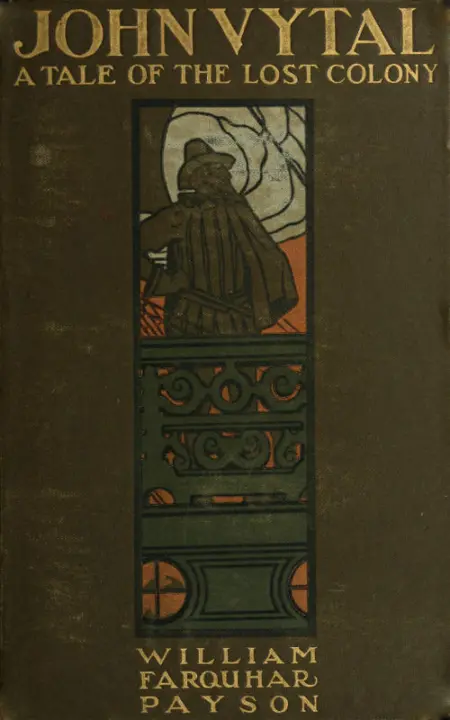
"John Vytal: A Tale of the Lost Colony" by William Farquhar Payson is a historical novel written in the early 20th century. The story explores the romantic and mysterious history of the Roanoke colony, focusing on the life and adventures of its main character, John Vytal. The narrative sets itself against the backdrop of 16th-century Virginia's tumultuous colonial endeavors, marked by adventure, enigma, and human connection. The opening of the tale introduces readers to a richly defined world of Elizabethan England, where the lively poet Christopher Marlowe and the formidable soldier Hugh Rouse encounter many colorful characters. The initial scenes depict the aftermath of a bear-baiting event where Vytal's heroic intervention creates ripples across the social fabric, drawing attention to his valor. As the story unfolds, Vytal prepares for his voyage to Virginia, mingling with both commoners and nobility, and hints of his future endeavors stir excitement. Through vibrant dialogues and intricate character interactions, the beginning offers a glimpse into the dynamics of human relationships in a historical context while setting the stage for a tale that intertwines fate, struggle, and the pursuit of personal destiny.
Introduction adapted from the source catalogue; source summaries may be automatically generated.
Free to read · English · 87,054 words · No account needed
MAKE TIME FOR A GOOD BOOK
On by default. Untick to stop anonymous reading totals. Each page counts after 10 seconds in view. How this works.
Anonymous counting is on unless you have switched it off.
“Oh, original, then—’tis little better. So readily conceived a metaphor has doubtless been made a hundred times concerning ruffs. You pay the best compliments with your sword. No, no; be not so crestfallen. We are but newly met, that’s all. You do not understand—forgive me, Master—how now, have I not yet learned your name?”
“’Tis John Vytal.”
“John Vytal,” she repeated, slowly. “It were easy to play on the name and show its meaning, but to them who’ve seen you I doubt not it needs no interpretation.” He would have questioned her then, but she hastened back to the first subject. “One thing piques my curiosity—the manner of your escape. Were the retainers of Sir Walter Raleigh so speedy to bring you succor?”
“No, I saw them not. Once you had gone I stayed no longer.”
“Stayed no longer?” She opened her large eyes very wide in surprise.
“Nay.”
“You speak as though you could have left at will.”
“The will was there, madam.”
“But the way—the way?” she demanded, impatiently.
“And the way, too.”
“Your brevity is badinage,” she declared, with an imperious toss of her
head.
“Your badinage cruelty,” he returned.
“Oh, you are not all silence and swordsmanship,” she laughed, with a trace of the persistent raillery in her voice. “But I have asked you concerning your way of escape.”
“From the cruelty?”
“No.” The word came impatiently, as though she were wholly unaccustomed to resistance. “I see you parry in more ways than one.” And her fingers played about the hood-clasp beneath her chin.
“Less hopefully in one way than another, Mistress Dare.”
At this her manner, curiously changing, became graver, the assumed archness and petulance for the moment leaving her. “You speak of cruelty,” she said, in a very low voice, again turning to gaze down at the sea, “and of hope. Sometimes, Captain Vytal, they are synonymous;” and then, before he could make rejoinder, she added, quickly, “I pray you tell me of the escape?”
“’Twas through a window overlooking the Thames,” he answered, in bewilderment. “And I swam ashore.”
“Ah, I see. I thought perhaps you had followed us through the porter’s
lodge.”
“No; the way was blocked.”
“Tell me,” she asked, “was it your plan, our reaching safety as we did, or Master Marlowe’s?”
“Neither his nor mine.”
“Neither! Whose, then?”
“At least, in a way, neither. You see, I remembered the story of the porter’s lodge. In 1554 Wyatt gained that building by mounting to the leads of an adjoining house, and thus made his way onto the bridge. Hence I knew there must be passageway to the Bankside.”
Your reading position is saved on this browser. Take it to another device with a library code. Reading pages adapt to text, rather than matching a printed edition.
BEHIND THE BOOK
This eBook is for the use of anyone anywhere in the United States and most other parts of the world at no cost and with almost no restrictions whatsoever. You may copy it, give it away or re-use it under the terms of the Project Gutenberg License included with this eBook or online at www.gutenberg.org. If you are not located in the United States, you will have to check the laws of the country where you are located before using this eBook. Read the source licence.
The original source file, including credits and licence, is retained by this library. Request an original-format copy at no charge. Please include the book title and Project Gutenberg identifier #58403.
KEEP YOUR CURIOSITY GOING
Cécile Tormay

Moritz Busch
Coulson Kernahan
John L. Ransom

Maurice Baring
Frances Wright