THE CLASSIC COLLECTION✦An outlaw’s diary: the CommuneCLASSIC FREE BOOKS
An outlaw’s diary: the Commune
Cécile Tormay
THE CLASSIC COLLECTION · 1901
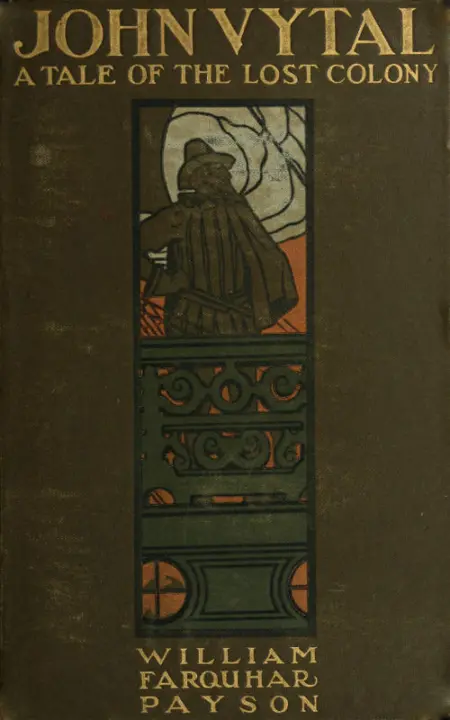
"John Vytal: A Tale of the Lost Colony" by William Farquhar Payson is a historical novel written in the early 20th century. The story explores the romantic and mysterious history of the Roanoke colony, focusing on the life and adventures of its main character, John Vytal. The narrative sets itself against the backdrop of 16th-century Virginia's tumultuous colonial endeavors, marked by adventure, enigma, and human connection. The opening of the tale introduces readers to a richly defined world of Elizabethan England, where the lively poet Christopher Marlowe and the formidable soldier Hugh Rouse encounter many colorful characters. The initial scenes depict the aftermath of a bear-baiting event where Vytal's heroic intervention creates ripples across the social fabric, drawing attention to his valor. As the story unfolds, Vytal prepares for his voyage to Virginia, mingling with both commoners and nobility, and hints of his future endeavors stir excitement. Through vibrant dialogues and intricate character interactions, the beginning offers a glimpse into the dynamics of human relationships in a historical context while setting the stage for a tale that intertwines fate, struggle, and the pursuit of personal destiny.
Introduction adapted from the source catalogue; source summaries may be automatically generated.
Free to read · English · 87,054 words · No account needed
MAKE TIME FOR A GOOD BOOK
On by default. Untick to stop anonymous reading totals. Each page counts after 10 seconds in view. How this works.
Anonymous counting is on unless you have switched it off.
He turned, laughing. “Nay, Mistress Dare; first throw away thy poniard.”
With a strenuous effort to stand erect, she obeyed, and the weapon fell at her feet. Evidently satisfied, he now released his hold on Virginia, and, swaggering forward, with an air of bravado, put an arm about Eleanor’s waist, while the daughter, utterly dazed, stood speechless, watching him.
“My dear love,” he murmured, caressingly, “rebel not against fate. We shall be very happy as king and queen.” It seemed as if there were a tone of real tenderness in his voice, while gently he led her to the door. But her own voice was silent as the grave, and again her whole being seemed hopelessly inert.
Before passing out he bent over her, and, with both arms, crushed her to him in a tense embrace. Then he started back and his face went pale as death.
A loud clash of steel, a roar of many voices, a whirlwind seemingly, and Vytal stood facing them in the doorway.
Like a flash Frazer drew his rapier, but too late.
The soldier, infuriated beyond control, thrust deep and deep again.
Frazer fell.
Vytal turned to Eleanor. “Come away, quick, by the rear entrance. Manteo and Rouse have overcome his guard.”
The wounded man groaned pitifully. “I pray you send me a priest,” he pleaded. “There is yet time for a short shrift. Your heretic parson will do an there’s none other.”
“I have no messenger at hand,” said Vytal, “and cannot go myself.”
At this moment, however, a slight dusky figure stood in the doorway, to which Frazer motioned feebly. It was Dark Eye.
“Send him,” said Eleanor, mercifully.
“Nay, for he must guard Frazer.”
“But the man is dying.”
“Nevertheless,” said Vytal, bitterly, “he is not yet dead.”
“Then let Dark Eye bind his arms, though it seems cruel.”
Vytal assented, and in a moment the captive lay bound hand and foot with thongs of hide from the Indian’s girdle.
Virginia came to her mother. “I will go with Dark Eye.”
Eleanor rested a hand on her daughter’s head, and turned to Vytal. “Is it
safe?”
“Yes, with him.”
Together Virginia Dare and Dark Eye left the room, only hesitating for a moment beyond the threshold to turn and wave farewell. “Have no fear,” said Manteo’s son. “The Winginas are put to flight; the Spaniards have left the town. Later we meet you on the shore.” The cresset flared high; its radiance fell across those two slight figures side by side in the near darkness.
The old world and the new had plighted troth, and here were the symbols
of an everlasting union.
Your reading position is saved on this browser. Take it to another device with a library code. Reading pages adapt to text, rather than matching a printed edition.
BEHIND THE BOOK
This eBook is for the use of anyone anywhere in the United States and most other parts of the world at no cost and with almost no restrictions whatsoever. You may copy it, give it away or re-use it under the terms of the Project Gutenberg License included with this eBook or online at www.gutenberg.org. If you are not located in the United States, you will have to check the laws of the country where you are located before using this eBook. Read the source licence.
The original source file, including credits and licence, is retained by this library. Request an original-format copy at no charge. Please include the book title and Project Gutenberg identifier #58403.
KEEP YOUR CURIOSITY GOING
Cécile Tormay

Moritz Busch
Coulson Kernahan
John L. Ransom

Maurice Baring
Frances Wright