THE CLASSIC COLLECTION✦An outlaw’s diary: the CommuneCLASSIC FREE BOOKS
An outlaw’s diary: the Commune
Cécile Tormay
THE CLASSIC COLLECTION · 1901
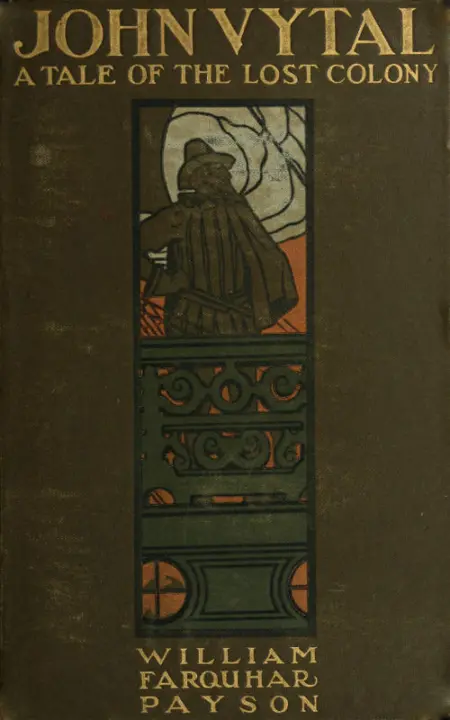
"John Vytal: A Tale of the Lost Colony" by William Farquhar Payson is a historical novel written in the early 20th century. The story explores the romantic and mysterious history of the Roanoke colony, focusing on the life and adventures of its main character, John Vytal. The narrative sets itself against the backdrop of 16th-century Virginia's tumultuous colonial endeavors, marked by adventure, enigma, and human connection. The opening of the tale introduces readers to a richly defined world of Elizabethan England, where the lively poet Christopher Marlowe and the formidable soldier Hugh Rouse encounter many colorful characters. The initial scenes depict the aftermath of a bear-baiting event where Vytal's heroic intervention creates ripples across the social fabric, drawing attention to his valor. As the story unfolds, Vytal prepares for his voyage to Virginia, mingling with both commoners and nobility, and hints of his future endeavors stir excitement. Through vibrant dialogues and intricate character interactions, the beginning offers a glimpse into the dynamics of human relationships in a historical context while setting the stage for a tale that intertwines fate, struggle, and the pursuit of personal destiny.
Introduction adapted from the source catalogue; source summaries may be automatically generated.
Free to read · English · 87,054 words · No account needed
MAKE TIME FOR A GOOD BOOK
On by default. Untick to stop anonymous reading totals. Each page counts after 10 seconds in view. How this works.
Anonymous counting is on unless you have switched it off.
He smiled, and added carelessly: “Then there is John Vytal.”
For a moment her eyes flashed, while she drew herself up proudly, but at his last words her chin sank on her breast and a flood of tears blinded her.
Virginia grasped her hand, and, bending forward, gazed up into her face perplexedly. “O my mother, will you not save the colony and Captain Vytal?”
Frazer nodded to Virginia approvingly. “I doubt it not,” he said, “for your mother is by no means heartless.”
Eleanor raised her head and gazed at him so expressionlessly that he started perceptibly; all life, all beauty, all consciousness, mental, spiritual, and physical, seemed suddenly to have left her face.
She went forward to him like one walking to death in sleep, and the only words that seemed, as it were, to drip and continually drip relentlessly on her brain, were these: “The end, the end!”
He sprang forward and covered her hand with burning kisses. “Thou’rt mine, Eleanor—mine at last.”
But suddenly he paused, startled. A low rustle, or trampling sound, as of innumerable bare feet rushing across the town, had caught his ear. And the voice of Hugh Rouse, far away, called loudly: “Quick, Manteo, this way! Thank God, we may yet save Vytal!”
On this Eleanor drew back with a cry of gladness, and Frazer hesitated. A Spanish soldier appeared at the door. “Shall we reinforce them?”
“Nay, keep your men around this cabin.” He turned to Eleanor, snapping his fingers carelessly. “Foh! a fico for the battle! You see I value your love higher even than our cause, and whether you will or not, I shall force it from you.” With this he started eagerly toward her, arms outstretched and eyes brilliant.
But Eleanor, quick as lightning, drew from her bosom a small poniard and held its point to her breast. “Another step,” she said, calmly, “and I stab myself.”
He paused, in genuine amazement. His supreme self-love had never dreamed of this—that a woman would rather kill herself than become his wife. “I no longer need to save others,” added Eleanor, triumphantly; “it is myself I save.”
For a moment he stood abashed, the very picture of chagrin; but then the light of a new impulse leaped into his eyes.
“Ay, but there shall be another,” he cried, “demanding your sacrifice,” with which, before she had divined his intent, he grasped Virginia in his arms and carried her to the doorway. “She is almost as beautiful,” he sneered, “and much younger.”
“Stay!” and Eleanor, swaying as if she must fall, cried out again in anguish, “Stay, I implore you—stay!”
Your reading position is saved on this browser. Take it to another device with a library code. Reading pages adapt to text, rather than matching a printed edition.
BEHIND THE BOOK
This eBook is for the use of anyone anywhere in the United States and most other parts of the world at no cost and with almost no restrictions whatsoever. You may copy it, give it away or re-use it under the terms of the Project Gutenberg License included with this eBook or online at www.gutenberg.org. If you are not located in the United States, you will have to check the laws of the country where you are located before using this eBook. Read the source licence.
The original source file, including credits and licence, is retained by this library. Request an original-format copy at no charge. Please include the book title and Project Gutenberg identifier #58403.
KEEP YOUR CURIOSITY GOING
Cécile Tormay

Moritz Busch
Coulson Kernahan
John L. Ransom

Maurice Baring
Frances Wright