THE CLASSIC COLLECTION✦An outlaw’s diary: the CommuneCLASSIC FREE BOOKS
An outlaw’s diary: the Commune
Cécile Tormay
THE CLASSIC COLLECTION · 1901
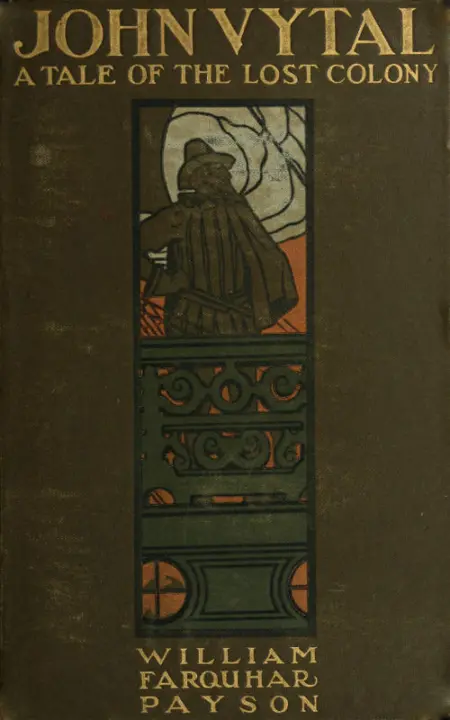
"John Vytal: A Tale of the Lost Colony" by William Farquhar Payson is a historical novel written in the early 20th century. The story explores the romantic and mysterious history of the Roanoke colony, focusing on the life and adventures of its main character, John Vytal. The narrative sets itself against the backdrop of 16th-century Virginia's tumultuous colonial endeavors, marked by adventure, enigma, and human connection. The opening of the tale introduces readers to a richly defined world of Elizabethan England, where the lively poet Christopher Marlowe and the formidable soldier Hugh Rouse encounter many colorful characters. The initial scenes depict the aftermath of a bear-baiting event where Vytal's heroic intervention creates ripples across the social fabric, drawing attention to his valor. As the story unfolds, Vytal prepares for his voyage to Virginia, mingling with both commoners and nobility, and hints of his future endeavors stir excitement. Through vibrant dialogues and intricate character interactions, the beginning offers a glimpse into the dynamics of human relationships in a historical context while setting the stage for a tale that intertwines fate, struggle, and the pursuit of personal destiny.
Introduction adapted from the source catalogue; source summaries may be automatically generated.
Free to read · English · 87,054 words · No account needed
MAKE TIME FOR A GOOD BOOK
On by default. Untick to stop anonymous reading totals. Each page counts after 10 seconds in view. How this works.
Anonymous counting is on unless you have switched it off.
He stopped at the fortress, before which Dyonis Harvie stood on guard, heavily armed. Eleanor was in the doorway. Seeing Vytal, she came out into the square and spoke to him. “Is it well?”
“An hour will show,” he answered, quietly.
“Then you fear treachery?”
“No, I do not fear it.”
“But you suspect it?”
“Nay, madam, I am fully aware that a general attack is intended. A force of Winginas already threatens our western wall.”
She hesitated, seeming loath to speak her mind, yet compelled by a certain distrust to make known her anxiety. “I hope,” she said, as though half to herself, “that none of the colonists will seek to leave by the Madre de Dios until the issue is certain.” Her voice faltered. “It is my duty to tell you that Ananias plans—”
But Vytal shook his head gravely. “Mistress Eleanor, Ananias Dare is
dead!”
“Dead!” she gasped, in a vague, incredulous bewilderment. “Dead!”
“Yes; drowned.”
A high flush of crimson came to her cheeks and suffused itself quickly about her temples; then as suddenly died, leaving her wan and pallid.
Vytal, averting his face, while in silence she re-entered the fortress, went slowly to Dyonis Harvie. “Is the prisoner well guarded?”
“Ay, most carefully—in a cell below the fort.”
“Your main duties are to protect the women and keep him there;” with which Vytal turned quickly away toward the western palisade.
Save for the light of the stars and of a wavering flambeau here and there, the town was in darkness. And but for the occasional reports of muskets, as the inland pickets fired into the forest at an unseen foe, no unusual sound broke the silence of night.
Yet each minute of that night, winged or halt, slow or quick-fleeting, was to every man big with import and terrible endeavor. The very air that filled their lungs seemed impregnated with suspense.
Here was no camp-fire and lounging throng in the main square, but only gloom and solitude, for the colony, broken up into small commands, stood in alert attitudes, with straining eyes, at every entrance.
The armistice was apparently at an end, yet some few consoled themselves with the fond delusion that the Winginas’ intermittent attack had not been inspired by the Spaniards. One or two of these sought Manteo to question him concerning the numbers of his hereditary foemen, but Manteo was not in the town. And, furthermore, not one of his tribe could be found save a few of the women. The Hatteras Indians had disappeared, men and boys, mysteriously.
Your reading position is saved on this browser. Take it to another device with a library code. Reading pages adapt to text, rather than matching a printed edition.
BEHIND THE BOOK
This eBook is for the use of anyone anywhere in the United States and most other parts of the world at no cost and with almost no restrictions whatsoever. You may copy it, give it away or re-use it under the terms of the Project Gutenberg License included with this eBook or online at www.gutenberg.org. If you are not located in the United States, you will have to check the laws of the country where you are located before using this eBook. Read the source licence.
The original source file, including credits and licence, is retained by this library. Request an original-format copy at no charge. Please include the book title and Project Gutenberg identifier #58403.
KEEP YOUR CURIOSITY GOING
Cécile Tormay

Moritz Busch
Coulson Kernahan
John L. Ransom

Maurice Baring
Frances Wright