THE CLASSIC COLLECTION✦An outlaw’s diary: the CommuneCLASSIC FREE BOOKS
An outlaw’s diary: the Commune
Cécile Tormay
THE CLASSIC COLLECTION · 1901
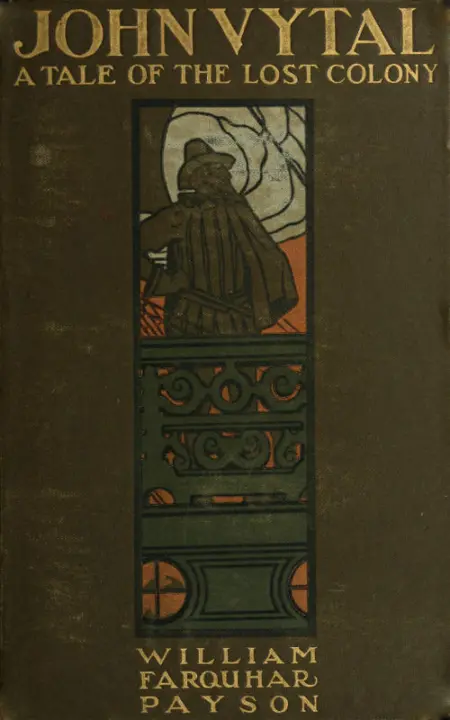
"John Vytal: A Tale of the Lost Colony" by William Farquhar Payson is a historical novel written in the early 20th century. The story explores the romantic and mysterious history of the Roanoke colony, focusing on the life and adventures of its main character, John Vytal. The narrative sets itself against the backdrop of 16th-century Virginia's tumultuous colonial endeavors, marked by adventure, enigma, and human connection. The opening of the tale introduces readers to a richly defined world of Elizabethan England, where the lively poet Christopher Marlowe and the formidable soldier Hugh Rouse encounter many colorful characters. The initial scenes depict the aftermath of a bear-baiting event where Vytal's heroic intervention creates ripples across the social fabric, drawing attention to his valor. As the story unfolds, Vytal prepares for his voyage to Virginia, mingling with both commoners and nobility, and hints of his future endeavors stir excitement. Through vibrant dialogues and intricate character interactions, the beginning offers a glimpse into the dynamics of human relationships in a historical context while setting the stage for a tale that intertwines fate, struggle, and the pursuit of personal destiny.
Introduction adapted from the source catalogue; source summaries may be automatically generated.
Free to read · English · 87,054 words · No account needed
MAKE TIME FOR A GOOD BOOK
On by default. Untick to stop anonymous reading totals. Each page counts after 10 seconds in view. How this works.
Anonymous counting is on unless you have switched it off.
Courage stood face to face with naked Fear.
With a look of disgust, Vytal glanced about for another boat, but none
was near them.
Slowly the canoe drifted from the shore, its occupant bidding farewell to Vytal with a laugh that died in a wail. “Return, or I shoot,” said the soldier, sternly.
But at this the paddle splashed frantically, and the canoe, now whirling about, now darting out to sea, went farther and farther from the land.
Vytal, for once, hesitated. To shoot was perhaps to kill the man, while to refrain from shooting was almost to countenance his suicide. As a compromise between these two alternatives the soldier took an arquebus from one of his men and fired in the air.
For a second the canoe paused in its outward course, then shot far seaward, and the man, wildly waving his paddle, either in triumph or expostulation, staggered to his feet. At this the frail craft so careened and trembled that before he could stand fully erect a torrent of water rushed in across the gunwale, and Vytal, aghast on the shore, just distinguished his figure, as, with a piercing cry, he tottered, fell sideways, and sank beneath the surface.
“He cannot swim,” said one of the arquebusiers, “any better than a gobbet
of lead.”
Hastily Vytal waded into the water, and, although there were no traces of the unfortunate drunkard, would have struck out toward the upturned craft, had not a deep voice at this instant restrained him. Turning, he saw Hugh Rouse standing on the shore, beckoning to him apprehensively.
“Captain, a force of Winginas attacks the western palisado.”
Vytal turned to one of the musketeers. “Bring hither a canoe and search for his body. He is drowned in the swift undertow;” then, with a last searching glance across the silver water, Vytal retraced his steps to the beach.
“To the town, Hugh! I follow immediately.” He turned to the arquebusiers. “It rests with you,” he said, “to hold the Spaniards back from land. Ask no reinforcements. We cannot spare them. Nor yet seek to retreat within the enclosure. You will be refused admittance. Your post is here. Knowing that some of you are the men who would have mutinied on the fly-boat long ago, I give you this opportunity to retrieve yourselves,” and, leaving them, he made his way speedily to the town.
As he passed within the main portal it was closed and barricaded, Rouse and a score of the ablest soldiers being left to defend it.
Your reading position is saved on this browser. Take it to another device with a library code. Reading pages adapt to text, rather than matching a printed edition.
BEHIND THE BOOK
This eBook is for the use of anyone anywhere in the United States and most other parts of the world at no cost and with almost no restrictions whatsoever. You may copy it, give it away or re-use it under the terms of the Project Gutenberg License included with this eBook or online at www.gutenberg.org. If you are not located in the United States, you will have to check the laws of the country where you are located before using this eBook. Read the source licence.
The original source file, including credits and licence, is retained by this library. Request an original-format copy at no charge. Please include the book title and Project Gutenberg identifier #58403.
KEEP YOUR CURIOSITY GOING
Cécile Tormay

Moritz Busch
Coulson Kernahan
John L. Ransom

Maurice Baring
Frances Wright