THE CLASSIC COLLECTION✦An outlaw’s diary: the CommuneCLASSIC FREE BOOKS
An outlaw’s diary: the Commune
Cécile Tormay
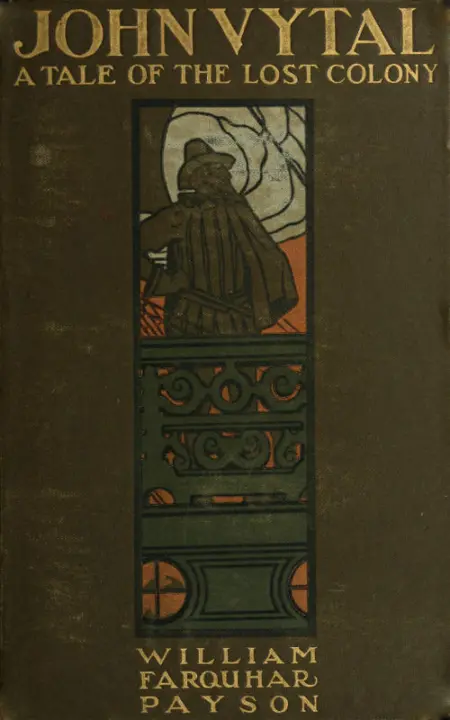
THE CLASSIC COLLECTION · 1901
"John Vytal: A Tale of the Lost Colony" by William Farquhar Payson is a historical novel written in the early 20th century. The story explores the romantic and mysterious history of the Roanoke colony, focusing on the life and adventures of its main character, John Vytal. The narrative sets itself against the backdrop of 16th-century Virginia's tumultuous colonial endeavors, marked by adventure, enigma, and human connection. The opening of the tale introduces readers to a richly defined world of Elizabethan England, where the lively poet Christopher Marlowe and the formidable soldier Hugh Rouse encounter many colorful characters. The initial scenes depict the aftermath of a bear-baiting event where Vytal's heroic intervention creates ripples across the social fabric, drawing attention to his valor. As the story unfolds, Vytal prepares for his voyage to Virginia, mingling with both commoners and nobility, and hints of his future endeavors stir excitement. Through vibrant dialogues and intricate character interactions, the beginning offers a glimpse into the dynamics of human relationships in a historical context while setting the stage for a tale that intertwines fate, struggle, and the pursuit of personal destiny.
Introduction adapted from the source catalogue; source summaries may be automatically generated.
Free to read · English · 87,054 words · No account needed
MAKE TIME FOR A GOOD BOOK
On by default. Untick to stop anonymous reading totals. Each page counts after 10 seconds in view. How this works.
Anonymous counting is on unless you have switched it off.
Gradually a desperate silence assumed sway over the colonists, while they advanced anxiously to the cliff’s edge. “They are enemies,” whispered one.
“Ay, ’fore Heaven, they are not of friendly countenance.”
Then a voice rose trembling in a high key, and Ananias, terror-struck, covered his eyes. “Oh, my God! the two are Spaniards from St. Augustine. Look! Look! One is the Madre de Dios!”
Vytal turned quickly to the settlers. “Yes, they are Spaniards,” he said, harshly, “and one is the Madre de Dios. She hath been defeated once; ’tis for us to sink her now.”
A low groan ran through the throng. Alarm had stifled hope. But, as none gave answer, Vytal spoke again. “Let those who are afraid return and seek safety at Croatan. I and my men will meet them.”
“Yea,” laughed Prat, “right gladly meet them.”
But already half the number had deserted, and, led by Ananias, were now stampeding toward their barges on the southern shore. Only the fighting-men and Eleanor remained on the headland. Suddenly an ejaculation from Prat caused Vytal to turn. The foremost of the Spanish vessels stood tentatively with flapping sails, as though undecided, and in another moment a long, rakish-looking craft, propelled by several rowers, had left the ships, and was making its way to the shore. In the prow an officer, gaudily dressed, stood erect, waving aloft a pike, from the blade of which a white flag floated lightly on the breeze. Slowly the long-boat drew nearer, until its stem swished on the sand. Then, stepping out, the Spanish officer, wearing no visible arms, turned to one and another with a lordly insolence, and finally accosted Vytal in English. “I am the admiral,” he said, “of our little fleet, and would speak with a person in command.”
“I,” said Vytal, “govern the colony.”
On hearing this the Spaniard started perceptibly and scrutinized the bleak, impassive face with heightened interest. “May I inquire,” he asked, with a curious mingling of autocratic condescension and true respect, “concerning your Excellency’s name?”
“’Tis the Wolf,” replied Roger Prat, impulsively, before Vytal could
answer.
The admiral smiled. “Ah, the Wolf! ’tis well for me I seek only an armistice at your hands—a short and friendly truce. We are in sore straits. Having but recently escaped wreckage, we are now like to die of thirst and starvation. I have here the usual conditions of an armistice, which I submit for your consideration,” and he handed Vytal a sheet of paper which conveyed, in English, his proposal:
“I. That we be permitted to buy victuals.
Your reading position is saved on this browser. Take it to another device with a library code. Reading pages adapt to text, rather than matching a printed edition.
BEHIND THE BOOK
This eBook is for the use of anyone anywhere in the United States and most other parts of the world at no cost and with almost no restrictions whatsoever. You may copy it, give it away or re-use it under the terms of the Project Gutenberg License included with this eBook or online at www.gutenberg.org. If you are not located in the United States, you will have to check the laws of the country where you are located before using this eBook. Read the source licence.
The original source file, including credits and licence, is retained by this library. Request an original-format copy at no charge. Please include the book title and Project Gutenberg identifier #58403.
KEEP YOUR CURIOSITY GOING
Cécile Tormay

Moritz Busch
Coulson Kernahan
John L. Ransom

Maurice Baring
Frances Wright