THE CLASSIC COLLECTION✦An outlaw’s diary: the CommuneCLASSIC FREE BOOKS
An outlaw’s diary: the Commune
Cécile Tormay
THE CLASSIC COLLECTION · 1901
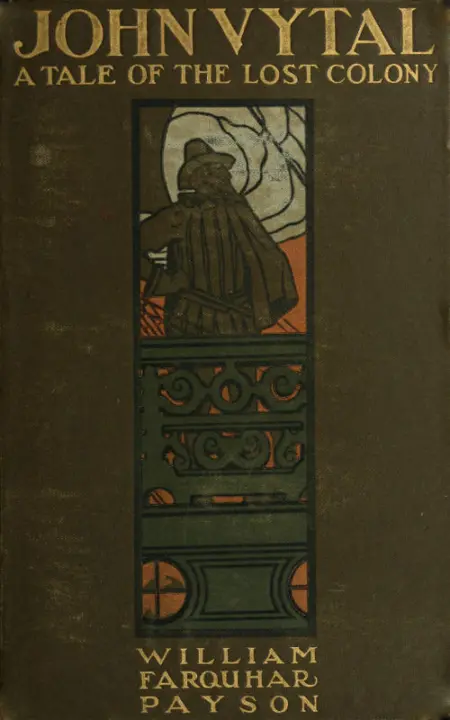
"John Vytal: A Tale of the Lost Colony" by William Farquhar Payson is a historical novel written in the early 20th century. The story explores the romantic and mysterious history of the Roanoke colony, focusing on the life and adventures of its main character, John Vytal. The narrative sets itself against the backdrop of 16th-century Virginia's tumultuous colonial endeavors, marked by adventure, enigma, and human connection. The opening of the tale introduces readers to a richly defined world of Elizabethan England, where the lively poet Christopher Marlowe and the formidable soldier Hugh Rouse encounter many colorful characters. The initial scenes depict the aftermath of a bear-baiting event where Vytal's heroic intervention creates ripples across the social fabric, drawing attention to his valor. As the story unfolds, Vytal prepares for his voyage to Virginia, mingling with both commoners and nobility, and hints of his future endeavors stir excitement. Through vibrant dialogues and intricate character interactions, the beginning offers a glimpse into the dynamics of human relationships in a historical context while setting the stage for a tale that intertwines fate, struggle, and the pursuit of personal destiny.
Introduction adapted from the source catalogue; source summaries may be automatically generated.
Free to read · English · 87,054 words · No account needed
MAKE TIME FOR A GOOD BOOK
On by default. Untick to stop anonymous reading totals. Each page counts after 10 seconds in view. How this works.
Anonymous counting is on unless you have switched it off.
To-day, feeling more restless than ever, “Look,” she said, “Roger Prat shall pipe to us.” With which she led her companion by the hand through the babbling throng to Roger, who, arm-in-arm with his bear, was swaggering here and there, discoursing bombastically on the approaching ships, as though he himself deserved thanks for the benefit.
“How now, Goodman Prat,” inquired Virginia, as they joined him; “art going to leave thy flute silent at such a time?”
He turned and, with head on one side, surveyed her narrowly. “The pipe pipeth no more,” he said, “for the necessary wind hath gone out of my heart.”
“Lungs,” corrected Virginia, with a silvery laugh.
“Lungs,” he assented, gravely; “but, White Doe, see here!” He pointed to a small tabor that hung by his side. “I have brought this drum wherewith to celebrate. Hark to Roger’s tattoo!” And, drawing from his belt a pair of drum-sticks, he marched about, with a rat-a-tat-tat-tat-too. “Sing, ho, the taborin, little taborin,” he cried, “merry taborin,” and his sticks danced furiously on the drum. He was thinking of England, and of the chance that he might return to forgive Gyll Croyden.
But Virginia, pouting, turned away. “That is not music,” she said to the Indian. “He is changed.”
Hers was the only frown that, until now, had crossed a face that morning. Hilarity laid hold on the jubilant throng, and turned all save the most serious ones to children.
Musket-shots rang out in celebration; cheer on cheer filled the air, until, growing hoarse with their incessant huzzahs, planters, soldiers, traders, wives, daughters, sons, and even lonely widows and orphans, still kept waving their arms to the distant ships in silence. And still Roger, with King Lud in his wake, went the round, now gesticulating in the air with both of his drum-sticks, next pointing with one to the sails, and again setting the pair ajig on his tabor in clamorous acclaim.
Suddenly, however, catching sight of Vytal’s face, he desisted and hastened to the captain’s side. Vytal spoke in a low voice that none but Prat and Hugh Rouse might catch the tenor of his words. “An I mistake not, those ships are not our friends.” Roger and Hugh turned, in dismay, to look once more across the water.
Rouse, shading his eyes with a great hand, swore roundly beneath his
breath.
“Body o’ me!” exclaimed Prat, who for once could say no more.
Vytal had spoken truly. For now that the ships came slowly within range of the watchers’ vision, the fact became obvious to one and another on the headland that these were not vessels of English build.
Your reading position is saved on this browser. Take it to another device with a library code. Reading pages adapt to text, rather than matching a printed edition.
BEHIND THE BOOK
This eBook is for the use of anyone anywhere in the United States and most other parts of the world at no cost and with almost no restrictions whatsoever. You may copy it, give it away or re-use it under the terms of the Project Gutenberg License included with this eBook or online at www.gutenberg.org. If you are not located in the United States, you will have to check the laws of the country where you are located before using this eBook. Read the source licence.
The original source file, including credits and licence, is retained by this library. Request an original-format copy at no charge. Please include the book title and Project Gutenberg identifier #58403.
KEEP YOUR CURIOSITY GOING
Cécile Tormay

Moritz Busch
Coulson Kernahan
John L. Ransom

Maurice Baring
Frances Wright