THE CLASSIC COLLECTION✦An outlaw’s diary: the CommuneCLASSIC FREE BOOKS
An outlaw’s diary: the Commune
Cécile Tormay
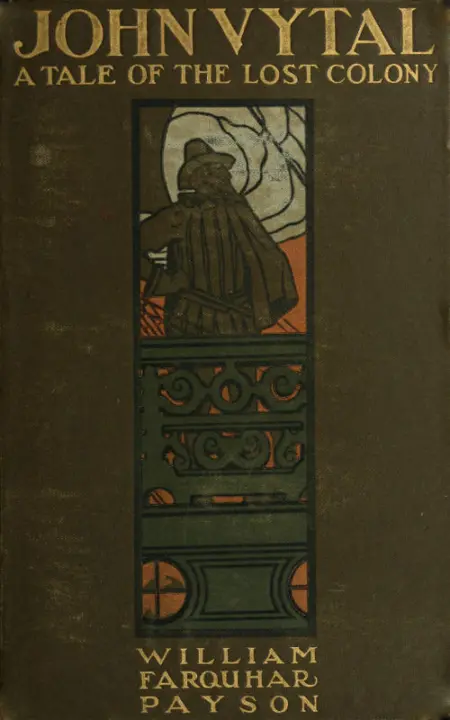
THE CLASSIC COLLECTION · 1901
"John Vytal: A Tale of the Lost Colony" by William Farquhar Payson is a historical novel written in the early 20th century. The story explores the romantic and mysterious history of the Roanoke colony, focusing on the life and adventures of its main character, John Vytal. The narrative sets itself against the backdrop of 16th-century Virginia's tumultuous colonial endeavors, marked by adventure, enigma, and human connection. The opening of the tale introduces readers to a richly defined world of Elizabethan England, where the lively poet Christopher Marlowe and the formidable soldier Hugh Rouse encounter many colorful characters. The initial scenes depict the aftermath of a bear-baiting event where Vytal's heroic intervention creates ripples across the social fabric, drawing attention to his valor. As the story unfolds, Vytal prepares for his voyage to Virginia, mingling with both commoners and nobility, and hints of his future endeavors stir excitement. Through vibrant dialogues and intricate character interactions, the beginning offers a glimpse into the dynamics of human relationships in a historical context while setting the stage for a tale that intertwines fate, struggle, and the pursuit of personal destiny.
Introduction adapted from the source catalogue; source summaries may be automatically generated.
Free to read · English · 87,054 words · No account needed
MAKE TIME FOR A GOOD BOOK
On by default. Untick to stop anonymous reading totals. Each page counts after 10 seconds in view. How this works.
Anonymous counting is on unless you have switched it off.
“Yes, captain, and our colony also. I deemed it advisable not to pit one duty against another. On coming ashore after the battle I would have told you, but you had swooned.”
Vytal looked at him in silence; then, finally sinking down again to a sitting posture, “You were right, Kyt,” and his eyes met Eleanor’s—“’Twas for our colony.”
“I pray you rest,” she said. “Your strength is spent.”
But he sat bolt-upright and made as if to rebuckle his sword-belt in a dazed, automatic way. “Nay, madam; it is unimpaired.”
At about this time a solitary man, far to the southward, struck inland from the shore. It was Frazer, returning from a defeat to what he believed was to be the scene of a conquest which should retrieve it.
On coming to the glade, however, and to the arbor in which Eleanor and Gyll Croyden had been imprisoned, he stood still before the threshold in mute astonishment. There, near the ashes of a fire, lay Towaye, basking in the sunlight, sound asleep. Amazedly the youth started forward and peered into the arbor. It was empty. Assuring himself of this, he stamped and swore roundly, but, with a second glance at the slumbering Indian, his expression changed. A sense of humor asserted itself above chagrin and even astonishment in the boyish eyes. “How now?” he laughed. “’Tis a court masque. Lo, a golden necklace and beribboned peruke garnish our Lucifer!” He shook Towaye none too gently with his foot. The Indian, rolling over, rubbed his eyes and strove to sit upright, but his bond held him fast to the stout grape-vine. “I dreamed that I tried once before,” he said, in sleepy bewilderment; “but the Daughter of the Sun hath woven a spell.”
“Fool!” ejaculated Frazer.
“Nay, no fool. ’Twas she and the captive sunlight which, escaping its bondage, entered my body at her command and overpowered it.”
Frazer’s eyes, falling on an empty bottle, brought him comprehension, and his thoughts went back to another bottle which but recently had worked his own failure. The remembrance decreased his severity. He unbraided the peruke, “like a barber,” he said, and bade the Indian join him in pursuing the women.
At this Sir Walter St. Magil, who had followed him from the shore, entered the opening. “I have come in search of you.”
“Unbidden!” returned Frazer, hotly.
St. Magil smiled. “You will not remonstrate on hearing the cause.”
“Nay, for I have not the time. No cause delays me.”
“Whither go you, then?”
Frazer made no answer.
“Ah, for some liaison, I doubt not. Mark me, a woman will work your
downfall.”
Your reading position is saved on this browser. Take it to another device with a library code. Reading pages adapt to text, rather than matching a printed edition.
BEHIND THE BOOK
This eBook is for the use of anyone anywhere in the United States and most other parts of the world at no cost and with almost no restrictions whatsoever. You may copy it, give it away or re-use it under the terms of the Project Gutenberg License included with this eBook or online at www.gutenberg.org. If you are not located in the United States, you will have to check the laws of the country where you are located before using this eBook. Read the source licence.
The original source file, including credits and licence, is retained by this library. Request an original-format copy at no charge. Please include the book title and Project Gutenberg identifier #58403.
KEEP YOUR CURIOSITY GOING
Cécile Tormay

Moritz Busch
Coulson Kernahan
John L. Ransom

Maurice Baring
Frances Wright