THE CLASSIC COLLECTION✦An outlaw’s diary: the CommuneCLASSIC FREE BOOKS
An outlaw’s diary: the Commune
Cécile Tormay
THE CLASSIC COLLECTION · 1901
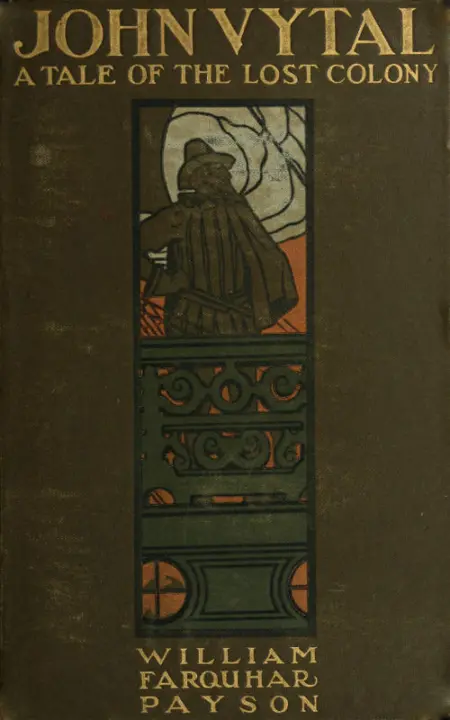
"John Vytal: A Tale of the Lost Colony" by William Farquhar Payson is a historical novel written in the early 20th century. The story explores the romantic and mysterious history of the Roanoke colony, focusing on the life and adventures of its main character, John Vytal. The narrative sets itself against the backdrop of 16th-century Virginia's tumultuous colonial endeavors, marked by adventure, enigma, and human connection. The opening of the tale introduces readers to a richly defined world of Elizabethan England, where the lively poet Christopher Marlowe and the formidable soldier Hugh Rouse encounter many colorful characters. The initial scenes depict the aftermath of a bear-baiting event where Vytal's heroic intervention creates ripples across the social fabric, drawing attention to his valor. As the story unfolds, Vytal prepares for his voyage to Virginia, mingling with both commoners and nobility, and hints of his future endeavors stir excitement. Through vibrant dialogues and intricate character interactions, the beginning offers a glimpse into the dynamics of human relationships in a historical context while setting the stage for a tale that intertwines fate, struggle, and the pursuit of personal destiny.
Introduction adapted from the source catalogue; source summaries may be automatically generated.
Free to read · English · 87,054 words · No account needed
MAKE TIME FOR A GOOD BOOK
On by default. Untick to stop anonymous reading totals. Each page counts after 10 seconds in view. How this works.
Anonymous counting is on unless you have switched it off.
A low moan rose in her heart, and whether or not it escaped her lips she
never knew.
On the settle lay John Vytal, prostrate and unconscious, his left arm extended to the floor, to which his half-sheathed sword had fallen, the belt having been unbuckled that his corselet might be unloosed. His fingers tenaciously grasped the scabbard. The right hand lay across his breast, which had been bared that a chirurgeon, who stood near by, might listen to the heart-beats. Under the head of the wounded man a folded cloak had been placed as a pillow, and his morion, having been removed, revealed a great black and gray flecked mane of hair, brushed back to cool his forehead. The brow itself, streaked with crimson, showed a deep line from temple to temple where the helmet had cut into it. The face, as though chiselled in bronze, was still stern and relentless save for a grim, triumphant look of victory that shone in the sharp features like the cresset-light across his sword.
Marlowe stood erect, watching him, until suddenly a voice, inarticulate, low, and questioning, seemed to break the spell that bound them all to the depths of anxious silence.
Marlowe turned. “Thank God!” he said, “you are saved. Speak to him.” And, with all the relief in the poet’s voice, there was a note of pain; for he had read her eyes.
“Captain Vytal.”
The soldier stirred as though in an abyss of sleep, his breast heaving
slightly.
“John Vytal.” The name was spoken in a low voice, yet, far away in the world that sound and sight fathom not by utterance or gaze, but only by their meaning, one spirit was calling to another.
The captain opened his eyes slowly.
“Thanks be to Heaven!” And Marlowe turned to Eleanor. “Your salvation is
his as well.”
Vytal’s lips parted. “Salvation? What mean you by salvation?” He forced himself to sit upright, and his voice rose harsh as a night wind. “Has Mistress Dare been nigh to danger?”
Neither Marlowe nor Eleanor made answer, but Gyll Croyden, who now had joined the group, replied, laughing: “Ay, that have we both. Master Ralph Contempt and Towaye snared us cunningly, but a wench’s wit outdid them, and, alas! a wench’s hair.”
She stroked her close-cut curls dolefully.
Vytal staggered to his feet, and, facing Marlowe, questioned him like a judge of the Inquisition: “Wherefore didst thou not make this known to me?”
The poet met his gaze unflinchingly. “I thought—”
“Thought!” The word was repeated in a frigid, biting tone. “Thought! ’Twas not your right to think. The daughter of our governor was in jeopardy.”
Your reading position is saved on this browser. Take it to another device with a library code. Reading pages adapt to text, rather than matching a printed edition.
BEHIND THE BOOK
This eBook is for the use of anyone anywhere in the United States and most other parts of the world at no cost and with almost no restrictions whatsoever. You may copy it, give it away or re-use it under the terms of the Project Gutenberg License included with this eBook or online at www.gutenberg.org. If you are not located in the United States, you will have to check the laws of the country where you are located before using this eBook. Read the source licence.
The original source file, including credits and licence, is retained by this library. Request an original-format copy at no charge. Please include the book title and Project Gutenberg identifier #58403.
KEEP YOUR CURIOSITY GOING
Cécile Tormay

Moritz Busch
Coulson Kernahan
John L. Ransom

Maurice Baring
Frances Wright