THE CLASSIC COLLECTION✦An outlaw’s diary: the CommuneCLASSIC FREE BOOKS
An outlaw’s diary: the Commune
Cécile Tormay
THE CLASSIC COLLECTION · 1901
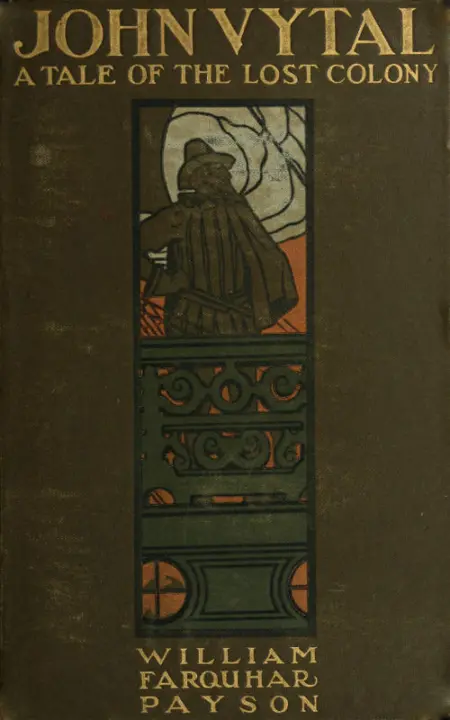
"John Vytal: A Tale of the Lost Colony" by William Farquhar Payson is a historical novel written in the early 20th century. The story explores the romantic and mysterious history of the Roanoke colony, focusing on the life and adventures of its main character, John Vytal. The narrative sets itself against the backdrop of 16th-century Virginia's tumultuous colonial endeavors, marked by adventure, enigma, and human connection. The opening of the tale introduces readers to a richly defined world of Elizabethan England, where the lively poet Christopher Marlowe and the formidable soldier Hugh Rouse encounter many colorful characters. The initial scenes depict the aftermath of a bear-baiting event where Vytal's heroic intervention creates ripples across the social fabric, drawing attention to his valor. As the story unfolds, Vytal prepares for his voyage to Virginia, mingling with both commoners and nobility, and hints of his future endeavors stir excitement. Through vibrant dialogues and intricate character interactions, the beginning offers a glimpse into the dynamics of human relationships in a historical context while setting the stage for a tale that intertwines fate, struggle, and the pursuit of personal destiny.
Introduction adapted from the source catalogue; source summaries may be automatically generated.
Free to read · English · 87,054 words · No account needed
MAKE TIME FOR A GOOD BOOK
On by default. Untick to stop anonymous reading totals. Each page counts after 10 seconds in view. How this works.
Anonymous counting is on unless you have switched it off.
“It is against Captain Vytal’s orders,” expostulated the mate, as Ralph followed her. “Under your favor, Master Contempt must stay behind.”
But the youth was already beside them. “Nay, Dyonis,” remonstrated Eleanor. “You forget ’tis the governor’s daughter who brings him.”
“I ask your pardon, Mistress Dare; but ’tis not that I forget too easily; it is that I remember well a positive command.” And he made as though to assist the subject of their talk down into the barge again.
“How now?” she demanded, imperiously. “Are any save my father’s orders superior to mine own? I had not looked to find my maid-servant’s husband so disloyal.”
At this the poor seaman wavered on the horns of a dilemma. Against Mistress Dare, of all the colony, he could not persist further, for she was regarded already as a kind of queen in the little settlement, who had shown kindness to the very humblest in sickness and distress, and was above all others most readily obeyed.
Harvie scratched his head. “You will explain, I pray, to Captain Vytal.”
“I will explain.”
The mate walked away mumbling to himself. Whereat, turning with a laugh of feigned delight and mischief, Eleanor led her companion to the room of state. “It is here,” she said, “that the king should hold his court. And, besides, I am anxious to inspect the chamber in which my poor father used to sit, head in hands, hoping against hope for my safe arrival.” She paused. “Furthermore, there is wine within of a rare vintage.”
“Wine,” he said, eagerly—“golden wine. We shall drink to our realm, to the England I pictured in my dreams. But no, first, first to our love.”
She felt his breath hot against her cheek. “And to solitude,” she added, with an under-meaning in her thoughts. Then, daringly, for the game at moments carried her away, “To an immemorial captivity in the room of state.”
He had, however, thrown caution to the winds, being, as he believed, at the very threshold of a double goal. Nevertheless, as they entered the long apartment, he assumed his old, pitiable air. “It is cruel,” he said, “to mention captivity to one who, having but just escaped so fell a slavery, is again in direst bondage.”
“It was thoughtless,” she allowed, with subtle truth, “and reprehensible to talk of victory when as yet we have neither of us won.”
He strove to encircle her waist with his arm, but once more, as if with natural coquetry, she eluded him. “Not yet won?” he whispered, passionately. “It is won; it shall be won—and by me.”
Your reading position is saved on this browser. Take it to another device with a library code. Reading pages adapt to text, rather than matching a printed edition.
BEHIND THE BOOK
This eBook is for the use of anyone anywhere in the United States and most other parts of the world at no cost and with almost no restrictions whatsoever. You may copy it, give it away or re-use it under the terms of the Project Gutenberg License included with this eBook or online at www.gutenberg.org. If you are not located in the United States, you will have to check the laws of the country where you are located before using this eBook. Read the source licence.
The original source file, including credits and licence, is retained by this library. Request an original-format copy at no charge. Please include the book title and Project Gutenberg identifier #58403.
KEEP YOUR CURIOSITY GOING
Cécile Tormay

Moritz Busch
Coulson Kernahan
John L. Ransom

Maurice Baring
Frances Wright