THE CLASSIC COLLECTION✦An outlaw’s diary: the CommuneCLASSIC FREE BOOKS
An outlaw’s diary: the Commune
Cécile Tormay
THE CLASSIC COLLECTION · 1901
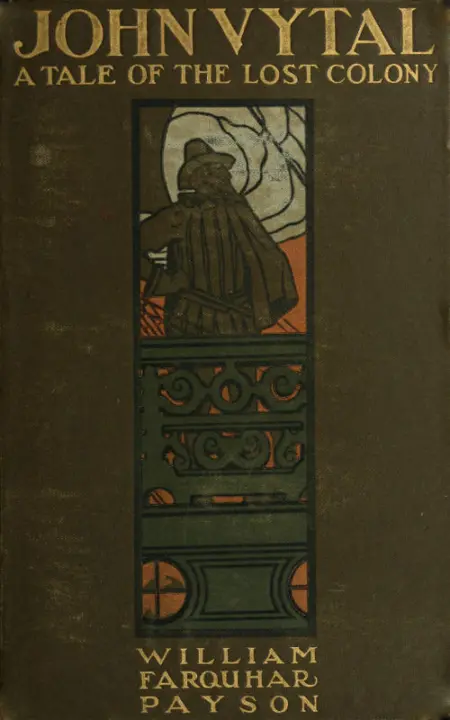
"John Vytal: A Tale of the Lost Colony" by William Farquhar Payson is a historical novel written in the early 20th century. The story explores the romantic and mysterious history of the Roanoke colony, focusing on the life and adventures of its main character, John Vytal. The narrative sets itself against the backdrop of 16th-century Virginia's tumultuous colonial endeavors, marked by adventure, enigma, and human connection. The opening of the tale introduces readers to a richly defined world of Elizabethan England, where the lively poet Christopher Marlowe and the formidable soldier Hugh Rouse encounter many colorful characters. The initial scenes depict the aftermath of a bear-baiting event where Vytal's heroic intervention creates ripples across the social fabric, drawing attention to his valor. As the story unfolds, Vytal prepares for his voyage to Virginia, mingling with both commoners and nobility, and hints of his future endeavors stir excitement. Through vibrant dialogues and intricate character interactions, the beginning offers a glimpse into the dynamics of human relationships in a historical context while setting the stage for a tale that intertwines fate, struggle, and the pursuit of personal destiny.
Introduction adapted from the source catalogue; source summaries may be automatically generated.
Free to read · English · 87,054 words · No account needed
MAKE TIME FOR A GOOD BOOK
On by default. Untick to stop anonymous reading totals. Each page counts after 10 seconds in view. How this works.
Anonymous counting is on unless you have switched it off.
“You do not realize,” she interposed, striving strenuously to fight down the meaning regret in her voice, “how much I have given you.” At this he seized her hand again, to cover it with kisses, and, growing more bold, bent down to kiss her lips; but she recoiled quickly, and, eluding him, stepped back until the cannon lay between them. Then she forced herself to laugh.
He vaulted over the caliver. “Even this great piece,” he cried, “although it were ready primed, could scarce deter me,” and, seizing both of her hands, he leaned down to repeat his first attempt. But she hung her head, and his lips only brushed the velvet of her cap. Then, raising her eyes to his, by sheer force of will she dominated his desire, held it in check, yet kindled it the more.
“Stay,” she objected, calmly, “you little comprehend the ways of women; they must be wooed before they can be won.”
He started back with an impatient gesture. “They can wait, then, to be wooed,” and, turning, he would have re-entered the fortress.
Had she lost him? Must the humiliation of it all be bitterly deepened by failure? No. She felt her woman’s power, her tingling wit and intuitive diplomacy rise quickly to meet the crisis. “I pray you, do not go, Master Contempt. Have I been so very unkind?”
He turned back smiling, his self-conceit actually leading him to believe that his own little ruse of apparent indifference had worked success.
A bold, flashing plan came to her. She would play upon the man’s two conflicting desires at one and the same time. A double spell must shackle him.
“I have it,” she suggested, in a yielding voice. “Let us row out to the Admiral, and pretend we have left this dangerous land for good and all.”
His eyes sparkled. Fortune had showered him with favors. He felt less compunction now in making love. She little knew, he thought, how opportunely her suggestion came. He even feigned reluctance for the moment, to hide the eagerness of his steps.
They walked to the shore.
“I have not been on board my father’s ship,” she told him, “since we landed in the fly-boat. You have heard, no doubt, of our mishaps?”
“Yes, I’ve heard.” There was a twinkle in his eye. “But one thing I know not, and that is the countersign. I fear Dyonis Harvie will forbid me the ship.”
She laughed. “Nay, he is my tire-woman’s husband. You shall see.”
In a few minutes they were under the Admiral’s side, and in one more she had mounted to the deck.
Your reading position is saved on this browser. Take it to another device with a library code. Reading pages adapt to text, rather than matching a printed edition.
BEHIND THE BOOK
This eBook is for the use of anyone anywhere in the United States and most other parts of the world at no cost and with almost no restrictions whatsoever. You may copy it, give it away or re-use it under the terms of the Project Gutenberg License included with this eBook or online at www.gutenberg.org. If you are not located in the United States, you will have to check the laws of the country where you are located before using this eBook. Read the source licence.
The original source file, including credits and licence, is retained by this library. Request an original-format copy at no charge. Please include the book title and Project Gutenberg identifier #58403.
KEEP YOUR CURIOSITY GOING
Cécile Tormay

Moritz Busch
Coulson Kernahan
John L. Ransom

Maurice Baring
Frances Wright