THE CLASSIC COLLECTION✦Life and times of Frederick DouglassCLASSIC FREE BOOKS
Life and times of Frederick Douglass
Frederick Douglass
THE CLASSIC COLLECTION · 1881
"John Brown: An Address at the 14th Anniversary of Storer College" by Frederick Douglass is a historical account delivered in the late 19th century. This address, presented to commemorate John Brown's legacy, focuses on his role as a controversial figure in the fight against slavery and his raid on Harper's Ferry in 1859. Douglass advocates for a deeper understanding of Brown's motivations and the significance of his actions in the context of American history. In the address, Douglass recounts the dramatic events of the Harper's Ferry raid, where John Brown attempted to initiate an armed insurrection to free enslaved individuals. He paints a vivid picture of Brown as a martyr for liberty, emphasizing his unwavering commitment to the cause of emancipation, even at the cost of his life. Douglass discusses the complex perceptions of Brown at the time, contrasting the immediate reactions of fear and condemnation with a more nuanced recognition of his bravery and moral clarity in advocating for freedom and justice. Through personal recollections and historical analysis, Douglass seeks to honor Brown's legacy while challenging the audience to reconsider their views on sacrifice in the struggle for liberty.
Introduction adapted from the source catalogue; source summaries may be automatically generated.
Free to read · English · 10,132 words · No account needed
MAKE TIME FOR A GOOD BOOK
On by default. Untick to stop anonymous reading totals. Each page counts after 10 seconds in view. How this works.
Anonymous counting is on unless you have switched it off.
There is, however, one aspect of the present subject quite worthy of notice, for it makes the hero of Harper's Ferry in some degree an exception to the general rules to which I have just now adverted. Despite the hold which slavery had at that time on the country, despite the popular prejudice against the Negro, despite the shock which the first alarm occasioned, almost from the first John Brown received a large measure of sympathy and appreciation. New England recognized in him the spirit which brought the pilgrims to Plymouth rock and hailed him as a martyr and saint. True he had broken the law, true he had struck for a despised people, true he had crept upon his foe stealthily, like a wolf upon the fold, and had dealt his blow in the dark whilst his enemy slept, but with all this and more to disturb the moral sense, men discerned in him the greatest and best qualities known to human nature, and pronounced him "good." Many consented to his death, and then went home and taught their children to sing his praise as one whose "soul is marching on" through the realms of endless bliss. One element in explanation of this somewhat anomalous circumstance will probably be found in the troubled times which immediately succeeded, for "when judgments are abroad in the world, men learn righteousness."
The country had before this learned the value of Brown's heroic character. He had shown boundless courage and skill in dealing with the enemies of liberty in Kansas. With men so few, and means so small, and odds against him so great, no captain ever surpassed him in achievements, some of which seem almost beyond belief. With only eight men in that bitter war, he met, fought and captured Henry Clay Pate, with twenty-five well armed and mounted men. In this memorable encounter, he selected his ground so wisely, handled his men so skillfully, and attacked the enemy so vigorously, that they could neither run nor fight, and were therefore compelled to surrender to a force less than one-third their own. With just thirty men on another important occasion during the same border war, he met and vanquished four hundred Missourians under the command of Gen. Read. These men had come into the territory under an oath never to return to their homes till they had stamped out the last vestige of free State spirit in Kansas; but a brush with old Brown took this high conceit out of them, and they were glad to get off upon any terms, without stopping to stipulate. With less than one hundred men to defend the town of Lawrence, he offered to lead them and give battle to fourteen hundred men on the banks of the Waukerusia river, and was much vexed when his offer was refused by Gen. Jim Lane and others to whom the defense of the town was confided. Before leaving Kansas, he went into the border of Missouri, and liberated a dozen slaves in a single night, and, in spite of slave laws and marshals, he brought these people through a half dozen States, and landed them safely in Canada. With eighteen men this man shook the whole social fabric of Virginia. With eighteen men he overpowered a town of nearly three thousand souls. With these eighteen men he held that large community firmly in his grasp for thirty long hours. With these eighteen men he rallied in a single night fifty slaves to his standard, and made prisoners of an equal number of the slave-holding class. With these eighteen men he defied the power and bravery of a dozen of the best militia companies that Virginia could send against him. Now, when slavery struck, as it certainly did strike, at the life of the country, it was not the fault of John Brown that our rulers did not at first know how to deal with it. He had already shown us the weak side of the rebellion, had shown us where to strike and how. It was not from lack of native courage that Virginia submitted for thirty long hours and at last was relieved only by Federal troops; but because the attack was made on the side of her conscience and thus armed her against herself. She beheld at her side the sullen brow of a black Ireland. When John Brown proclaimed emancipation to the slaves of Maryland and Virginia he added to his war power the force of a moral earthquake. Virginia felt all her strong-ribbed mountains to shake under the heavy tread of armed insurgents. Of his army of nineteen her conscience made an army of nineteen hundred.
Your reading position is saved on this browser. Take it to another device with a library code. Reading pages adapt to text, rather than matching a printed edition.
Frederick Douglass
Frederick Douglass
Frederick Douglass
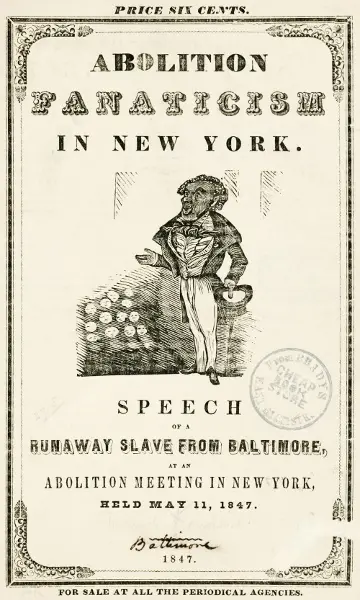
Frederick Douglass
BEHIND THE BOOK
This eBook is for the use of anyone anywhere in the United States and most other parts of the world at no cost and with almost no restrictions whatsoever. You may copy it, give it away or re-use it under the terms of the Project Gutenberg License included with this eBook or online at www.gutenberg.org. If you are not located in the United States, you will have to check the laws of the country where you are located before using this eBook. Read the source licence.
The original source file, including credits and licence, is retained by this library. Request an original-format copy at no charge. Please include the book title and Project Gutenberg identifier #31839.
KEEP YOUR CURIOSITY GOING

David Patterson (Spirit) Hatch

David Patterson (Spirit) Hatch

David Patterson (Spirit) Hatch
Cécile Tormay

Moritz Busch
John L. Ransom