THE CLASSIC COLLECTION✦Life and times of Frederick DouglassCLASSIC FREE BOOKS
Life and times of Frederick Douglass
Frederick Douglass
THE CLASSIC COLLECTION · 1881
"John Brown: An Address at the 14th Anniversary of Storer College" by Frederick Douglass is a historical account delivered in the late 19th century. This address, presented to commemorate John Brown's legacy, focuses on his role as a controversial figure in the fight against slavery and his raid on Harper's Ferry in 1859. Douglass advocates for a deeper understanding of Brown's motivations and the significance of his actions in the context of American history. In the address, Douglass recounts the dramatic events of the Harper's Ferry raid, where John Brown attempted to initiate an armed insurrection to free enslaved individuals. He paints a vivid picture of Brown as a martyr for liberty, emphasizing his unwavering commitment to the cause of emancipation, even at the cost of his life. Douglass discusses the complex perceptions of Brown at the time, contrasting the immediate reactions of fear and condemnation with a more nuanced recognition of his bravery and moral clarity in advocating for freedom and justice. Through personal recollections and historical analysis, Douglass seeks to honor Brown's legacy while challenging the audience to reconsider their views on sacrifice in the struggle for liberty.
Introduction adapted from the source catalogue; source summaries may be automatically generated.
Free to read · English · 10,132 words · No account needed
MAKE TIME FOR A GOOD BOOK
On by default. Untick to stop anonymous reading totals. Each page counts after 10 seconds in view. How this works.
Anonymous counting is on unless you have switched it off.
In the stately shadow, in the sublime presence of such a soul I find myself standing to-night; and how to do it reverence, how to do it justice, how to honor the dead with due regard to the living, has been a matter of most anxious solicitude.
Much has been said of John Brown, much that is wise and beautiful, but in looking over what may be called the John Brown literature, I have been little assisted with material, and even less encouraged with any hope of success in treating the subject. Scholarship, genius and devotion have hastened with poetry and eloquence, story and song to this simple altar of human virtue, and have retired dissatisfied and distressed with the thinness and poverty of their offerings, as I shall with mine.
The difficulty in doing justice to the life and character of such a man is not altogether due to the quality of the zeal, or of the ability brought to the work, nor yet to any imperfections in the qualities of the man himself; the state of the moral atmosphere about us has much to do with it. The fault is not in our eyes, nor yet in the object, if under a murky sky we fail to discover the object. Wonderfully tenacious is the taint of a great wrong. The evil, as well as "the good that men do, lives after them." Slavery is indeed gone; but its long, black shadow yet falls broad and large over the face of the whole country. It is the old truth oft repeated, and never more fitly than now, "a prophet is without honor in his own country and among his own people." Though more than twenty years have rolled between us and the Harper's Ferry raid, though since then the armies of the nation have found it necessary to do on a large scale what John Brown attempted to do on a small one, and the great captain who fought his way through slavery has filled with honor the Presidential chair, we yet stand too near the days of slavery, and the life and times of John Brown, to see clearly the true martyr and hero that he was and rightly to estimate the value of the man and his works. Like the great and good of all ages--the men born in advance of their times, the men whose bleeding footprints attest the immense cost of reform, and show us the long and dreary spaces, between the luminous points in the progress of mankind,--this our noblest American hero must wait the polishing wheels of after-coming centuries to make his glory more manifest, and his worth more generally acknowledged. Such instances are abundant and familiar. If we go back four and twenty centuries, to the stately city of Athens, and search among her architectural splendor and her miracles of art for the Socrates of to-day, and as he stands in history, we shall find ourselves perplexed and disappointed. In Jerusalem Jesus himself was only the "carpenter's son"--a young man wonderfully destitute of worldly prudence--a pestilent fellow, "inexcusably and perpetually interfering in the world's business,"--"upsetting the tables of the money-changers"--preaching sedition, opposing the good old religion--"making himself greater than Abraham," and at the same time "keeping company" with very low people; but behold the change! He was a great miracle-worker, in his day, but time has worked for him a greater miracle than all his miracles, for now his name stands for all that is desirable in government, noble in life, orderly and beautiful in society. That which time has done for other great men of his class, that will time certainly do for John Brown. The brightest gems shine at first with subdued light, and the strongest characters are subject to the same limitations. Under the influence of adverse education and hereditary bias, few things are more difficult than to render impartial justice. Men hold up their hands to Heaven, and swear they will do justice, but what are oaths against prejudice and against inclination! In the face of high-sounding professions and affirmations we know well how hard it is for a Turk to do justice to a Christian, or for a Christian to do justice to a Jew. How hard for an Englishman to do justice to an Irishman, for an Irishman to do justice to an Englishman, harder still for an American tainted by slavery to do justice to the Negro or the Negro's friends. "John Brown," said the late Wm. H. Seward, "was justly hanged." "John Brown," said the late John A. Andrew, "was right." It is easy to perceive the sources of these two opposite judgments: the one was the verdict of slave-holding and panic-stricken Virginia, the other was the verdict of the best heart and brain of free old Massachusetts. One was the heated judgment of the passing and passionate hour, and the other was the calm, clear, unimpeachable judgment of the broad, illimitable future.
Your reading position is saved on this browser. Take it to another device with a library code. Reading pages adapt to text, rather than matching a printed edition.
Frederick Douglass
Frederick Douglass
Frederick Douglass
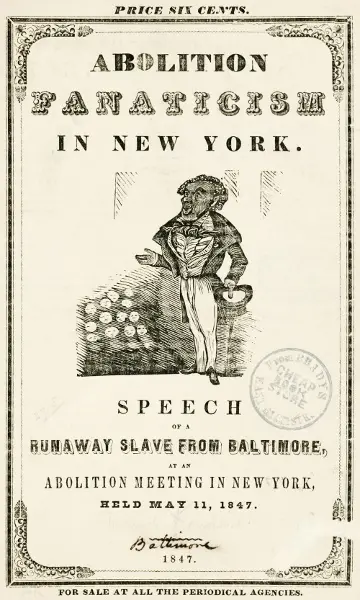
Frederick Douglass
BEHIND THE BOOK
This eBook is for the use of anyone anywhere in the United States and most other parts of the world at no cost and with almost no restrictions whatsoever. You may copy it, give it away or re-use it under the terms of the Project Gutenberg License included with this eBook or online at www.gutenberg.org. If you are not located in the United States, you will have to check the laws of the country where you are located before using this eBook. Read the source licence.
The original source file, including credits and licence, is retained by this library. Request an original-format copy at no charge. Please include the book title and Project Gutenberg identifier #31839.
KEEP YOUR CURIOSITY GOING

David Patterson (Spirit) Hatch

David Patterson (Spirit) Hatch

David Patterson (Spirit) Hatch
Cécile Tormay

Moritz Busch
John L. Ransom