THE CLASSIC COLLECTION✦An outlaw’s diary: the CommuneCLASSIC FREE BOOKS
An outlaw’s diary: the Commune
Cécile Tormay
THE CLASSIC COLLECTION · 1902
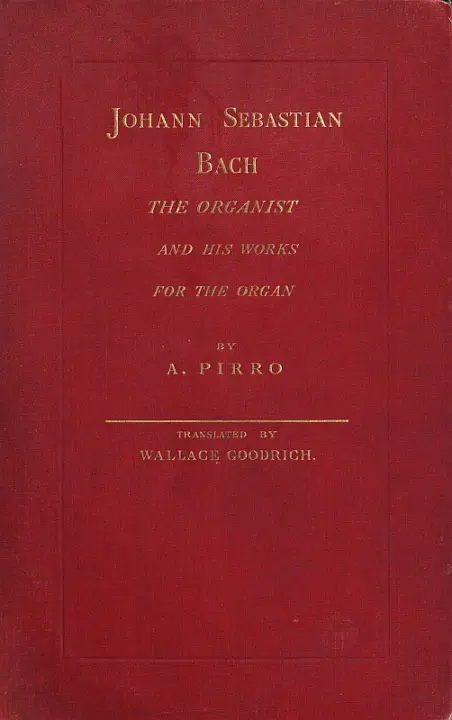
"Johann Sebastian Bach: The Organist and His Works for the Organ" by André Pirro is a historical account written in the late 19th century. The book delves into the life and compositions of Johann Sebastian Bach, particularly focusing on his work as an organist and the significance of his organ music. Through this exploration, it aims to provide insights into Bach’s musical contributions and his profound influence on the development of organ music. The opening of this work presents a preface that sets the tone for a deep analysis of Bach’s character and his musical genius. It portrays Bach as a humble and diligent figure who was dedicated to his craft, characterized by a combination of formidable talent and a commitment to his education and teaching. The narrative hints at Bach's intricate relationship with his predecessors, suggesting that his genius was informed by the works of notable composers before him, such as Frescobaldi and Buxtehude. By providing historical context and detailing the evolution of Bach's style, the introduction prepares readers for an in-depth study of his organ compositions, which will explore their structure and significance within the broader spectrum of classical music.
Introduction adapted from the source catalogue; source summaries may be automatically generated.
Free to read · English · 40,361 words · No account needed
MAKE TIME FOR A GOOD BOOK
On by default. Untick to stop anonymous reading totals. Each page counts after 10 seconds in view. How this works.
Anonymous counting is on unless you have switched it off.
1. Gross Principal
(of pure tin), 16'
2. Gross Quintatön, 16'
3. Klein Principal, 8'
4. Schalmei, 8'
5. Flûte allemande, 8'
6. Gemshorn, 8'
7. Octave, 4'
8. Quinte, 3'
9. Quint-Nasat, 3'
10. Octavina, 2'
11. Waldflöte, 2'
12. Grosse Mixtur,
of 5 and 6 ranks
13. Cornetti, of 3 ranks
14. Zink (a species of
cornett), of
2 ranks
Echo.
1. Principal (in front), 8'
2. Viola di Gamba naturelle, 8'
3. Grobgedackt
(large scale bourdon) 8'
4. Octave, 4'
5. Rohrflöte, 4'
6. Octave, 2'
7. Nasat, 3'
8. Sedecima, 1'
9. Schweizerpfeife, 1'
10. Largo.[184]
11. Mixtur, of 3 ranks
12. Helle (bright) Cymbel,
of 2 ranks
[Footnote 184: Undoubtedly larigot.]
Choir.
1. Leiblich gedackt, 8'
2. Quintatön, 8'
3. Flûte douce, 4'
4. Quinta decima, 4'
5. Decima nona, 3'
6. Hohlflöte, 2'
7. Viola, 2'
8. Vigesima nona, 1-1/2'
9. Weitpfeife, 1'
10. Mixtur, of 3 ranks
11. Helle Cymbel, of 2 ranks
12. Sertin (serpent?), 8'
Pedal.
1. Gross Principal, 16'
2. Gross Quintatön, 16'
3. Octave, 8'
4. Octave, 4'
5. Quinte, 3'
6. Mixtur, of 5 and 6 ranks
7. Grosse Quintenbass, 6'
8. Jubal (open flute), 8'
9. Nachthorn, 4'
10. Octave, 2'
11. Second Principal, 16'
12. Subbass, 16'
13. Posaune, 16'
14. Trompete, 8'
15. Hohflöte, 1'
16. Mixtur, of 4 ranks
Finally, the specification of the principal organ in the Thomaskirche in Leipzig, installed in 1525, twice rebuilt during the seventeenth century, enlarged in 1670; and considerably repaired, in 1721, by Johann Scheibe:[185]
[Footnote 185: Vogel, Leipziger Chronicke. Vol. iii, chap. vi, p.
110.]
Great.
1. Principal, 16'
2. Principal, 8'
3. Quintatön, 16'
4. Octave, 4'
5. Quinte, 3'
6. Superoctave, 2'
7. Spielpfeife
(a species of flute), 8'
8. Sesquialtera
9. Mixtur, of 6, 8, and
10 ranks
Echo (Brustwerk).
1. Grobgedackt, 8'
2. Principal, 4'
3. Nachthorn, 4'
4. Nasat, 3'
5. Gemshorn, 2'
6. Cymbel, of 2 ranks
7. Sesquialtera
8. Regal, 8'
9. Geigenregal[186]
(Violin-regal), 4'
[Footnote 186: In combination with the Quintatön of eight feet,
says Adlung, the Geigenregal sounds almost like a stringed
instrument.]
Choir.
1. Principal 8'
2. Quintatön, 8'
3. Lieblich Gedackt, 8'
4. Kleingedackt, 4'
5. Querflöte
(Flauto traverso), 4'
6. Violine, 2'
7. Rauschquinte doppelt
8. Mixtur, of 4 ranks
9. Sesquialtera
10. Spitzflöte, 4'
11. Schallflöte, 1'
12. Krummhorn,[187] 16'
13. Trompete, 8'
[Footnote 187: Cromorne. Also called lituus (clarion) by Praetorius (Syntagma musicum), Tome ii, chap. xv, p. 40. Adlung suggests this simple derivation: cor and morne (sad, reserved).]
Pedal.
1. Subbass (of metal), 16'
2. Posaune, 16'
3. Trompete, 8'
4. Schalmei, 4'
5. Cornett, 3'
The St. Thomas church possessed in addition a small organ. This instrument, at one time abandoned, and later again brought into service, stood at Bach's time in a gallery, opposite the large organ. It possessed a stop called Trichter-Regal, a sort of Vox humana. This organ was used in performance of the St. Matthew Passion music, in coöperation with the other.
Your reading position is saved on this browser. Take it to another device with a library code. Reading pages adapt to text, rather than matching a printed edition.
BEHIND THE BOOK
This eBook is for the use of anyone anywhere in the United States and most other parts of the world at no cost and with almost no restrictions whatsoever. You may copy it, give it away or re-use it under the terms of the Project Gutenberg License included with this eBook or online at www.gutenberg.org. If you are not located in the United States, you will have to check the laws of the country where you are located before using this eBook. Read the source licence.
The original source file, including credits and licence, is retained by this library. Request an original-format copy at no charge. Please include the book title and Project Gutenberg identifier #59085.
KEEP YOUR CURIOSITY GOING
Cécile Tormay

Moritz Busch
John L. Ransom
Frances Wright
Cécile Tormay

Mabel Potter Daggett