THE CLASSIC COLLECTION✦The haunts of menCLASSIC FREE BOOKS
The haunts of men
Robert W. (Robert William) Chambers
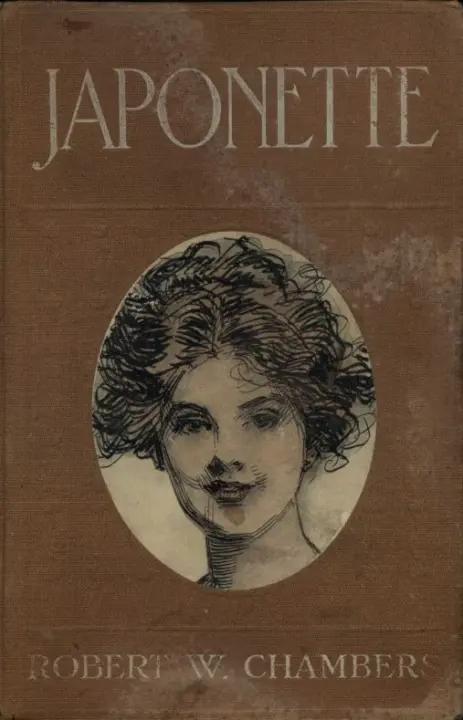
THE CLASSIC COLLECTION · 1912
"Japonette" by Robert W. Chambers is a novel written in the early 20th century. The story centers around James Edgerton, a young man returning to New York after a financial disaster that has wiped out his family's legacy. As he navigates his new reality, he unexpectedly encounters two orphaned nieces of a family acquaintance, Diana and Silvette Tennant, who have rented his apartment without his knowledge. Their interaction sets the stage for a rich exploration of relationships, identity, and the complexities of social status. At the start of the book, Edgerton arrives back in New York after losing everything in his late uncle's firm. Upon returning to his apartment, he finds it occupied by the Tennant sisters, who believed they were merely renting a space for the summer. This initial surprise leads to comedic misunderstandings and a need for collaboration as they each navigate their precarious financial situations. The characters’ dialogues reveal their personalities, creating a light-hearted yet contemplative atmosphere, hinting at deeper themes of resilience and familial connections that may unfold as their lives become intertwined.
Introduction adapted from the source catalogue; source summaries may be automatically generated.
Free to read · English · 59,465 words · No account needed
MAKE TIME FOR A GOOD BOOK
On by default. Untick to stop anonymous reading totals. Each page counts after 10 seconds in view. How this works.
Anonymous counting is on unless you have switched it off.
"Sort! sort! What does that matter!" said Diana hotly. "It never stopped a thoroughbred from mating. He can afford to love where he chooses, I fancy."
"Or marry what he chooses, anyway."
"Silvie! Do you imagine he'd do a thing like that--not loving her!"
"I don't know," said Silvette coolly; "he's a dear boy, and nice to us, but I don't credit him with superhuman qualities.... And she inherits millions."
"It isn't in him to do it.... And there are plenty of his own sort who would be glad enough----"
"Why do you become so animated, Di? Have you noticed any particular strength of character in Jim Edgerton?"
"Yes.... He is as true as steel, underneath the amiable exterior of a drifter and dilettante.... He has ideals.... I am not one of them--I know that."
"Do you care particularly?"
"No.... I don't know whether I do or not.... I never seem to know what to say to him these days. We talk together like two men. I'd like to know what he thinks about me--the kind of woman I am, compared to others in his own set.... I'd like to know what he thinks about my gambling and cocktails and cigarettes, which you and I have got to stop! What he really thinks of our position in this house--in the world! I don't believe he thinks much of it."
"Does his position differ from ours?" asked Silvette gently; "why are you so excited, little sister?"
"I'm not excited.... Things--various matters have occurred to me--recently; and I've made up my mind that I don't like to see him here. This is no place for him, no position. He is capable of doing better things, more important things, nobler things. He slips into a life like this too easily; he is too easily reconciled, too quickly content."
Silvette seated herself on a rocking chair and, leaning back, sat rocking and inspecting her sister, who stood by the bed, her brown locks clustering against her cheeks.
"There is something to Jim," she insisted. "He can do things--respectable, dignified things--and make his living. It humiliates me to see him here in such a capacity----"
"As ours?" added Silvette, smiling.
"Yes, as ours. He is a man, and it does not become him."
"We are respectively physician and lawyer, but our talents and fortunes
lie in this profession."
Diana flushed. "If we were anything except the frivolous, ease-loving, and pleasure-craving little beasts that we are, we wouldn't be here."
"No; we'd starve, respectably, in our several offices. Do you want Jim
to starve?"
"I don't know," said Diana, almost fiercely; "I'd rather see him in want, I think, than doing this kind of thing."
Your reading position is saved on this browser. Take it to another device with a library code. Reading pages adapt to text, rather than matching a printed edition.
Robert W. (Robert William) Chambers
Robert W. (Robert William) Chambers

Robert W. (Robert William) Chambers
Robert W. (Robert William) Chambers
BEHIND THE BOOK
This eBook is for the use of anyone anywhere in the United States and most other parts of the world at no cost and with almost no restrictions whatsoever. You may copy it, give it away or re-use it under the terms of the Project Gutenberg License included with this eBook or online at www.gutenberg.org. If you are not located in the United States, you will have to check the laws of the country where you are located before using this eBook. Read the source licence.
The original source file, including credits and licence, is retained by this library. Request an original-format copy at no charge. Please include the book title and Project Gutenberg identifier #52842.
KEEP YOUR CURIOSITY GOING
Coulson Kernahan

Maurice Baring
Frances Wright
Cécile Tormay

Frederic Jesup Stimson

W. H. P. (William Henry Pope) Jarvis