THE CLASSIC COLLECTION✦The haunts of menCLASSIC FREE BOOKS
The haunts of men
Robert W. (Robert William) Chambers
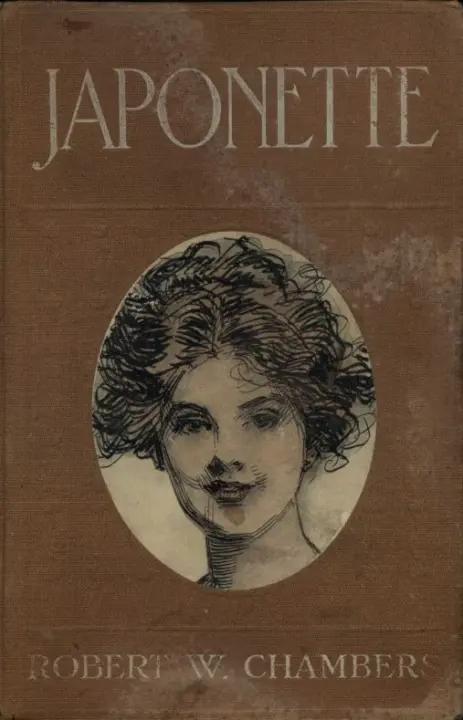
THE CLASSIC COLLECTION · 1912
"Japonette" by Robert W. Chambers is a novel written in the early 20th century. The story centers around James Edgerton, a young man returning to New York after a financial disaster that has wiped out his family's legacy. As he navigates his new reality, he unexpectedly encounters two orphaned nieces of a family acquaintance, Diana and Silvette Tennant, who have rented his apartment without his knowledge. Their interaction sets the stage for a rich exploration of relationships, identity, and the complexities of social status. At the start of the book, Edgerton arrives back in New York after losing everything in his late uncle's firm. Upon returning to his apartment, he finds it occupied by the Tennant sisters, who believed they were merely renting a space for the summer. This initial surprise leads to comedic misunderstandings and a need for collaboration as they each navigate their precarious financial situations. The characters’ dialogues reveal their personalities, creating a light-hearted yet contemplative atmosphere, hinting at deeper themes of resilience and familial connections that may unfold as their lives become intertwined.
Introduction adapted from the source catalogue; source summaries may be automatically generated.
Free to read · English · 59,465 words · No account needed
MAKE TIME FOR A GOOD BOOK
On by default. Untick to stop anonymous reading totals. Each page counts after 10 seconds in view. How this works.
Anonymous counting is on unless you have switched it off.
For the others he had no particular feelings. He knew, without troubling himself to think about it, that Colonel Curmew was what his own friends would call a bounder; and the remaining guests were of no greater importance to him than strangers inclined to be civil.
As for Silvette and Diana, they were not only kindred, and so to be automatically cherished, but they also were very charming and delightful young girls; and Diana aroused his curiosity.
During the first days of their acquaintance, the circumstances of his encounter with Diana had inclined him to sentiment. Now that had been merged into a nice friendship--a friendship so frank and pleasant that, in his idea, it permitted privileges of an intimacy which at first perplexed and disturbed Diana, and which, presently, she began to silently resent without exactly knowing why.
What her ideas concerning Edgerton really were, she herself had not entirely decided. She had been as vividly conscious of the charm of their first encounter as had he; being a woman, she still remembered it vividly, whereas, with him, it had dissolved into the mistiest of dream-tinted memories--charming, but vague.
Too, she remembered his attitude toward her in those first three days in the studio--the golden magic of them, the little roof garden, the starlings, the sunset beyond the river. Under such circumstances, the things men say and look, men usually forget; but women remember longer.
Then she remembered, too, the first days of their arrival at Adriutha.... There was nothing in particular to recall--a note or two from her to him, from him to her.... Perhaps a something in his voice and eyes which, somehow, had died out since.... Yet, had it been anything in particular? And, granting that it had, what had she done to encourage it?
She had fallen into the habit of thinking about these things in her bedroom while preparing for the night. She often thought, too, about this new friendship of his for Christine Rivett. It perplexed her, saddened, irritated her by turns, and it distressed her to even question his motives.
But Silvette said one evening, after they had undressed and the maid had
left:
"Wouldn't it be odd if Jim married that girl?"
"Married--her?" repeated Diana, startled out of a reverie not entirely
happy.
"He's becoming very attentive to her. She is pretty, of course,"
Silvette smiled.
"Why shouldn't he marry her if he finds that he cares for her?" asked
Diana with some heat.
"I was merely surprised that he should care for her in that way. She is
not his sort."
Your reading position is saved on this browser. Take it to another device with a library code. Reading pages adapt to text, rather than matching a printed edition.
Robert W. (Robert William) Chambers
Robert W. (Robert William) Chambers

Robert W. (Robert William) Chambers
Robert W. (Robert William) Chambers
BEHIND THE BOOK
This eBook is for the use of anyone anywhere in the United States and most other parts of the world at no cost and with almost no restrictions whatsoever. You may copy it, give it away or re-use it under the terms of the Project Gutenberg License included with this eBook or online at www.gutenberg.org. If you are not located in the United States, you will have to check the laws of the country where you are located before using this eBook. Read the source licence.
The original source file, including credits and licence, is retained by this library. Request an original-format copy at no charge. Please include the book title and Project Gutenberg identifier #52842.
KEEP YOUR CURIOSITY GOING
Coulson Kernahan

Maurice Baring
Frances Wright
Cécile Tormay

Frederic Jesup Stimson

W. H. P. (William Henry Pope) Jarvis