THE CLASSIC COLLECTION✦Noah Webster American Men of LettersCLASSIC FREE BOOKS
Noah Webster American Men of Letters
Horace Elisha Scudder
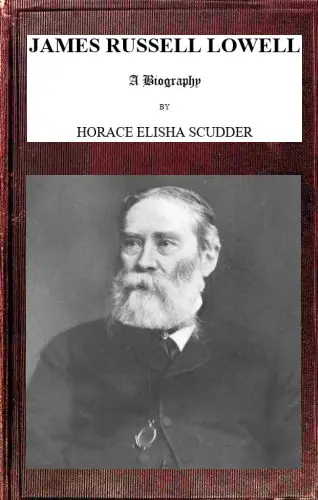
THE CLASSIC COLLECTION · 1901
"James Russell Lowell, A Biography; vol 2/2" by Horace Elisha Scudder is a biographical account written in the early 20th century. This work explores the life and contributions of James Russell Lowell, focusing on various critical periods of his life, including his engagement in political discourse and his literary career. The biography covers Lowell's role during the Civil War, his editorial work for the Atlantic Monthly, and his political opinions, providing insight into his impact on American literature and thought, particularly surrounding issues like democracy and slavery. The opening of the biography sets the stage for a detailed examination of Lowell's engagement with the political landscape of his time, particularly during the Civil War. It discusses the establishment of the Atlantic Monthly, highlighting its intention to be a platform for both art and politics under Lowell's leadership. The author outlines how this magazine became a crucial medium for discussions about pressing national issues, including the moral and political implications of slavery. The text reflects on Lowell's fervent convictions regarding freedom and democracy, emphasizing the ethical considerations that guided his views as the nation faced tumultuous times.
Introduction adapted from the source catalogue; source summaries may be automatically generated.
Free to read · English · 135,986 words · No account needed
MAKE TIME FOR A GOOD BOOK
On by default. Untick to stop anonymous reading totals. Each page counts after 10 seconds in view. How this works.
Anonymous counting is on unless you have switched it off.
“Pirate, The,” i. 11.
Place of the Independent in Politics, The; see Independent in Politics.
Plays of Thomas Middleton, The, extract from, on poets, i. 149.
Pocket Celebration of the Fourth, The, ii. 14, note.
Poe, Edgar Allan, contributor to The Pioneer, i. 105; rate of payment to, by Broadway Journal, 158; sketched by J. R. L. in Graham’s Magazine, 162; his criticism of J. R. L., 163; his allusions to Longfellow’s family, 164; J. R. L.’s judgment of, 165-167; the correspondence with J. R. L., 165, note; his relation with J. R. L. discussed by Briggs, Willis, and Page, 382.
Poems, J. R. L. preparing the volume of, i. 239.
Poems, second series by J. R. L. issued, i. 277;
analyzed, 277-280.
Poetry, J. R. L.’s enquiry into, in Conversations, i. 137; his lectures on, at Lowell Institute, 373-375.
“Poet’s Yorkshire Haunts, A,” quoted, ii. 356.
Political Essays, articles not included by J. R. L. in his, ii. 5;
published, 372.
Pontine marshes, the, i. 344.
Pope, the, J. R. L. sees, i. 324;
hears him celebrate mass, 325;
likens him to an American statesman, 326.
Pope, Alexander, criticised by J. R. L., i. 290;
treated at length in lectures on poetry, 374.
Portsmouth, early visited by J. R. L., i. 19, 20.
Postmaster at Stockbridge, account of, by J. R. L., i. 272.
Power of Sound, The, quoted, i. 20.
Prescott, Harriet Elizabeth, J. R. L. meets at dinner, i. 449.
Prescott, William Hickling, his “Conquest of Mexico,” i. 274; importance of, to the Atlantic, 420.
Presepio on Christmas eve in Rome, i. 324, 325.
President on the Stump, The, ii. 93.
“President’s Message, The,” by Parke Godwin, ii. 3.
Proctor, Mrs. Bryan Waller, ii. 335.
Professorship at Oxford proposed for J. R. L., ii. 318.
Prometheus, i. 115;
at work on, 119;
its character, 121;
compared with Keats’s “Hyperion,” 122;
Briggs and J. R. L. on, 123.
Proof-reading, J. R. L. on, i. 444.
Provincial Newspaper Society, J. R. L. before, ii. 306.
Punch on J. R. L. as an alien, ii. 300.
Puritanism in New England, ii. 82.
Putnam, George, J. R. L. to, ii. 182, 296.
Putnam, George Palmer, to publish A Fable for Critics, i. 242; does not notice the rhymed title-page, 249, note; his character as a publisher, 349.
Putnam, Mrs. S. R., see Lowell, Mary Traill Spence.
Putnam, William Lowell, killed at Ball’s Bluff, ii. 30.
Putnam’s Monthly, established, i. 348;
prospectus of, 349;
its decline, 350.
Puttenham’s “Art of English Poesie,” i. 67.
Question of the Hour, The, ii. 20.
Quincy, Edmund, writes the life of his father, Josiah Quincy, i. 27;
one of the editors of the Standard, 192;
a contributor to the same, 193;
corresponding editor of, 202;
the quality of his work, 211;
valued by J. R. L., 230, 231;
“correspondence” with J. R. L., 235;
writes for Atlantic, ii. 2.
Quincy, Josiah, president of Harvard, i. 27;
portrayed by J. R. L., 27, 28.
Rebellion, The; its Causes and Consequences, ii. 53.
Your reading position is saved on this browser. Take it to another device with a library code. Reading pages adapt to text, rather than matching a printed edition.
Horace Elisha Scudder

Horace Elisha Scudder
Horace Elisha Scudder
Horace Elisha Scudder
BEHIND THE BOOK
This eBook is for the use of anyone anywhere in the United States and most other parts of the world at no cost and with almost no restrictions whatsoever. You may copy it, give it away or re-use it under the terms of the Project Gutenberg License included with this eBook or online at www.gutenberg.org. If you are not located in the United States, you will have to check the laws of the country where you are located before using this eBook. Read the source licence.
The original source file, including credits and licence, is retained by this library. Request an original-format copy at no charge. Please include the book title and Project Gutenberg identifier #57777.
KEEP YOUR CURIOSITY GOING
Cécile Tormay

Moritz Busch
John L. Ransom
Frances Wright
Cécile Tormay

Mabel Potter Daggett