THE CLASSIC COLLECTION✦Noah Webster American Men of LettersCLASSIC FREE BOOKS
Noah Webster American Men of Letters
Horace Elisha Scudder
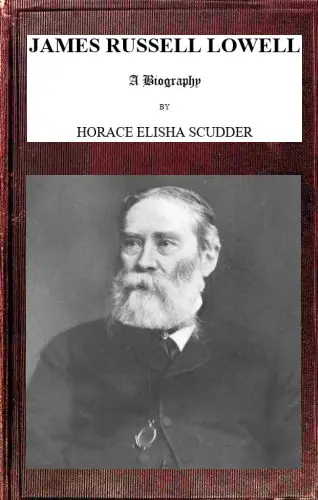
THE CLASSIC COLLECTION · 1901
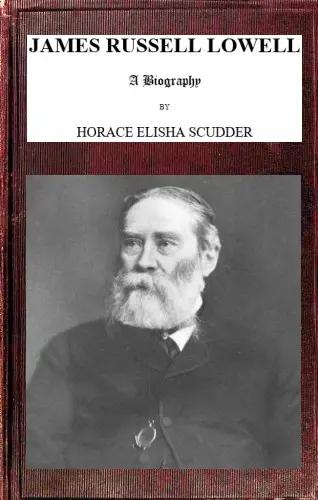
"James Russell Lowell, A Biography; vol 2/2" by Horace Elisha Scudder is a biographical account written in the early 20th century. This work explores the life and contributions of James Russell Lowell, focusing on various critical periods of his life, including his engagement in political discourse and his literary career. The biography covers Lowell's role during the Civil War, his editorial work for the Atlantic Monthly, and his political opinions, providing insight into his impact on American literature and thought, particularly surrounding issues like democracy and slavery. The opening of the biography sets the stage for a detailed examination of Lowell's engagement with the political landscape of his time, particularly during the Civil War. It discusses the establishment of the Atlantic Monthly, highlighting its intention to be a platform for both art and politics under Lowell's leadership. The author outlines how this magazine became a crucial medium for discussions about pressing national issues, including the moral and political implications of slavery. The text reflects on Lowell's fervent convictions regarding freedom and democracy, emphasizing the ethical considerations that guided his views as the nation faced tumultuous times.
Introduction adapted from the source catalogue; source summaries may be automatically generated.
Free to read · English · 135,986 words · No account needed
MAKE TIME FOR A GOOD BOOK
On by default. Untick to stop anonymous reading totals. Each page counts after 10 seconds in view. How this works.
Anonymous counting is on unless you have switched it off.
Our Young Folks, J. R. L. writes for, ii. 105.
Owens, John, publishes Conversations, i. 132; reports success of the book, 158; wishes to suppress one of J. R. L.’s anti-slavery poems, 134.
Oxford, J. R. L. goes to, for his degree, ii. 169, 170; professorship at, proposed for J. R. L., 318.
Page, William, J. R. L. meets, i. 78;
paints M. W.’s portrait, 79;
J. R. L.’s affection for, 116;
likened to Haydon, 117;
paints J. R. L.’s portrait, 117;
is shown a bit of A Fable for Critics, 240;
proposed as a beneficiary of the book, 241;
has faith in the book, 242;
paints Bryant’s portrait, 246, note;
with Briggs and Willis discusses J. R. L. and Poe, 282;
meets J. R. L. in Florence, 314;
dines with him there, 315;
meets him at Orvieto, 384.
Palfrey, John Gorham, his “History of New England”
reviewed by J. R. L., ii. 79.
Palmer, George Herbert, ii. 340.
Parable, A, i. 228.
Parker, Captain Montgomery, letter to, in China from J. R. L., i. 438.
Parker, Friend, with whom the Whites and Lowells
stayed in Philadelphia, i. 151, 152.
Parker, Theodore, editor of Massachusetts Quarterly, i. 287;
letter of J. R. L. to, 288;
characterized by J. R. L., 290, note.
Parkman, Francis, J. R. L. writes on, ii. 398.
Parnell, Charles Stewart, prosecution of, ii. 278; his extraordinary characterization of Irish-Americans, 281.
Parsons, Thomas William, contributor to the Pioneer, i. 105; J. R. L. to, on A June Idyll, ii. 117.
Peabody, Andrew Preston, editor of the North American, ii. 45.
Peirce, Benjamin, professor of mathematics at
Harvard in J. R. L.’s youth, i. 27.
Pellico, Silvio, i. 341.
Pennsylvania Academy of Fine Arts, exhibition of,
noticed by J. R. L., i. 160, 161.
Pennsylvania Freeman, J. R. L. engaged to write for, i. 152, 154; his contributions to the paper, 169-173; Letter from Boston sent to, 181.
Pepperell, Massachusetts, i. 274.
Perceval, Hugh, a nom de plume of J. R. L., i. 92, 161.
Percival, James Gates, J. R. L. on, ii. 109.
Perry, Mrs. Lilla Cabot, J. R. L. to, on Spenser, ii. 188.
Peterboro, ii. 156.
Petrarch and Michelangelo compared, ii. 111.
Phillips, Moses Dresser, i. 409;
won over to the scheme of a magazine, 410;
gives a little dinner, 410;
interests Mrs. Stowe, 412;
dies, 449.
Phillips, Wendell, contributor to the Standard, i. 193; his eloquence contrasted with that of the Charleston batteries, ii. 26.
Phillips & Sampson undertake the Atlantic Monthly, i. 408;
character of the house, 420;
J. R. L.’s duty toward, 426;
failure of, 450.
Phœbe, ii. 295.
Pickens-and-Stealins’ Rebellion, The, ii. 25.
Pictures from Appledore, ii. 302, 367.
Pioneer, The, projected by J. R. L. and R. Carter, i. 99;
prospectus of, 99, 100;
its purpose, 101;
introduction to, 103-105;
its contributors, 105;
its contents, 105;
carried on in absence of J. R. L., 106;
suspended, 107;
how it looked in New York, 109;
J. R. L.’s concern for, 110-113;
J. R. L.’s formal bow in, ii. 390.
Pipe, the, as a weather-sign, ii. 358.
Your reading position is saved on this browser. Take it to another device with a library code. Reading pages adapt to text, rather than matching a printed edition.
Horace Elisha Scudder

Horace Elisha Scudder
Horace Elisha Scudder
Horace Elisha Scudder
BEHIND THE BOOK
This eBook is for the use of anyone anywhere in the United States and most other parts of the world at no cost and with almost no restrictions whatsoever. You may copy it, give it away or re-use it under the terms of the Project Gutenberg License included with this eBook or online at www.gutenberg.org. If you are not located in the United States, you will have to check the laws of the country where you are located before using this eBook. Read the source licence.
The original source file, including credits and licence, is retained by this library. Request an original-format copy at no charge. Please include the book title and Project Gutenberg identifier #57777.
KEEP YOUR CURIOSITY GOING
Cécile Tormay

Moritz Busch
John L. Ransom
Frances Wright
Cécile Tormay

Mabel Potter Daggett