READ · DISCOVER · ENJOYClassic literature · Always free
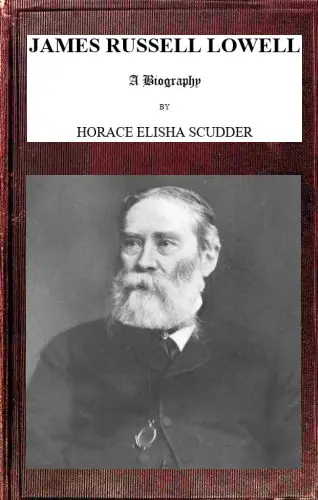
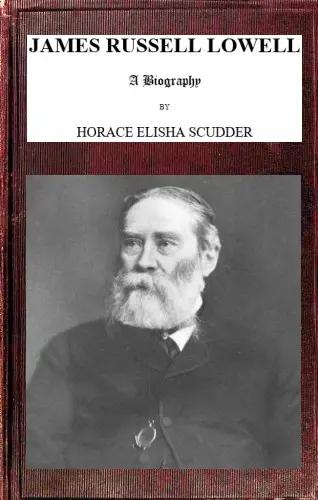
James Russell Lowell, A Biography; vol 2/2 — digital edition cover

THE CLASSIC COLLECTION · 1901

James Russell Lowell, A Biography; vol 2/2

"James Russell Lowell, A Biography; vol 2/2" by Horace Elisha Scudder is a biographical account written in the early 20th century. This work explores the life and contributions of James Russell Lowell, focusing on various critical periods of his life, including his engagement in political discourse and his literary career. The biography covers Lowell's role during the Civil War, his editorial work for the Atlantic Monthly, and his political opinions, providing insight into his impact on American literature and thought, particularly surrounding issues like democracy and slavery. The opening of the biography sets the stage for a detailed examination of Lowell's engagement with the political landscape of his time, particularly during the Civil War. It discusses the establishment of the Atlantic Monthly, highlighting its intention to be a platform for both art and politics under Lowell's leadership. The author outlines how this magazine became a crucial medium for discussions about pressing national issues, including the moral and political implications of slavery. The text reflects on Lowell's fervent convictions regarding freedom and democracy, emphasizing the ethical considerations that guided his views as the nation faced tumultuous times.

Introduction adapted from the source catalogue; source summaries may be automatically generated.

Start reading ↓

Free to read · English · 135,986 words · No account needed

MAKE TIME FOR A GOOD BOOK

James Russell Lowell, A Biography; vol 2/2

On by default. Untick to stop anonymous reading totals. Each page counts after 10 seconds in view. How this works.

Anonymous counting is on unless you have switched it off.

James Russell Lowell, A Biography; vol 2/2

Writes a political paper for the Atlantic jointly with Mr. Godwin, ii. 4;
does not reprint it, 5;
the qualities of the paper, 13;
writes a paper on American Tract Society, 13;
and two on Choate and Cushing, 14;
his main contention in these papers, 16;
identifies himself with Republican party, 17;
prefers Seward to Lincoln, 18;
his first characterization of Lincoln, 19;
his uncertainty as to results, 20;
writes on The Question of the Hour, 20;
and on secession, 23;
disappointed in Lincoln’s public utterances, 25;
writes on the English attitude, 27;
his private views on Lincoln, 29;
is anxious for his nephews, 30;
cannot write Biglows, 32;
writes The Washers of the Shroud, 33;
his refreshment in nature, 34;
writes the first of the second series of Biglow Papers, 34;
the ease with which he assumes the Yankee dialect, 35;
his greater firmness in his second series, 36;
the earnestness of his tone, 37;
his playing at old age, 38;
writes Mason and Slidell, 40;
and Sunthin’ in the Pastoral Line, 41;
writes his ode to the memory of Shaw, 42;
his
passion for freedom, 41;
undertakes with Mr. Norton the editorship of
the North American Review, 45;
is whimsically indignant over the announcement, 47;
writes to Mr. Motley for an article, 48;
stirred to action by Mr. Norton, 49;
writes on The President’s Policy, 50;
confesses his earlier doubt about Lincoln, 50;
his greater confidence in him, 51;
criticises McClellan, 52;
reexamines the causes of the war, 53;
compares the candidates for the presidency, 55;
exults in the promise of success, 57;
finds expression in verso and prose, 58;
forecasts reconstruction, 59;
rejoices over the end of the war, 60;
attacks the problem of reconstruction, 61;
writes of Lincoln’s death, 62;
called on to write his Commemoration Ode, 63;
is wasted by the work, 64;
comments on the structure of the ode, 66;
delivers it, 69;
his conception in it of Lincoln, 71;
his recognition finally of Lincoln’s greatness, 72;
finds in him the new American, 73;
his familiar letters, 74;
comments on “Miles Standish,” 75;
studies Spanish, 76;
makes his editing and teaching help each other, 77;
edits a volume of Old Dramatists, 78, note;
his loyalty to New England and America, 79;
his characterization of his ancestors, 81;
dines with Trollope, 82;
meets with the Dante Club, 84;
his relations to the whole field of intellectual life, 85;
his discourses on literature, 87;
his originality, 88;
his personality in criticism, 89;
reflex judgment on Carlyle, 89;
criticises poetry in Swinburne, 92;
his treatment of President Johnson, 93;
his poetry carries farther than his prose, 94;
entertains Cranch, 95;
writes on the weather, 96;
reflects on his personality, 99;
makes new arrangements with the college, 100;
edits Dryden, 101;
considers a biography of Hawthorne, 102;
writes to a friend on some points of speech, 103;
writes Fitz Adam’s Story, 104;
sends a fairy tale and poem to Our Young Folks, 105;
writes The Seward-Johnson Reaction, 107;
writes on Percival, 109;
his views on impeachment, 109, note;
finds a likeness to his own experience in Lessing, 110;
his use of lecturers in his essay-work, 111;
his personality in his writing, 112;
reviews Longfellow’s translation of Dante, 113;
his views on translations, 114;
his appearance at Elmwood, 115;
writes A June Idyll, 116;
collects a volume of his poetry, 118;
struggles over its title, 119;
gives expression to himself in two essays, 121;
is burdened with the North American, 122;
receives congratulations on Under the Willows, 125;
is interested in young writers, 127;
writes a letter of encouragement, 129;
writes on literary honesty, 131;
interests himself in the letters and journals of a Virginian, 135;
his sympathy with Southerners, 136;
sends his daughter abroad with Mr. and Mrs. Fields, 137;
is near being sent as minister to Spain, 138;
writes The Cathedral, 139;
defends his use of a word, 140;
his happiness in writing his poem, 142;
his hatred of debt, 143;
refuses to do hack work, 144;
lectures at Cornell, 145;
makes the acquaintance of T. Hughes, 145;
thanks R. G. White for a dedication, 146;
sells part of his estate, 147;
finds relief in this, 148;
thanks Mr. Fields for “Yesterdays with Authors,” 149;
sails for Europe with Mrs. Lowell, 150;
lands in Queenstown, 151;
visits Killarney, 152;
and Chester, 153;
is in lodgings in London, 154;
makes a tour in the north, 156;
and in the west, 157;
joins the Nortons in Paris, 158;
picks up books, 160;
works at Old French, 162:
has John Holmes for a companion, 163;
proposes to visit London to bid the Nortons good-by, 165;
is decorated with D. C. L. at Oxford, 169;
en route to Italy, 170;
is charmed with Venice, 171;
considers a return to his professorship, 172;
writes Agassiz, 174;
defends his poem, 176;
goes to Rome where he is with Story, 179;
at Naples, 180;
returns to Paris, 181;
and to London, 183;
is decorated at Cambridge, 184;
returns to America, 184;
spends the summer at home, 186;
works at Old French, 187;
writes an article on Spencer, 188;
writes Concord and Old Elm odes, 189;
shows his patriotism in Fourth of July ode, 190;
writes bitter verses for the Nation, 191;
calls out thereby cheap wrath, 192;
defends himself in a letter to Joel Benton, 193;
publishes second series of Among my Books, 196;
refers to Mr. Wilkinson’s criticism, 197;
writes on Swift, 198;
his interest in national politics, 200;
presides at a political meeting, 201;
is a delegate to Republican convention, 202;
is talked of for a foreign mission, 203;
gives expression to his political views, 204;
is asked to run for Congress, and put on the
Republican ticket as elector, 205;
makes a speech at a caucus, 206;
gives vent to his faith and doubts in Fourth of July ode, 212;
publishes Three Memorial Poems, 213;
goes to Baltimore with F. J. Child to lecture at the Johns Hopkins, 213;
is entertained, 214;
writes a sonnet to Miss Alice Gilman, 215;
is urged as elector to vote for Tilden, 216;
is asked to accept the mission to Austria, 217;
declines and is given that to Spain, 218;
meets Mr. Hayes, 219;
sails with Mrs. Lowell for Liverpool, 220;
his real preparation for his office, 221;
his official consciousness, 223;
his dislike of business, 226;
arrives with Mrs. Lowell at Madrid, 227;
is presented at Court, 227;
finds pleasant quarters, 228;
his early diplomatic duties, 229;
writes of the marriage of the king, 230;
witnesses a bull-fight, 234;
buys books, 236;
takes a two months’ leave of absence, 237;
visits Constantinople, 238;
writes of the Queen’s illness and death, 239;
devotes himself to the study of Spanish, 241;
writes of Internal affairs, 242;
his opinion as to the future of Spain, 245;
receives General Grant, 247;
a judgement on the Spanish, 248;
proposes a flying visit to America, 249;
is stayed by his wife’s illness, 250;
which proves nearly fatal, 251;
sends a despatch on the change on ministry, 253;
writes on the Cuban situation, 254;
is offered the English mission, 255;
is disturbed over his wife’s condition, 256;
goes to London, returns to Madrid and removes his wife to England, 258;
his training for the English mission, 259;
a representative of American men of letters, 260;
his friendly reception, 261;
his championship of America, 262;
in demand as an after-dinner speaker, 264;
his embarrassment from his narrow means, 265;
his social relations, 266;
plays Romeo, 267;
his official duties in connection
with the assassination of President Garfield, 268;
makes a brief trip after the death of the President, 270;
visits Weimar, 271;
joins the Fields at Venice, 272;
makes a brief stay at Paris, 273;
his judgment on Irish affairs, 274;
describes the situation to Mr. Evarts, 277;
writes on the coercion bill, 280;
criticises the bill, 281;
his attitude toward Irish-Americans, 282;
lays down course of action, 284;
corresponds with Mr. Blaine on the measures to be taken, 285;
is called upon for the facts, 288;
is denounced and defended at home, 289;
his action recognized at home and abroad, 290;
compared with Lord Granville, 291;
writes to friends of his difficulties with the Irish, 292;
characterized by Mr. Watts-Dunton, 293;
reverts to poetry, 294;
sends poems to The Century, 295;
regrets the death of R. H. Dana, 296;
has his portrait painted, 297;
his perplexities in presenting his country women at court, 298;
makes a speech on the unveiling of bust of Fielding, 298;
is candidate for rectorship of St. Andrews, 299;
withdraws his name, 300;
addresses the students at St. Andrews, 301;
his monomania on Jews 302;
unveils bust of Longfellow, 305;
receives degree at Edinburgh, 306;
speaks on the newspaper, 307;
analyses Wordsworth’s power, 309;
his attitude toward the church, 311;
his address on Democracy, 313;
tenure of his diplomatic position, 316;
his hesitation about leaving England, 317;
is sounded about accepting a professorship at Oxford, 318;
death of his wife, 319;
his words respecting her, 319, 320;
speaks on Coleridge, 321;
returns to America, 321;
makes his home for the time being at Deerfoot Farm, 322;
takes up letter-writing as an occupation, 323;
his dependence on women, 324;
goes to Washington, 324;
begins to feel his age, 325;
gives an address at Chelsea, 326;
is president of American Archæological Institute, 326;
attends a hearing on international copyright, 326;
addresses the committee, 327-332;
writes an epigram on the subject, 333;
makes an epigram on Gladstone, 334;
his life in London, 335;
is harassed by his approaching Harvard address, 337;
annoyed by an interview, 337;
delivers his oration at Harvard, 338;
edits letters of Landor, 342;
makes rhymes for Mrs. Gilder, 343, note;
writes an introduction to “The World’s Progress,” 344;
his need of economy, 349;
his reputation, capital, 350;
goes to Chicago to give an address on Washington’s Birthday, 351;
gives six lectures on the Old Dramatists before the Lowell Institute, 352;
sails for England in spring of 1888, 355;
his life at Whitby, 356;
is at work on his new volume of poems, 357;
doubts about his work, 358;
writes to Mrs. Bell about Feltham, 359;
presides at an Authors’ Reading and discourses on American literature, 361;
writes poems which reflect his deeper nature, 368;
makes a slight beginning on his Hawthorne, 372;
issues his Political Essays, 372;
utters valedictories, 373;
gives his address on The Independent in Politics, 374;
his faith in his early ideals, 376;
makes a speech before the Civil Service Reform Association, 377;
goes to England in the spring of 1888, 379;
attends commemoration at Bologna and receives a degree, 379;
is again at Whitby, 380;
his antidote to sleeplessness, 383;
visits St. Ives and returns to London, 384;
writes to Misses Lawrence, 384;
returns to America and spends the winter in Boston, 386;
visits Washington, 387;
celebrates his seventieth birthday, 387;
gives up writing a paper on John Bright, 388;
writes on Walton, 389;
makes an after-dinner speech on “Our Literature,” 390;
makes a final visit to England, 391;
writes The Brook, 393;
returns to Elmwood, 393;
works at a uniform edition of his writings, 394;
his judgment on his early poems, 395;
suffers the first severe illness of his life, 396;
writes The Infant Prodigy, 397;
receives a visit from Mr. Stephen, 398;
writes of Milton, 398;
and of Parkman, 399;
his Thou Spell, avaunt!, 399;
writes a birthday letter to Whittier, 400;
has books dedicated to him, 401;
writes of his condition to Misses Lawrence, 402;
his occupation in his last days, 406;
death of, 408.

Your reading position is saved on this browser. Take it to another device with a library code. Reading pages adapt to text, rather than matching a printed edition.

More from this author

BEHIND THE WORDS

About Horace Elisha Scudder

Horace Elisha Scudder (1838–1902). Explore Noah Webster American Men of Letters, Childhood in literature and art, with some observations on literature for children, James Russell Lowell, A Biography; vol 2/2 and other works in this collection. These books span biography & memoir, history, children’s books.
Explore this author’s books →

THE READERS’ VERDICT

How did this story stay with you?

Not rated yet
Your rating for James Russell Lowell, A Biography; vol 2/2

Be the first to share your verdict.

One rating per browser, which you can change or remove. A necessary browser identifier remembers your vote. How ratings work

A GOOD STORY DESERVES COMPANY

Pass this book along.

A great read is even better when it’s shared.

SEND A LITTLE INSPIRATION

Share this book

BEHIND THE BOOK

Edition & source details.

Title
James Russell Lowell, A Biography; vol 2/2
Author
Horace Elisha Scudder
Publication year
1901
Digital edition publisher
Project Gutenberg
Gutenberg release date
2018-08-26
Language
English
Source edition imprint
Not stated in source catalogue
Source identifier
Project Gutenberg #57777
Contributors
No additional named contributors in source metadata

Public-domain source & licence

This eBook is for the use of anyone anywhere in the United States and most other parts of the world at no cost and with almost no restrictions whatsoever. You may copy it, give it away or re-use it under the terms of the Project Gutenberg License included with this eBook or online at www.gutenberg.org. If you are not located in the United States, you will have to check the laws of the country where you are located before using this eBook. Read the source licence.

Full source licence and obtaining an original copy

The original source file, including credits and licence, is retained by this library. Request an original-format copy at no charge. Please include the book title and Project Gutenberg identifier #57777.

the full Project Gutenberg License must appear
prominently whenever any copy of a Project Gutenberg work (any work
on which the phrase “Project Gutenberg” appears, or with which the
phrase “Project Gutenberg” is associated) is accessed, displayed,
performed, viewed, copied or distributed:

This eBook is for the use of anyone anywhere in the United States and most
other parts of the world at no cost and with almost no restrictions
whatsoever. You may copy it, give it away or re-use it under the terms
of the Project Gutenberg™ License included with this eBook or online
at www.gutenberg.org. If you
are not located in the United States, you will have to check the laws
of the country where you are located before using this eBook.

1.E.2. If an individual Project Gutenberg electronic work is
derived from texts not protected by U.S. copyright law (does not
contain a notice indicating that it is posted with permission of the
copyright holder), the work can be copied and distributed to anyone in
the United States without paying any fees or charges. If you are
redistributing or providing access to a work with the phrase “Project
Gutenberg” associated with or appearing on the work, you must comply
either with the requirements of paragraphs 1.E.1 through 1.E.7 or
obtain permission for the use of the work and the Project Gutenberg
trademark as set forth in paragraphs 1.E.8 or 1.E.9.

1.E.3. If an individual Project Gutenberg electronic work is posted
with the permission of the copyright holder, your use and distribution
must comply with both paragraphs 1.E.1 through 1.E.7 and any
additional terms imposed by the copyright holder. Additional terms
will be linked to the Project Gutenberg License for all works
posted with the permission of the copyright holder found at the
beginning of this work.

1.E.4. Do not unlink or detach or remove the full Project Gutenberg
License terms from this work, or any files containing a part of this
work or any other work associated with Project Gutenberg.

1.E.5. Do not copy, display, perform, distribute or redistribute this
electronic work, or any part of this electronic work, without
prominently displaying the sentence set forth in paragraph 1.E.1 with
active links or immediate access to the full terms of the Project
Gutenberg License.

1.E.6. You may convert to and distribute this work in any binary,
compressed, marked up, nonproprietary or proprietary form, including
any word processing or hypertext form. However, if you provide access
to or distribute copies of a Project Gutenberg work in a format
other than “Plain Vanilla ASCII” or other format used in the official
version posted on the official Project Gutenberg website
(www.gutenberg.org), you must, at no additional cost, fee or expense
to the user, provide a copy, a means of exporting a copy, or a means
of obtaining a copy upon request, of the work in its original “Plain
Vanilla ASCII” or other form. Any alternate format must include the
full Project Gutenberg License as specified in paragraph 1.E.1.

1.E.7. Do not charge a fee for access to, viewing, displaying,
performing, copying or distributing any Project Gutenberg works
unless you comply with paragraph 1.E.8 or 1.E.9.

1.E.8. You may charge a reasonable fee for copies of or providing
access to or distributing Project Gutenberg electronic works
provided that:

• You pay a royalty fee of 20% of the gross profits you derive from
the use of Project Gutenberg works calculated using the method
you already use to calculate your applicable taxes. The fee is owed
to the owner of the Project Gutenberg trademark, but he has
agreed to donate royalties under this paragraph to the Project
Gutenberg Literary Archive Foundation. Royalty payments must be paid
within 60 days following each date on which you prepare (or are
legally required to prepare) your periodic tax returns. Royalty
payments should be clearly marked as such and sent to the Project
Gutenberg Literary Archive Foundation at the address specified in
Section 4, “Information about donations to the Project Gutenberg
Literary Archive Foundation.”

• You provide a full refund of any money paid by a user who notifies
you in writing (or by e-mail) within 30 days of receipt that s/he
does not agree to the terms of the full Project Gutenberg™
License. You must require such a user to return or destroy all
copies of the works possessed in a physical medium and discontinue
all use of and all access to other copies of Project Gutenberg™
works.

• You provide, in accordance with paragraph 1.F.3, a full refund of
any money paid for a work or a replacement copy, if a defect in the
electronic work is discovered and reported to you within 90 days of
receipt of the work.

• You comply with all other terms of this agreement for free
distribution of Project Gutenberg™ works.


1.E.9. If you wish to charge a fee or distribute a Project
Gutenberg™ electronic work or group of works on different terms than
are set forth in this agreement, you must obtain permission in writing
from the Project Gutenberg Literary Archive Foundation, the manager of
the Project Gutenberg™ trademark. Contact the Foundation as set
forth in Section 3 below.

1.F.

1.F.1. Project Gutenberg volunteers and employees expend considerable
effort to identify, do copyright research on, transcribe and proofread
works not protected by U.S. copyright law in creating the Project
Gutenberg™ collection. Despite these efforts, Project Gutenberg™
electronic works, and the medium on which they may be stored, may
contain “Defects,” such as, but not limited to, incomplete, inaccurate
or corrupt data, transcription errors, a copyright or other
intellectual property infringement, a defective or damaged disk or
other medium, a computer virus, or computer codes that damage or
cannot be read by your equipment.

1.F.2. LIMITED WARRANTY, DISCLAIMER OF DAMAGES - Except for the “Right
of Replacement or Refund” described in paragraph 1.F.3, the Project
Gutenberg Literary Archive Foundation, the owner of the Project
Gutenberg™ trademark, and any other party distributing a Project
Gutenberg™ electronic work under this agreement, disclaim all
liability to you for damages, costs and expenses, including legal
fees. YOU AGREE THAT YOU HAVE NO REMEDIES FOR NEGLIGENCE, STRICT
LIABILITY, BREACH OF WARRANTY OR BREACH OF CONTRACT EXCEPT THOSE
PROVIDED IN PARAGRAPH 1.F.3. YOU AGREE THAT THE FOUNDATION, THE
TRADEMARK OWNER, AND ANY DISTRIBUTOR UNDER THIS AGREEMENT WILL NOT BE
LIABLE TO YOU FOR ACTUAL, DIRECT, INDIRECT, CONSEQUENTIAL, PUNITIVE OR
INCIDENTAL DAMAGES EVEN IF YOU GIVE NOTICE OF THE POSSIBILITY OF SUCH
DAMAGE.

1.F.3. LIMITED RIGHT OF REPLACEMENT OR REFUND - If you discover a
defect in this electronic work within 90 days of receiving it, you can
receive a refund of the money (if any) you paid for it by sending a
written explanation to the person you received the work from. If you
received the work on a physical medium, you must return the medium
with your written explanation. The person or entity that provided you
with the defective work may elect to provide a replacement copy in
lieu of a refund. If you received the work electronically, the person
or entity providing it to you may choose to give you a second
opportunity to receive the work electronically in lieu of a refund. If
the second copy is also defective, you may demand a refund in writing
without further opportunities to fix the problem.

1.F.4. Except for the limited right of replacement or refund set forth
in paragraph 1.F.3, this work is provided to you ‘AS-IS’, WITH NO
OTHER WARRANTIES OF ANY KIND, EXPRESS OR IMPLIED, INCLUDING BUT NOT
LIMITED TO WARRANTIES OF MERCHANTABILITY OR FITNESS FOR ANY PURPOSE.

1.F.5. Some states do not allow disclaimers of certain implied
warranties or the exclusion or limitation of certain types of
damages. If any disclaimer or limitation set forth in this agreement
violates the law of the state applicable to this agreement, the
agreement shall be interpreted to make the maximum disclaimer or
limitation permitted by the applicable state law. The invalidity or
unenforceability of any provision of this agreement shall not void the
remaining provisions.

1.F.6. INDEMNITY - You agree to indemnify and hold the Foundation, the
trademark owner, any agent or employee of the Foundation, anyone
providing copies of Project Gutenberg™ electronic works in
accordance with this agreement, and any volunteers associated with the
production, promotion and distribution of Project Gutenberg™
electronic works, harmless from all liability, costs and expenses,
including legal fees, that arise directly or indirectly from any of
the following which you do or cause to occur: (a) distribution of this
or any Project Gutenberg work, (b) alteration, modification, or
additions or deletions to any Project Gutenberg work, and (c) any
Defect you cause.

Section 2. Information about the Mission of Project Gutenberg

Project Gutenberg is synonymous with the free distribution of
electronic works in formats readable by the widest variety of
computers including obsolete, old, middle-aged and new computers. It
exists because of the efforts of hundreds of volunteers and donations
from people in all walks of life.

Volunteers and financial support to provide volunteers with the
assistance they need are critical to reaching Project Gutenberg’s
goals and ensuring that the Project Gutenberg collection will
remain freely available for generations to come. In 2001, the Project
Gutenberg Literary Archive Foundation was created to provide a secure
and permanent future for Project Gutenberg and future
generations. To learn more about the Project Gutenberg Literary
Archive Foundation and how your efforts and donations can help, see
Sections 3 and 4 and the Foundation information page at www.gutenberg.org.

Section 3. Information about the Project Gutenberg Literary Archive Foundation

The Project Gutenberg Literary Archive Foundation is a non-profit
501(c)(3) educational corporation organized under the laws of the
state of Mississippi and granted tax exempt status by the Internal
Revenue Service. The Foundation’s EIN or federal tax identification
number is 64-6221541. Contributions to the Project Gutenberg Literary
Archive Foundation are tax deductible to the full extent permitted by
U.S. federal laws and your state’s laws.

The Foundation’s business office is located at 41 Watchung Plaza #516,
Montclair NJ 07042, USA, +1 (862) 621-9288. Email contact links and up
to date contact information can be found at the Foundation’s website
and official page at www.gutenberg.org/contact

Section 4. Information about Donations to the Project Gutenberg
Literary Archive Foundation

Project Gutenberg™ depends upon and cannot survive without widespread
public support and donations to carry out its mission of
increasing the number of public domain and licensed works that can be
freely distributed in machine-readable form accessible by the widest
array of equipment including outdated equipment. Many small donations
($1 to $5,000) are particularly important to maintaining tax exempt
status with the IRS.

The Foundation is committed to complying with the laws regulating
charities and charitable donations in all 50 states of the United
States. Compliance requirements are not uniform and it takes a
considerable effort, much paperwork and many fees to meet and keep up
with these requirements. We do not solicit donations in locations
where we have not received written confirmation of compliance. To SEND
DONATIONS or determine the status of compliance for any particular state
visit www.gutenberg.org/donate.

While we cannot and do not solicit contributions from states where we
have not met the solicitation requirements, we know of no prohibition
against accepting unsolicited donations from donors in such states who
approach us with offers to donate.

International donations are gratefully accepted, but we cannot make
any statements concerning tax treatment of donations received from
outside the United States. U.S. laws alone swamp our small staff.

Please check the Project Gutenberg web pages for current donation
methods and addresses. Donations are accepted in a number of other
ways including checks, online payments and credit card donations. To
donate, please visit: www.gutenberg.org/donate.

Section 5. General Information About Project Gutenberg electronic works

Professor Michael S. Hart was the originator of the Project
Gutenberg concept of a library of electronic works that could be
freely shared with anyone. For forty years, he produced and
distributed Project Gutenberg eBooks with only a loose network of
volunteer support.

Project Gutenberg eBooks are often created from several printed
editions, all of which are confirmed as not protected by copyright in
the U.S. unless a copyright notice is included. Thus, we do not
necessarily keep eBooks in compliance with any particular paper
edition.

Most people start at our website which has the main PG search
facility: www.gutenberg.org.

This website includes information about Project Gutenberg,
including how to make donations to the Project Gutenberg Literary
Archive Foundation, how to help produce our new eBooks, and how to
subscribe to our email newsletter to hear about new eBooks.


KEEP YOUR CURIOSITY GOING

Your next chapter awaits.