THE CLASSIC COLLECTION✦Noah Webster American Men of LettersCLASSIC FREE BOOKS
Noah Webster American Men of Letters
Horace Elisha Scudder
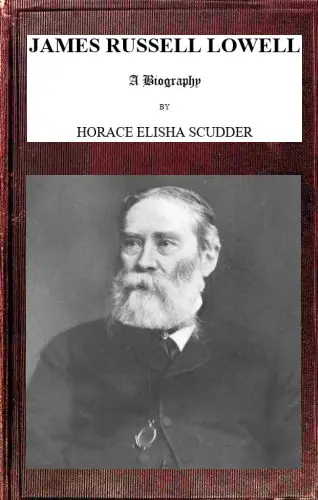
THE CLASSIC COLLECTION · 1901
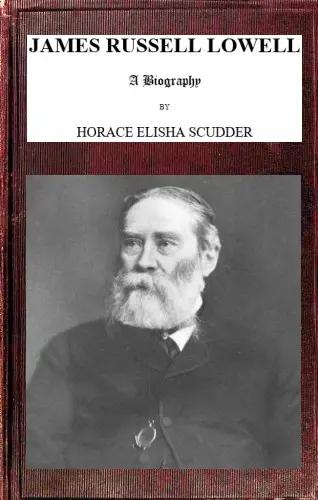
"James Russell Lowell, A Biography; vol 2/2" by Horace Elisha Scudder is a biographical account written in the early 20th century. This work explores the life and contributions of James Russell Lowell, focusing on various critical periods of his life, including his engagement in political discourse and his literary career. The biography covers Lowell's role during the Civil War, his editorial work for the Atlantic Monthly, and his political opinions, providing insight into his impact on American literature and thought, particularly surrounding issues like democracy and slavery. The opening of the biography sets the stage for a detailed examination of Lowell's engagement with the political landscape of his time, particularly during the Civil War. It discusses the establishment of the Atlantic Monthly, highlighting its intention to be a platform for both art and politics under Lowell's leadership. The author outlines how this magazine became a crucial medium for discussions about pressing national issues, including the moral and political implications of slavery. The text reflects on Lowell's fervent convictions regarding freedom and democracy, emphasizing the ethical considerations that guided his views as the nation faced tumultuous times.
Introduction adapted from the source catalogue; source summaries may be automatically generated.
Free to read · English · 135,986 words · No account needed
MAKE TIME FOR A GOOD BOOK
On by default. Untick to stop anonymous reading totals. Each page counts after 10 seconds in view. How this works.
Anonymous counting is on unless you have switched it off.
Lowell, James Russell, birth and death of, i. 1;
his appreciation of his birthplace, 1;
his ancestry, 6;
his father, 6-10;
his mother, 11, 12;
his brothers and sisters, 13-15;
his recollections of childhood, 15-18;
hears of John Adams’s death, 19;
visits Portsmouth and Washington, 19;
drives with his father on his parochial journeys, 20;
so gets acquainted with pristine New England, 20;
his first schooling, 21;
his companions, 21, 22;
attends William Wells’s school, 22-24;
tells stories and reads Scott, 24;
enters Harvard, 26;
his immaturity in college, 30;
his browsings among books, 30-33;
his intimacy with W. H. Shackford, 33;
his letters to Shackford, 34-38;
change in handwriting, 37;
his friendship with G. B. Loring, 38, 39;
letters to Loring, 39-42;
becomes editor of Harvardiana, 44;
is suspended from college, 47;
goes to Concord in consequence, 48;
meets Emerson there, 49;
makes a friend in E. R. Hoar, 50;
letters to Loring, 51-56;
defends himself against the charge of indolence, 52;
works at Class Poem, 51, 53, 54, 56;
writes an exculpatory letter to Emerson, 58;
wishes to go abroad, 62;
weighs the professions of ministry and law, 62;
his attitude toward the ministry, 63;
his need of a livelihood, 65;
takes up and abandons law, 65;
thinks of going into a store, 66;
takes his brother Robert’s place, 67;
studies the art of poetry, 67;
delivers a lecture, 67;
is in miserable dubiety, 68;
resumes the study of law, 69;
enters Mr. Loring’s office, 70;
his disappointment in love an explanation of his vacillation, 71;
finds expression in verse, 73-75;
meets Maria White, 76;
translation of experience in verse, 82-85;
is introduced by her to the Band, 89;
takes up writing as a means of support, 91;
writes for Southern Literary Messenger, 92;
publishes A Year’s Life, 93;
proposes a life of Keats, 95;
writes to Duyckinck, 95;
contributes to the Boston Miscellany, 98;
reckons his resources, 99;
projects the Pioneer, 99;
associates himself with R. Carter in the issue of the magazine, 100;
the spirit that prompted him, 102;
his principles as displayed in the Introduction to the Pioneer, 103-105;
whom he drew to his side, 105;
his attitude toward Anti-slavery, 105;
goes to New York for his eyes, 107;
his course of life there, 109;
meets N. P. Willis, 111;
undergoing operations, 113;
forms a friendship with C. F. Briggs, 114;
returns to Cambridge, 114;
after failure of the Pioneer, returns to poetry, 114;
painted by Page, 115;
his relations to Page and Briggs, 116, 117;
publishes a volume of Poems, 118;
puts his radicalism into poetry, 121;
is autobiographic also, 125;
introduces wit and humor, 128;
works over some old material and new into
Conversations on Some of the Old Poets, 132;
his reference in it to contemporaries, 135;
his enquiry in it into the nature of poetry, 137;
his attitude in it toward formal religion, 140;
his vision of the inner verity of religion, 145;
his poetic disclosure of faith, 146;
his conception of the function of the poet, 149;
publication of Conversations, 150;
marriage to Maria White, 150;
goes to Philadelphia, 152;
undertakes work on the Pennsylvania Freeman, 152;
writes of his daily life to Carter, 152-155;
proposes to contribute to the Broadway Journal, 157;
sends a “letter to Matthew Trueman,” 158;
which is declined, 159;
sends poems and criticisms, 160;
writes for Graham’s Magazine, 161;
writes a sketch of Poe, 162;
comments on Poe, 163-167;
breathes the air of anti-slavery, 168;
sends stanzas to Boston Courier, 168;
his articles in Pennsylvania Freeman, 169, 173;
visits the Davis family, 173;
returns to Cambridge, 173;
writes his verses On the Capture of Fugitive Slaves near Washington, 174;
his attitude toward disunion, 175;
becomes distinctly a man of letters, 176;
he and Mrs. Lowell fall heirs to property, 177;
his indifference to wealth, 177 and note;
proposes a sojourn abroad, 178;
birth of his first born, 178;
his reflections before her birth, 179;
contributions to Liberty Bell, 180;
writes to Briggs about Blanche, 181;
studies French, 182;
discusses the suppression of Longfellow’s “Poems on Slavery,” 183, 184;
his views on the education of Blanche, 185;
contributes to the London Daily News, 186;
his judgment of Garrison, 187-190;
writes Lines on the Death of Charles Turner Torrey, 191;
becomes a contributor to the National Anti-Slavery Standard, 193;
writes to S. H. Gay on his proposed close
connection with that journal, 194-200;
writes his first Biglow Paper, 201;
contributes a paper to Standard on Daniel Webster, 201;
becomes “corresponding
editor” of the Standard, 202;
his salary for this, 202;
his Ode to France his first regular contribution, 204;
his article on The French Revolution of 1848, 204;
continues the discussion, 205;
his verses To Lamartine, 206;
writes an article Shall we ever be Republicans, 207;
his conceit of The Sacred Parasol, 209;
the reënforcement he brought to the Anti-slavery camp, 211;
is doubtful about his service, 212;
writes on The Nominations for the Presidency, 213;
writes An Imaginary Conversation, 215;
his comment on Jefferson, 218, note;
his interest in public men, 219;
especially in Webster, 220;
his articles on this statesman, 220-227;
the poems he contributed to the Standard, 227, 228;
his relations to the anti-slavery leaders, 228-232;
accepts a modification of his connection with the Standard, 233;
close of his engagement, 234;
the part he had played, 235, 236;
the worth his connection had been to him, 236;
his charity toward friends and opponents, 237;
begins on A Fable for Critics, 238;
sends specimens to Briggs, 239;
promises the book as a New Year’s gift, 240;
advises as to publication, 241;
is amused over Briggs’s disposition of anticipated profits, 243;
insists upon the freedom of the gift, 244;
reports progress, 245;
explains origin of passage on bores, 246;
finishes the book, 247;
gives direction about title-page, 249:
his after judgment of the poem, 252;
shows his independence in it, 254;
and his nature generally, 255;
his Biglow Papers, 255;
wishes he had used a nom de plume, 256;
gives his views on the political condition which gave rise to the book, 257;
his two poems suggested by Garrison and the Liberator, 258-260;
questions the bad spelling of Hosea, 261;
collects the papers into a volume, 262;
proposes an external fitness, 263;
writes of the success of the book, 264;
discloses his personality in it, 265;
writes The Vision of Sir Launfal, 266;
his conception of his poetry, 267;
is the poet of June, 269;
his whist club, 271;
goes to Stockbridge, 272;
loses his child Blanche, 273;
attempts tragedy, 274;
writes to Carter at Pepperell, 274;
writes to Briggs of the preparation of a volume of poems, 276;
his seclusion, 280;
confesses impecuniosity, 281;
his effort to help Hawthorne, 283;
meditates a magazine, 287;
writes to Theodore Parker on contributions to
the Massachusetts Quarterly, 288;
contributes papers to the North American, 290;
writes to Briggs respecting American society, 296;
on current English writers, 297;
is described in his home by Miss Bremer, 298;
issues his Poems in two volumes, 299;
proposes The Nooning, 300;
his views on his poetic vocation, 302;
defends his sister on the Hungarian question, 304;
loses his child Rose, 304;
and his mother, 305;
birth of his child Walter, 305;
jests on the boy’s birthday, 306;
plans for a year in Europe, 307;
sails with his family, 309;
describes voyage, 309;
halts at Malta, 314;
describes his life at Florence, 315;
hears of his father’s illness, 316;
leaves for Rome, 317;
describes arrival in Rome, 318;
joins English and American friends, 320;
compares Roman with Lombard churches, 321;
visits the Campagna, 322;
describes his Christmas in Rome, 323;
criticises Roman architecture, 327;
comments on the people he sees, 328;
describes his habit of studying pictures, 330;
takes part in private theatricals, 331;
writes their grandfather of his children, 334;
loses his only son, 338;
describes Easter Sunday, 339;
his final impressions of Rome, 342;
makes an excursion to Subiaco, 343;
travels to Naples, 343;
is in England, 345;
takes passage for America, 345;
makes the acquaintance on shipboard of Thackeray and Clough, 346;
his opinion of Clough’s “Bothie,” 347;
projects a novel, 347;
abandons the attempt, 348;
begins Our Own for Putnam’s Monthly, 351;
contributes A Moosehead Journal, 353;
and Cambridge Thirty Years Ago, 354;
interests himself in Underwood’s magazine, 355;
loses his wife, 357;
has dreams of her and Walter, 358;
prints her poems, 359; his solitude, 361;
takes comfort in his daughter, 363;
engages in literary jobs, 364;
spends a summer in Beverly, 365;
makes the acquaintance of Stillman, 367;
writes Ode to Happiness, 368;
lectures on poetry before the Lowell Institute, 370;
is appointed successor to Longfellow in the
Smith professorship at Harvard, 376;
goes West on a lecturing tour, 378;
has a farewell dinner given him, 378;
sails for Havre, 380;
goes to Paris and Chartres, 380;
to London, 381;
settles in Dresden for autumn and winter, 381;
takes lessons in German and Spanish, 382;
goes to Italy in the spring, 383;
returns to Dresden and to America, 381;
establishes himself at Dr. Howe’s, 384;
takes up his college work, 385;
discourses on philology and æsthetics, 386;
on the modern languages compared with the
ancient as disciplinary studies, 387;
the character of his teaching, 388;
his interest in literature as compelling force, 389;
his indebtedness to Dante, 390;
his relation to students, 391;
his use of object-aids, 392;
his manner in teaching, 393;
his indifference to academic routine, 395;
the generosity of his teaching-gifts, 396;
his hospitality to his students, 398;
what he got from his teaching, 399;
effect of academic life on productiveness, 400;
second marriage, 401;
comments on his wife and her family, 401, 402;
goes to the Adirondacks, 404;
his appreciation of wild life, 405;
his attitude toward poetry, 406;
asked to edit a magazine, 408;
goes to dine with M. D. Phillips, 411;
becomes editor of the Atlantic, 412;
makes it a condition that Dr. Holmes shall contribute, 413;
writes to Emerson on his contributions, 414;
and to Whittier, 417;
writes regarding terms of payment, 421;
to R. G. White on anonymity, 422;
compares the situation with that of a later date, 423;
upon the independence of the magazine, 424;
his qualifications for his post, 425;
his editorial function compared with that of his successors, 427;
his attitude toward contributors, 428;
his weariness of his routine, 429;
his regard for criticism, 430;
his own work as reviewer, 432;
his thoroughness, 433;
his injection of fun, 434;
his proposal to dictate five love-stories at once, 437;
writes a Lambish letter to Captain Parker, 438;
his impatience over details, 441;
his respect for proof-reading, 444;
his loss of spontaneity, 445;
his diversion, 446;
goes to club dinners, 447;
his critical faculty, 449;
concerned over the transfer of the Atlantic, 450;
gives his judgment of Ticknor & Fields, 451;
yields editorship of Atlantic to Mr. Fields, 453;
returns to Elmwood to live, 453;
views on his own poetry, 454.
Your reading position is saved on this browser. Take it to another device with a library code. Reading pages adapt to text, rather than matching a printed edition.
Horace Elisha Scudder

Horace Elisha Scudder
Horace Elisha Scudder
Horace Elisha Scudder
BEHIND THE BOOK
This eBook is for the use of anyone anywhere in the United States and most other parts of the world at no cost and with almost no restrictions whatsoever. You may copy it, give it away or re-use it under the terms of the Project Gutenberg License included with this eBook or online at www.gutenberg.org. If you are not located in the United States, you will have to check the laws of the country where you are located before using this eBook. Read the source licence.
The original source file, including credits and licence, is retained by this library. Request an original-format copy at no charge. Please include the book title and Project Gutenberg identifier #57777.
KEEP YOUR CURIOSITY GOING
Cécile Tormay

Moritz Busch
John L. Ransom
Frances Wright
Cécile Tormay

Mabel Potter Daggett