READ · DISCOVER · ENJOYClassic literature · Always free
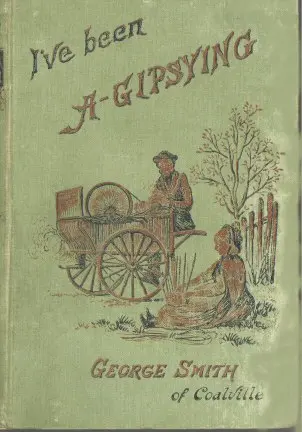
I’ve been a Gipsying or, Rambles among our Gipsies and their children in their tents and vans — digital edition cover

THE CLASSIC COLLECTION · 1883

I’ve been a Gipsying or, Rambles among our Gipsies and their children in their tents and vans

"I've Been a Gipsying" by George Smith is a travelogue written in the late 19th century. The book documents the author’s experiences and observations among the gipsy communities in England, particularly focusing on their children, culture, and living conditions. Through a series of excursions, he seeks to portray the realities of gipsy life, shedding light on their hardships and the neglect faced by their young ones. The opening of the book introduces the reader to the author's intention of conveying both the struggles and joys of gipsy life. On a rainy Sunday, Smith embarks on a journey to visit gipsy children living in squalor on the outskirts of London. He vividly describes their impoverished living conditions, illustrating their lack of education and basic needs, and expressing a deep concern for their wellbeing. The author's empathetic storytelling aims to evoke a sense of urgency for social change, highlighting the stark contrast between the gipsy children's lives and the privileged existence of other children nearby.

Introduction adapted from the source catalogue; source summaries may be automatically generated.

Start reading ↓

Free to read · English · 132,003 words · No account needed

MAKE TIME FOR A GOOD BOOK

I’ve been a Gipsying or, Rambles among our Gipsies and their children in their tents and vans

On by default. Untick to stop anonymous reading totals. Each page counts after 10 seconds in view. How this works.

Anonymous counting is on unless you have switched it off.

I’ve been a Gipsying or, Rambles among our Gipsies and their children in their tents and vans

In the midst of this large group of idle men and women, ragged, dirty, unkempt, and ignorant children with matted hair, there were two of the Smith damsels—say, of about eighteen or twenty years—dressed in all the gay and lively colours imaginable, whose business was not to attend to the cocoa-nut “set outs,” but to wheedle their way with gipsy fascination amongst the crowd of race-goers, to gain “coppers” in all sorts of questionable ways of those “greenhorns” who choose to listen to their “witching” tales of gipsydom. Their “lurchers” and “snap” dogs came and smelt at my pantaloons, and skulked away with their tails between their legs.

Upon the course there were over thirty adult gipsies, and nearly forty children living in tents and vans, and connected in one way or other with the gipsy Smiths, Greens, Hollands, Stanleys, and Claytons, not one of whom—excepting one Stanley—could read and write a simple sentence out of any book, and attended neither a place of worship nor any Sunday or day school. When I explained to them the plan I proposed for registering their vans, and bringing the children within reach of the schoolmaster, they one and all agreed to it without any hesitation, and said as follows, that “it would be the best thing in the world, and unitedly expressed more than once, ‘Thank you, sir,’ ‘Thank you, sir.’”

Rain was now coming down, and the races were about to commence; therefore my gipsy congregation had begun to find its way to the various cocoa-nut establishments to begin business in earnest. With this exodus going on around me, and in the midst of oaths, swearing, betting, banging, cheating, lying, shouting, and thrashing, I turned quickly into Alfred Clayton’s van to have a friendly chat with him with “closed doors.” The conversation I had with him earlier in the afternoon led me to think that some kind of influence had been at work with him that one does not see in a thousand times among gipsies. Evidently a softening process had taken hold of him which I wanted to hear more about. With his wife and another gipsy friend in charge of his cocoa-nut business, we closed the door of the van, and he began his tale in answer to my questions. I asked him whether they had always been gipsies. To which he answered as follows: “My grandfather was a ‘stockiner’ at Barlestone, and lived in a cottage there; but in course of time he began to do a little hawking, first out of a basket round the villages, and then in a cart round the country. He then took to a van; and the same thing may be said of the Claytons. Originally they were ‘stockiners’ at Barwell, a village close to Barlestone, and began to travel as my grandfather and father had done. Thus you will see that the two families of gipsies, Claytons and Hollands, are mixed up pretty much. My father is, as you know, a Holland, and my mother a Clayton, whose name I take. At the present time, out of the original family of Hollands at Barlestone, and the original family of Claytons at Barwell, there are seven families of Hollands travelling the country at the present time, and fifteen families of Claytons travelling in various parts of Staffordshire and other places.” From the original two families it will be seen that there are over a hundred and fifty men, women, and children who have taken to gipsying within the last fifty years, not half a dozen of whom can read and write, with all the attendant consequences of this kind of a vagabond rambling life; which the more we look into, it is plain that Christianity and civilization, as we have put them forth to reclaim those of our own brothers and sisters near home, have proved a failure, not on account of the blessed influences of themselves being not powerful enough, but in the lack of the application of them to the gipsies by those who profess to have received those world-moving principles in their hearts. In the midst of this dark mass of human beings moving to and fro upon our lovely England, one little cheering ray is to be seen. Alfred Clayton tells us this. When he was staying at Leicester with his van some three years since, he stole like a thief in the night into the “Salvation Warehouse” at the bottom of Belgrave Gate, and while he was there an influence penetrated through the hardened coats of ignorance and crime, and the ramification of sin in all its worst shape to the depth of his heart, and awakened a chord of sympathy in his nature which has not died out, or wholly left him to this day. “Jesus the name high over all” caused him to open his ears in a manner they had never been opened before, and wonder what it all meant. This visit to the “Salvation warehouse” was not lost upon him, or without its effects upon his conduct. One cold wintry day, some two years ago, he was staying with his wife and family in this van on the roadside between Atherstone and Hinckley, when a youth, apparently about eighteen years old, came limping along the road, dressed in what had once been a fashionable suit of clothes, but now was little better than rags. His face was thin and pale, and his fingers long, and his neck bare. Upon his feet were two odd old worn-out shoes, and without stockings upon his legs; and as the forlorn youth neared the van and its occupants at dusk, he said, “Will you please give me a bit of bread, for I feel very hungry.” Clayton said, without much inquiry and hesitation, “Come into the van and warm yourself,” and while the youth was doing so, they got ready a crust of bread and cheese and some tea, which were devoured ravenously. Clayton learned that the stranger was related to one of the leading manufacturers named at Leicester, and well known as being rich; but unfortunately for the poor youth, his father died, and his stepmother had sold everything and cleared away to America, leaving this well-educated lad without any money, or means of earning money, to grapple with the world and its difficulties for a livelihood as best he could. Clayton, in the kindness of his heart, took the youth into the van, and he travelled up and down the country with them as one of their own during the space of two years, when owing to “his being a gentleman,” and a “capital scollard,” he was helpful to the gipsy family in more ways than one. After the two years’ gipsying spent by the youth with his kind friends the Claytons in rambling about the country, some kind friends at Atherstone took pity on him, and he is there to-day, gradually working his position back into civilized society, and a respectable member of the community, notwithstanding the treatment he has received at the hands of his cruel stepmother. After the meeting at the “Salvation Warehouse” Clayton had been seen and heard more than once, checking swearing and other sins so common to gipsies; but had never finally decided to leave gipsying and begin a better life until last Christmas. The steps which led up to his “great resolve,” he related to me as follows: “Mr. Smith, you must know that I have been about as bad a man as could be found anywhere. I felt at times, through drink and other things, that I would as soon murder somebody as I would eat my supper; in fact, I didn’t care what I did; and things went on in this way till my little girl, about three years old, and who I loved to the bottom of my heart, was taken ill and died. She had such bright eyes, a lovely face, and curls upon her head. She was my darling pet, and always met me with a smile; but she died and lies buried in Polesworth churchyard.” At this Clayton burst into crying and sobbing like a child. “I vowed,” said Clayton, “on the day, at the side of the grave, she, my poor darling, was buried, that I would not touch drink for a month, and do you know, Mr. Smith of Coalville, when the month was gone, I did not feel to crave for drink any more, and I have not had any up till now.” He now dried his eyes, and his face brightened up with a smile, and I said to him in the van, “Let us kneel down and thank God for helping you to make this resolution, and for grace to help you to keep it.” In the midst of the hum, shouting, and swearing of the races, we shut the door of the van; and after we had got off our knees, he knelt down again and again, and began to pray, with tears in his eyes, as follows:—

Your reading position is saved on this browser. Take it to another device with a library code. Reading pages adapt to text, rather than matching a printed edition.

More from this author

BEHIND THE WORDS

About George Smith

George Smith (1831–1895). Explore I’ve been a Gipsying or, Rambles among our Gipsies and their children in their tents and vans, Henry Martyn, Saint and Scholar First Modern Missionary to the Mohammedans, 1781-1812, Gipsy Life Being an account of our Gipsies and their children, with suggestions for their improvement in this collection. These books span travel & exploration, biography & memoir, history.

Explore this author’s books →

THE READERS’ VERDICT

How did this story stay with you?

Not rated yet
Your rating for I’ve been a Gipsying or, Rambles among our Gipsies and their children in their tents and vans

Be the first to share your verdict.

One rating per browser, which you can change or remove. A necessary browser identifier remembers your vote. How ratings work

A GOOD STORY DESERVES COMPANY

Pass this book along.

A great read is even better when it’s shared.

SEND A LITTLE INSPIRATION

Share this book

BEHIND THE BOOK

Edition & source details.

Title
I’ve been a Gipsying or, Rambles among our Gipsies and their children in their tents and vans
Author
George Smith
First publication (Open Library catalogue match)
1883
Digital edition publisher
Project Gutenberg
Gutenberg release date
2020-06-20
Language
English
Source edition imprint
Not stated in source catalogue
Source identifier
Project Gutenberg #62432
Contributors
No additional named contributors in source metadata

Public-domain source & licence

This eBook is for the use of anyone anywhere in the United States and most other parts of the world at no cost and with almost no restrictions whatsoever. You may copy it, give it away or re-use it under the terms of the Project Gutenberg License included with this eBook or online at www.gutenberg.org. If you are not located in the United States, you will have to check the laws of the country where you are located before using this eBook. Read the source licence.

Full source licence and obtaining an original copy

The original source file, including credits and licence, is retained by this library. Request an original-format copy at no charge. Please include the book title and Project Gutenberg identifier #62432.

the full Project Gutenberg License must appear
prominently whenever any copy of a Project Gutenberg work (any work
on which the phrase “Project Gutenberg” appears, or with which the
phrase “Project Gutenberg” is associated) is accessed, displayed,
performed, viewed, copied or distributed:

This eBook is for the use of anyone anywhere in the United States and most
other parts of the world at no cost and with almost no restrictions
whatsoever. You may copy it, give it away or re-use it under the terms
of the Project Gutenberg™ License included with this eBook or online
at www.gutenberg.org. If you
are not located in the United States, you will have to check the laws
of the country where you are located before using this eBook.

1.E.2. If an individual Project Gutenberg electronic work is
derived from texts not protected by U.S. copyright law (does not
contain a notice indicating that it is posted with permission of the
copyright holder), the work can be copied and distributed to anyone in
the United States without paying any fees or charges. If you are
redistributing or providing access to a work with the phrase “Project
Gutenberg” associated with or appearing on the work, you must comply
either with the requirements of paragraphs 1.E.1 through 1.E.7 or
obtain permission for the use of the work and the Project Gutenberg
trademark as set forth in paragraphs 1.E.8 or 1.E.9.

1.E.3. If an individual Project Gutenberg electronic work is posted
with the permission of the copyright holder, your use and distribution
must comply with both paragraphs 1.E.1 through 1.E.7 and any
additional terms imposed by the copyright holder. Additional terms
will be linked to the Project Gutenberg License for all works
posted with the permission of the copyright holder found at the
beginning of this work.

1.E.4. Do not unlink or detach or remove the full Project Gutenberg
License terms from this work, or any files containing a part of this
work or any other work associated with Project Gutenberg.

1.E.5. Do not copy, display, perform, distribute or redistribute this
electronic work, or any part of this electronic work, without
prominently displaying the sentence set forth in paragraph 1.E.1 with
active links or immediate access to the full terms of the Project
Gutenberg License.

1.E.6. You may convert to and distribute this work in any binary,
compressed, marked up, nonproprietary or proprietary form, including
any word processing or hypertext form. However, if you provide access
to or distribute copies of a Project Gutenberg work in a format
other than “Plain Vanilla ASCII” or other format used in the official
version posted on the official Project Gutenberg website
(www.gutenberg.org), you must, at no additional cost, fee or expense
to the user, provide a copy, a means of exporting a copy, or a means
of obtaining a copy upon request, of the work in its original “Plain
Vanilla ASCII” or other form. Any alternate format must include the
full Project Gutenberg License as specified in paragraph 1.E.1.

1.E.7. Do not charge a fee for access to, viewing, displaying,
performing, copying or distributing any Project Gutenberg works
unless you comply with paragraph 1.E.8 or 1.E.9.

1.E.8. You may charge a reasonable fee for copies of or providing
access to or distributing Project Gutenberg electronic works
provided that:

• You pay a royalty fee of 20% of the gross profits you derive from
the use of Project Gutenberg works calculated using the method
you already use to calculate your applicable taxes. The fee is owed
to the owner of the Project Gutenberg trademark, but he has
agreed to donate royalties under this paragraph to the Project
Gutenberg Literary Archive Foundation. Royalty payments must be paid
within 60 days following each date on which you prepare (or are
legally required to prepare) your periodic tax returns. Royalty
payments should be clearly marked as such and sent to the Project
Gutenberg Literary Archive Foundation at the address specified in
Section 4, “Information about donations to the Project Gutenberg
Literary Archive Foundation.”

• You provide a full refund of any money paid by a user who notifies
you in writing (or by e-mail) within 30 days of receipt that s/he
does not agree to the terms of the full Project Gutenberg™
License. You must require such a user to return or destroy all
copies of the works possessed in a physical medium and discontinue
all use of and all access to other copies of Project Gutenberg™
works.

• You provide, in accordance with paragraph 1.F.3, a full refund of
any money paid for a work or a replacement copy, if a defect in the
electronic work is discovered and reported to you within 90 days of
receipt of the work.

• You comply with all other terms of this agreement for free
distribution of Project Gutenberg™ works.


1.E.9. If you wish to charge a fee or distribute a Project
Gutenberg™ electronic work or group of works on different terms than
are set forth in this agreement, you must obtain permission in writing
from the Project Gutenberg Literary Archive Foundation, the manager of
the Project Gutenberg™ trademark. Contact the Foundation as set
forth in Section 3 below.

1.F.

1.F.1. Project Gutenberg volunteers and employees expend considerable
effort to identify, do copyright research on, transcribe and proofread
works not protected by U.S. copyright law in creating the Project
Gutenberg™ collection. Despite these efforts, Project Gutenberg™
electronic works, and the medium on which they may be stored, may
contain “Defects,” such as, but not limited to, incomplete, inaccurate
or corrupt data, transcription errors, a copyright or other
intellectual property infringement, a defective or damaged disk or
other medium, a computer virus, or computer codes that damage or
cannot be read by your equipment.

1.F.2. LIMITED WARRANTY, DISCLAIMER OF DAMAGES - Except for the “Right
of Replacement or Refund” described in paragraph 1.F.3, the Project
Gutenberg Literary Archive Foundation, the owner of the Project
Gutenberg™ trademark, and any other party distributing a Project
Gutenberg™ electronic work under this agreement, disclaim all
liability to you for damages, costs and expenses, including legal
fees. YOU AGREE THAT YOU HAVE NO REMEDIES FOR NEGLIGENCE, STRICT
LIABILITY, BREACH OF WARRANTY OR BREACH OF CONTRACT EXCEPT THOSE
PROVIDED IN PARAGRAPH 1.F.3. YOU AGREE THAT THE FOUNDATION, THE
TRADEMARK OWNER, AND ANY DISTRIBUTOR UNDER THIS AGREEMENT WILL NOT BE
LIABLE TO YOU FOR ACTUAL, DIRECT, INDIRECT, CONSEQUENTIAL, PUNITIVE OR
INCIDENTAL DAMAGES EVEN IF YOU GIVE NOTICE OF THE POSSIBILITY OF SUCH
DAMAGE.

1.F.3. LIMITED RIGHT OF REPLACEMENT OR REFUND - If you discover a
defect in this electronic work within 90 days of receiving it, you can
receive a refund of the money (if any) you paid for it by sending a
written explanation to the person you received the work from. If you
received the work on a physical medium, you must return the medium
with your written explanation. The person or entity that provided you
with the defective work may elect to provide a replacement copy in
lieu of a refund. If you received the work electronically, the person
or entity providing it to you may choose to give you a second
opportunity to receive the work electronically in lieu of a refund. If
the second copy is also defective, you may demand a refund in writing
without further opportunities to fix the problem.

1.F.4. Except for the limited right of replacement or refund set forth
in paragraph 1.F.3, this work is provided to you ‘AS-IS’, WITH NO
OTHER WARRANTIES OF ANY KIND, EXPRESS OR IMPLIED, INCLUDING BUT NOT
LIMITED TO WARRANTIES OF MERCHANTABILITY OR FITNESS FOR ANY PURPOSE.

1.F.5. Some states do not allow disclaimers of certain implied
warranties or the exclusion or limitation of certain types of
damages. If any disclaimer or limitation set forth in this agreement
violates the law of the state applicable to this agreement, the
agreement shall be interpreted to make the maximum disclaimer or
limitation permitted by the applicable state law. The invalidity or
unenforceability of any provision of this agreement shall not void the
remaining provisions.

1.F.6. INDEMNITY - You agree to indemnify and hold the Foundation, the
trademark owner, any agent or employee of the Foundation, anyone
providing copies of Project Gutenberg™ electronic works in
accordance with this agreement, and any volunteers associated with the
production, promotion and distribution of Project Gutenberg™
electronic works, harmless from all liability, costs and expenses,
including legal fees, that arise directly or indirectly from any of
the following which you do or cause to occur: (a) distribution of this
or any Project Gutenberg work, (b) alteration, modification, or
additions or deletions to any Project Gutenberg work, and (c) any
Defect you cause.

Section 2. Information about the Mission of Project Gutenberg

Project Gutenberg is synonymous with the free distribution of
electronic works in formats readable by the widest variety of
computers including obsolete, old, middle-aged and new computers. It
exists because of the efforts of hundreds of volunteers and donations
from people in all walks of life.

Volunteers and financial support to provide volunteers with the
assistance they need are critical to reaching Project Gutenberg’s
goals and ensuring that the Project Gutenberg collection will
remain freely available for generations to come. In 2001, the Project
Gutenberg Literary Archive Foundation was created to provide a secure
and permanent future for Project Gutenberg and future
generations. To learn more about the Project Gutenberg Literary
Archive Foundation and how your efforts and donations can help, see
Sections 3 and 4 and the Foundation information page at www.gutenberg.org.

Section 3. Information about the Project Gutenberg Literary Archive Foundation

The Project Gutenberg Literary Archive Foundation is a non-profit
501(c)(3) educational corporation organized under the laws of the
state of Mississippi and granted tax exempt status by the Internal
Revenue Service. The Foundation’s EIN or federal tax identification
number is 64-6221541. Contributions to the Project Gutenberg Literary
Archive Foundation are tax deductible to the full extent permitted by
U.S. federal laws and your state’s laws.

The Foundation’s business office is located at 41 Watchung Plaza #516,
Montclair NJ 07042, USA, +1 (862) 621-9288. Email contact links and up
to date contact information can be found at the Foundation’s website
and official page at www.gutenberg.org/contact

Section 4. Information about Donations to the Project Gutenberg
Literary Archive Foundation

Project Gutenberg™ depends upon and cannot survive without widespread
public support and donations to carry out its mission of
increasing the number of public domain and licensed works that can be
freely distributed in machine-readable form accessible by the widest
array of equipment including outdated equipment. Many small donations
($1 to $5,000) are particularly important to maintaining tax exempt
status with the IRS.

The Foundation is committed to complying with the laws regulating
charities and charitable donations in all 50 states of the United
States. Compliance requirements are not uniform and it takes a
considerable effort, much paperwork and many fees to meet and keep up
with these requirements. We do not solicit donations in locations
where we have not received written confirmation of compliance. To SEND
DONATIONS or determine the status of compliance for any particular state
visit www.gutenberg.org/donate.

While we cannot and do not solicit contributions from states where we
have not met the solicitation requirements, we know of no prohibition
against accepting unsolicited donations from donors in such states who
approach us with offers to donate.

International donations are gratefully accepted, but we cannot make
any statements concerning tax treatment of donations received from
outside the United States. U.S. laws alone swamp our small staff.

Please check the Project Gutenberg web pages for current donation
methods and addresses. Donations are accepted in a number of other
ways including checks, online payments and credit card donations. To
donate, please visit: www.gutenberg.org/donate.

Section 5. General Information About Project Gutenberg electronic works

Professor Michael S. Hart was the originator of the Project
Gutenberg concept of a library of electronic works that could be
freely shared with anyone. For forty years, he produced and
distributed Project Gutenberg eBooks with only a loose network of
volunteer support.

Project Gutenberg eBooks are often created from several printed
editions, all of which are confirmed as not protected by copyright in
the U.S. unless a copyright notice is included. Thus, we do not
necessarily keep eBooks in compliance with any particular paper
edition.

Most people start at our website which has the main PG search
facility: www.gutenberg.org.

This website includes information about Project Gutenberg,
including how to make donations to the Project Gutenberg Literary
Archive Foundation, how to help produce our new eBooks, and how to
subscribe to our email newsletter to hear about new eBooks.


KEEP YOUR CURIOSITY GOING

Your next chapter awaits.

Your privacy choices

Reading is always free. You can change these settings at any time.

Book banners link to our books on simonward.net. They do not use advertising cookies or tracking.

Privacy & cookie policy · Reading data and privacy controls