THE CLASSIC COLLECTION✦Henry Martyn, Saint and Scholar First Modern Missionary to the Mohammedans, 1781-1812CLASSIC FREE BOOKS
Henry Martyn, Saint and Scholar First Modern Missionary to the Mohammedans, 1781-1812
George Smith
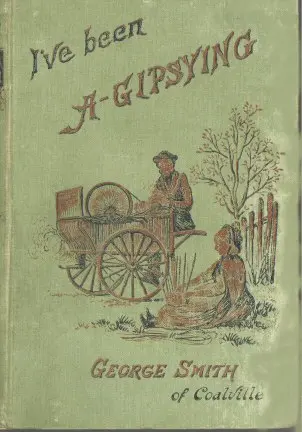
THE CLASSIC COLLECTION · 1883
"I've Been a Gipsying" by George Smith is a travelogue written in the late 19th century. The book documents the author’s experiences and observations among the gipsy communities in England, particularly focusing on their children, culture, and living conditions. Through a series of excursions, he seeks to portray the realities of gipsy life, shedding light on their hardships and the neglect faced by their young ones. The opening of the book introduces the reader to the author's intention of conveying both the struggles and joys of gipsy life. On a rainy Sunday, Smith embarks on a journey to visit gipsy children living in squalor on the outskirts of London. He vividly describes their impoverished living conditions, illustrating their lack of education and basic needs, and expressing a deep concern for their wellbeing. The author's empathetic storytelling aims to evoke a sense of urgency for social change, highlighting the stark contrast between the gipsy children's lives and the privileged existence of other children nearby.
Introduction adapted from the source catalogue; source summaries may be automatically generated.
Free to read · English · 132,003 words · No account needed
MAKE TIME FOR A GOOD BOOK
On by default. Untick to stop anonymous reading totals. Each page counts after 10 seconds in view. How this works.
Anonymous counting is on unless you have switched it off.
I once worked for a master in the slave yards of Brickdom in Staffordshire, who owned a bulldog. This dog took it into his head one day to leave its cruel master, and seek fresh lodgings of a better kind. Spying its opportunity, off it started out of the brickyard as if it was shot out of a gun; and the master for whom I slaved could not whistle, and knowing that I could whistle as well as I could cry and sing, bawled out to me, “Whistle him, whistle him, or I’ll black your eye! I’ve lost a dog worth five shillings; whistle him!” Of course, under the circumstances, trembling with fear and fright, I could not “whistle” very loud. The consequence was, the dog was lost, and I got a “good kick and a punch.” If the inspector could have whistled for the lost dog in the tones of its mistress, it would have saved his legs and brought the dog back to its comfortable home.
I was no sooner upon the racecourse, paddling through the quagmire, than I was brought face to face with some of the gipsies—the Hollands and the Claytons. I had not long been talking to them before one of the old Hollands came up to me and said, “I know who you are, Mr. Smith of Coalville; lend’s your hand, and let’s have a good shake. I would not mind giving five shillings for your likeness.” I told him he need not be at the expense of giving five shillings for a flattering photograph; he could have a good stare at the original, with all its faults, blemishes, and scars, for nothing. In my hands were a lot of picture cards for the gipsy children, given to me by the Religious Tract Society, upon which were a lot of texts of Scripture, in pretty patterns. Some of them read as follows: “My son, forget not my law;” “Thou art my trust from my youth;” “Thou God seest me;” “Thy word is a lamp unto my feet;” “My son, give me thine heart;” “Wisdom is more precious than rubies;” “Enter not into the path of the wicked;” “Even a child is known by his doings;” “Feed my lambs;” “Hear instruction, and be wise;” “Show piety at home;” “The Lord bless and keep thee;” “The Lord preserveth all them that love Him;” “I will guide thee with mine eye;” “The Lord shall preserve thee from all evil;” and many more. Immediately I had begun to distribute them among the children clustered round me, Alfred Clayton came up to me, as close as he could get, and he said, as I read out some of the texts to the children “I do like them; I could die by them; I’d sooner have some of them than a meal’s meat at any time. Do give me some, Mr. Smith, and I’ll get somebody to read them to me, and will take great care of them. I’ll have them framed and hung up.” The Hollands now asked me to go into their van, which invitation I gladly accepted. I was no sooner seated than Mrs. Holland, a big strong woman with pipe in her mouth, began to tell me how many children they had had, and that she had “been a nurse for the Lord,” for she had “had twelve children, nine of whom had died before they were three years old, and three are living, two of whom you see.” At this point she flew off at a tangent in language not suited for this book. Any one hearing her would think that she was a somewhat queer and strange kind of “nurse for the Lord.” Mr. Holland the elder told me of one poor gipsy woman, who, through her unfaithfulness and bad conduct, had come to an untimely end, so much so that it was with much difficulty and risk her rotten remains were placed in a coffin. Sad to say, her sins were not buried with her. Her family carry the marks upon them. After chatting about all sorts of things and old times, with the Leicestershire gipsies from Barlestone and Barwell, I turned in with some gipsy Smiths from Gloucestershire, whose van and tents were on the other side of the “grand stand.” I found that in three of the vans there were twenty-one children of various sizes and ages, and nine men and women sleeping and huddling together in wretchedness. One of the gipsy women told me that she had had “nineteen children all born alive.” As they sat round the fire upon the grass, I began to give them some cards, and while I was doing so, one of the men, Reservoir Smith, broke out in language not very elevating, and said among other things, “What use are picture cards to either the children or us; there is not one in the whole bunch that can tell a letter; and as for saying prayers, they do not know what it is and where to begin. We cannot pray ourselves, much less teach our children. Who are we to pray to? Parsons pray, and not we poor folks.” A gipsy woman must needs have her say in the matter, and said as follows, “Do not mind what he says master, if you will give me some of the cards we will have them framed; they will do to look at if we cannot read them.” At this they clustered round me—men, women and children; and I distributed cards and pence to the little ones as far as my stock would allow, with which all were delighted.
Your reading position is saved on this browser. Take it to another device with a library code. Reading pages adapt to text, rather than matching a printed edition.
George Smith
George Smith
BEHIND THE BOOK
This eBook is for the use of anyone anywhere in the United States and most other parts of the world at no cost and with almost no restrictions whatsoever. You may copy it, give it away or re-use it under the terms of the Project Gutenberg License included with this eBook or online at www.gutenberg.org. If you are not located in the United States, you will have to check the laws of the country where you are located before using this eBook. Read the source licence.
The original source file, including credits and licence, is retained by this library. Request an original-format copy at no charge. Please include the book title and Project Gutenberg identifier #62432.
KEEP YOUR CURIOSITY GOING
Wilfrid Scawen Blunt
Wilfrid Scawen Blunt

E. W. (Edgar Watson) Howe
Francis Greenleaf Allinson & Anne C. E. (Anne Crosby Emery) Allinson
Cyrenus Cole

John Martineau