THE CLASSIC COLLECTION✦Henry Martyn, Saint and Scholar First Modern Missionary to the Mohammedans, 1781-1812CLASSIC FREE BOOKS
Henry Martyn, Saint and Scholar First Modern Missionary to the Mohammedans, 1781-1812
George Smith
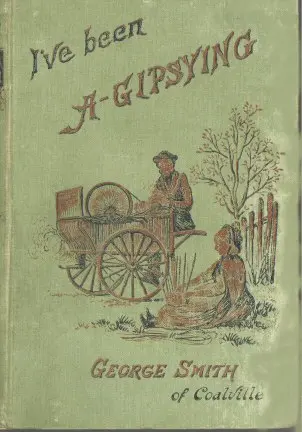
THE CLASSIC COLLECTION · 1883
"I've Been a Gipsying" by George Smith is a travelogue written in the late 19th century. The book documents the author’s experiences and observations among the gipsy communities in England, particularly focusing on their children, culture, and living conditions. Through a series of excursions, he seeks to portray the realities of gipsy life, shedding light on their hardships and the neglect faced by their young ones. The opening of the book introduces the reader to the author's intention of conveying both the struggles and joys of gipsy life. On a rainy Sunday, Smith embarks on a journey to visit gipsy children living in squalor on the outskirts of London. He vividly describes their impoverished living conditions, illustrating their lack of education and basic needs, and expressing a deep concern for their wellbeing. The author's empathetic storytelling aims to evoke a sense of urgency for social change, highlighting the stark contrast between the gipsy children's lives and the privileged existence of other children nearby.
Introduction adapted from the source catalogue; source summaries may be automatically generated.
Free to read · English · 132,003 words · No account needed
MAKE TIME FOR A GOOD BOOK
On by default. Untick to stop anonymous reading totals. Each page counts after 10 seconds in view. How this works.
Anonymous counting is on unless you have switched it off.
“He is our best and kindest Friend,
And guards us night and day.”
I gave her another verse, but I could see tears in her eyes, which prevented her getting through it as well as she desired. She laid the fault to her being without spectacles. Her reading these lines touched her very much, and she became quite excited again, and jumped up and clutched hold of both of my hands and said, “Yer see, my good mon, if none o’ the t’other gipsies con read, I con, conner I? But I con do more than read, I con say a lot o’ the Bible off by heart. The Creeds, Church Catechism, Belief, and Sacraments, which I larnt by heart when I was a girl. I went to the Church Sunday School at Uttoxeter. Yer’ll see by that I have not allus been a gipsy. When I got married to my old mon I had to go a-gipsying wi’ him, and have never been in th’ church since. My name’s Bedman, of ‘Ucheter,’ and am well known.”
She knelt upon the grass again, and supped a little more of her strong tea. The number of Hinckley working people and gipsies was increasing, and up she jumped again, clutching both of my hands, after which she laid her hand in navvy fashion upon my shoulder, and began to repeat the Creed: “I believe in one God, the Father Almighty, maker of heaven and earth, and in all things visible and invisible. And in one Lord Jesus Christ, the only begotten Son of God,” and on she went to the end in her fashion. After this she knelt down again and began with the Decalogue; “God spake these words and said, I am the Lord thy God; thou shalt have none other gods but me,” and with a red face, and tears in her eyes, trembling with emotion, she sung in the usual chanting tone, “Lord have mercy upon us, and incline our hearts to keep this law.” The old gipsy woman went on to the end, to which I responded, “Amen.” Some portions of the Litany were repeated, and then she struck off at a tangent into the Catechism, commencing with “What is your name? May Bedman. Who gave you that name? My godfathers and godmothers in my baptism, wherein I was made a member of Christ, the child of God, and an inheritor of the kingdom of heaven. What did your godfathers and godmothers then for you? They did promise and vow three things in my name. First, that I should renounce the devil and all his works, the pomps and vanities of this wicked world, and all the sinful lusts of the flesh. Secondly, that I should believe all the Articles of the Christian Faith. And thirdly, that I should keep God’s holy will and commandments, and walk in the same all the days of my life;” and then she sung out, “Amen.” “Ah!” said the old woman, “you see, my good master mon, I know a little, don’t I?” “Yes,” I said, “you know a little, and he that knoweth his Master’s will, and doeth it not, ‘shall be beaten with many stripes.’” “Yes,” said the old gipsy, “I do know my Master’s will, and I have not done it, and I’ve been beaten with many stripes during the last forty years, and here I am. Never mind, let bygones be bygones. ‘Let the wicked forsake his way, and the unrighteous man his thoughts: and let him return unto the Lord, and he will have mercy upon him; and to our God, for he will abundantly pardon.’” And I replied, “Though your sins be as scarlet, they shall be as white as snow; though they be red like crimson, they shall be as wool.” “Yes, you are right, bless you,” said the old backsliding gipsy, and with wet knees and wet eyes she sang out again, “Lord, have mercy upon us, and incline our hearts to keep this law,” to which I responded, “Amen.” I then left this penitent gipsy’s strong grips, the gipsy gang, and the number of lookers-on to go to my “quarters” for my breakfast. I then spent another half-hour with the Salvation Army. After a pleasant conversation with the clergyman at my lodgings, I started homeward, and on my way to the station I came upon one of my old gipsy families, who were just having their breakfast in a very filthy, tumbledown van, with their six poor ragged, dirty little children squatting about on the bottom of it. The good-hearted posh gipsy woman seemed to have lost all spirit in her struggles to live a respectable traveller’s life, and was now with her children in the depths of despair and poverty. She would insist on my having a cup of tea as I sat upon the doorstep. I could not drink all of it, but did the best I could under the circumstances. She persisted in pressing me to take a cocoa-nut and a sponge for my little folk at home, the cocoa-nut to eat and the sponge to clean their slates with.
Your reading position is saved on this browser. Take it to another device with a library code. Reading pages adapt to text, rather than matching a printed edition.
George Smith
George Smith
BEHIND THE BOOK
This eBook is for the use of anyone anywhere in the United States and most other parts of the world at no cost and with almost no restrictions whatsoever. You may copy it, give it away or re-use it under the terms of the Project Gutenberg License included with this eBook or online at www.gutenberg.org. If you are not located in the United States, you will have to check the laws of the country where you are located before using this eBook. Read the source licence.
The original source file, including credits and licence, is retained by this library. Request an original-format copy at no charge. Please include the book title and Project Gutenberg identifier #62432.
KEEP YOUR CURIOSITY GOING
Wilfrid Scawen Blunt
Wilfrid Scawen Blunt

E. W. (Edgar Watson) Howe
Francis Greenleaf Allinson & Anne C. E. (Anne Crosby Emery) Allinson
Cyrenus Cole

John Martineau