THE CLASSIC COLLECTION✦Henry Martyn, Saint and Scholar First Modern Missionary to the Mohammedans, 1781-1812CLASSIC FREE BOOKS
Henry Martyn, Saint and Scholar First Modern Missionary to the Mohammedans, 1781-1812
George Smith
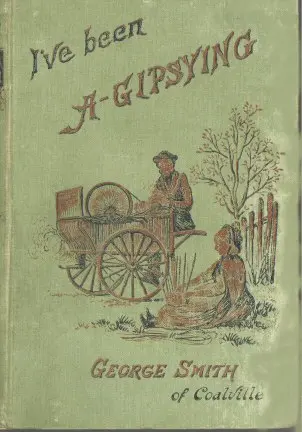
THE CLASSIC COLLECTION · 1883
"I've Been a Gipsying" by George Smith is a travelogue written in the late 19th century. The book documents the author’s experiences and observations among the gipsy communities in England, particularly focusing on their children, culture, and living conditions. Through a series of excursions, he seeks to portray the realities of gipsy life, shedding light on their hardships and the neglect faced by their young ones. The opening of the book introduces the reader to the author's intention of conveying both the struggles and joys of gipsy life. On a rainy Sunday, Smith embarks on a journey to visit gipsy children living in squalor on the outskirts of London. He vividly describes their impoverished living conditions, illustrating their lack of education and basic needs, and expressing a deep concern for their wellbeing. The author's empathetic storytelling aims to evoke a sense of urgency for social change, highlighting the stark contrast between the gipsy children's lives and the privileged existence of other children nearby.
Introduction adapted from the source catalogue; source summaries may be automatically generated.
Free to read · English · 132,003 words · No account needed
MAKE TIME FOR A GOOD BOOK
On by default. Untick to stop anonymous reading totals. Each page counts after 10 seconds in view. How this works.
Anonymous counting is on unless you have switched it off.
A closet is a burrow into which a Christian who is hounded to death by the dogs of hell can run and be safe. When once there, Christians can smile at their howls and sing while they show their teeth with rage.
At seven o’clock I was unbolting the door, making my way out of the house to a number of gipsy vans in an orchard on the outskirts of the town. On going to the place I met a little posh gipsy dressed in “rags and trashes,” with the heels—what was left of the “trashes”—upside down. He had just turned out of his bed, he said, and from his bed followed the dog, both having snoozled under the van—in which his uncle and aunt lay—on the ground, with a wet, damp rug as a covering. “Master,” said the little posh gipsy boy, “can you tell me where I can get a bottle of ginger beer? I am so thirsty and hungry. I’ve had nothing since my dinner yesterday.” I went with the boy to several houses where “Ginger-beer sold here” was displayed in the window, but without success. I gave the boy the price of a bottle and trotted him off lower down the town to quench his thirst and satisfy his appetite.
The gipsies were just beginning to “turn out,” and the little gipsies, half naked, were hunting up sticks out of the hedge-bottom to light the fire to boil the water for breakfast. The men and dogs were collecting together in groups, half-dressed, to relate to each other their successes at the fair. Apart from the rest of the gipsies, owning a van of a better kind than the others, two old gipsies were enjoying their breakfast upon the ground. As soon as the old gipsy woman—whose face betokened that it had figured in many an encounter, and was somewhat highly coloured—saw me, she began to get excited, and called me to them. I thought, “Now is the time for squalls; look out.” I drew near to the old woman with a strange mixture of feelings. It was early in the morning. There were now about a score of gipsy men and women looking on, and a few of the dogs came sniffing at my heels. I tried to screw a smile upon my face, and to dig and delve low for a pleasant joke, but it would not come from the “vasty deep.” On my approach the old woman jumped up from the ground, and with both hands clasped mine in hers, which felt as rough as a navvy’s, saying while griping them tightly, “Bless yer, my good mon, I’ve wanted to see yer for a long while. I’ve long ’erd abaut yer, and ha’ never had th’ pleasure o’ puttin’ my een on yer till this mornin’. Sit yer down on th’ gress, I want to tawke to yer. Dunner yer be freetened, I’m not goin’ to swaller yer, bless yer, master mon. Yer’ll ha’ sum brekust, wonner yer?” “Yes,” I said, “I did not mind.” Although I did not exactly like the appearance of things, I thought it would not do to say “no,” and I knelt upon the damp grass. In a pan over their fiery embers were the remnants of bacon and red herrings. There was only one large cup and saucer, without a handle, for the pair of them. I thought most surely she would fetch a cup and saucer out of the van for me. Such was not to be the case. A group of some ten or twelve working men of Hinckley stood looking over the hedge only a few yards away, at the old woman’s “megrims.” She handed me in the first place a piece of bread, upon which was some bacon and herring. It took me all the time to swallow this uninviting morsel. I munched a little of it, and some I put into my pocket for another time. She now filled up her cup with tea, and made her fingers do duty for sugar tongs. I could see no teaspoons about, except one that was among the herrings and bacon. This was fetched out and plunged into the tea, and round and round it went, leaving upon the top of the dark-coloured tea—which I could now see by the bright morning sun shining upon the scene—stars floating about. The old woman first drank herself, and then handed the cup of tea to me. I supped and nibbled the crust. I supped again, till between us the cup was nearly emptied. She had a strong scent of “Black Jack,” and I kept a very sharp eye upon what parts of the cup the old woman drank from. “Now then to bisness,” said the old gipsy. “Yer see none o’ we gipsies con read an’ write. I’ll show yer I con, if none o’ them conner. Han yer got anythin’ wi yer for me to read?” I had a few copies of “Our Boys and Girls,” with me, given to me by the Wesleyan Sunday School Union, and I handed one to the old woman, dated September 1880, and she began stammering at some of the verses in an excited frame of mind between anger and pleasure, as if determined to read them whether she could or not. “Ha—ha—ha,—Haste traveller—ha—ha,—haste! the night comes on.” She got through one or two of the verses pretty well. I then gave her another verse, which she read fairly well:
Your reading position is saved on this browser. Take it to another device with a library code. Reading pages adapt to text, rather than matching a printed edition.
George Smith
George Smith
BEHIND THE BOOK
This eBook is for the use of anyone anywhere in the United States and most other parts of the world at no cost and with almost no restrictions whatsoever. You may copy it, give it away or re-use it under the terms of the Project Gutenberg License included with this eBook or online at www.gutenberg.org. If you are not located in the United States, you will have to check the laws of the country where you are located before using this eBook. Read the source licence.
The original source file, including credits and licence, is retained by this library. Request an original-format copy at no charge. Please include the book title and Project Gutenberg identifier #62432.
KEEP YOUR CURIOSITY GOING
Wilfrid Scawen Blunt
Wilfrid Scawen Blunt

E. W. (Edgar Watson) Howe
Francis Greenleaf Allinson & Anne C. E. (Anne Crosby Emery) Allinson
Cyrenus Cole

John Martineau