THE CLASSIC COLLECTION✦An outlaw’s diary: the CommuneCLASSIC FREE BOOKS
An outlaw’s diary: the Commune
Cécile Tormay
THE CLASSIC COLLECTION · 1895
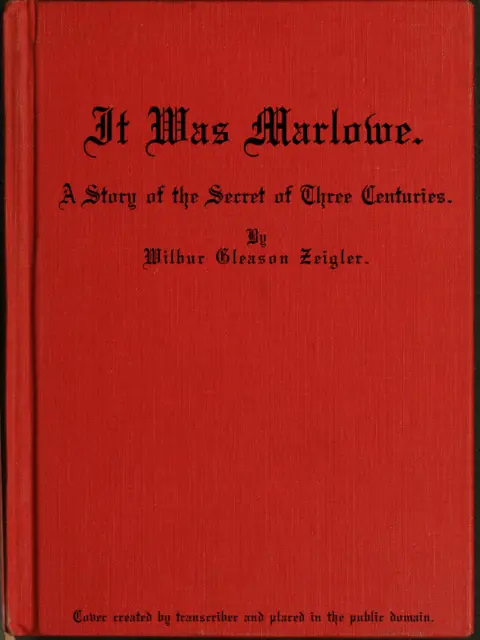
"It Was Marlowe: A Story of the Secret of Three Centuries" by Wilbur Gleason Zeigler is a historical novel written in the late 19th century. The narrative centers around the intriguing figure of Christopher Marlowe, a prominent playwright of the Elizabethan era, as it explores themes of authorship, scandal, and love, all set against the backdrop of the tumultuous societal changes of that time. At the start of the story, we meet Marlowe in the midst of the plague-stricken London of June 1593. A chance encounter with a youth named Tabbard leads to discussions regarding the Lady Anne and a potential romantic connection between them. Meanwhile, tensions brew as Marlowe navigates his professional life as a playwright and actor amid rumors of his controversial reputation and impending danger. Secrets unfold through Tabbard's news and Marlowe's upcoming clandestine meeting with Anne, setting the stage for a tale filled with intrigue, romance, and the shadow of Marlowe’s enigmatic past. This opening lays the groundwork for a plot that promises to delve into the complexities of Marlowe's life and the challenges he faces in a world rife with political and personal peril.
Introduction adapted from the source catalogue; source summaries may be automatically generated.
Free to read · English · 71,165 words · No account needed
MAKE TIME FOR A GOOD BOOK
On by default. Untick to stop anonymous reading totals. Each page counts after 10 seconds in view. How this works.
Anonymous counting is on unless you have switched it off.
“Of the established church, eh?”
“Nay, a sour, morose Brownist, who strikes at all but his own sect.”
“A gad fly,” said Tabbard.
“An asp, more like; a carrion-eating swine!” exclaimed Gyves, as though the words were the froth of bitter recollections.
“Is his rope long?”
“As long as the laws under which he acts.”
“And who is the accused in this case?”
“Chris--”
He checked himself and then continued:
“’Sdeath! When I get the reviler where liberty is a sweet memory only, I will if I choose call aloud his name in every quarter but St. Paul’s.”
“And why not there?”
“He hath attacked the church, ’tis said.”
“Canst thou not recollect his name, over this second glass?” inquired
Tabbard, smoothly.
“I said nothing of my recollection being faulty.”
“Hast thou the warrant? If thou hast let me see it,” said Tabbard, with the air and tone of one in command. “Here, some more of that best Rheinish wine,” he thundered to the drawer.
Gyves had never encountered so reckless a spendthrift. His admiration was rising as every glass was lowered. He was in no hurry to go on his quest. The foggy night, and the dark miles between the Windmill and the Roman Wall caused him to embrace the glittering present. The tap-room of the Windmill never appeared so enchanting. Tabbard, despite his rusticity, was growing into a prince. The cultivated caution of the constable oozed away, and he placed the warrant in Tabbard’s hands. Just at that moment Bame walked into the tap-room and came hurriedly toward the table. Tabbard had caught sight of him out of the corner of his eye. He thrust the warrant in his pocket, at the same time giving a significant glance at Gyves, who, with at first a motion that he would retake the paper, subsided on noticing Bame. The latter said, as he reached the table, “How now, Gyves, has the arrest been made?”
“Shortly, sir, shortly,” exclaimed Gyves, scarcely able to conceal his surprise at seeing the sanctimonious-looking Brownist beside him in the tap-room.
“Good faith, man! Get thee out quick, or the fellow will be fled. Thou hast already squandered an hour here. Come, stir thyself!”
The tones were peremptory and husky with suppressed anger. Gyves knew Bame’s power. He felt that temporary action was necessary to preserve his office. True, he could not act without the warrant, and he dared not expose to Bame his folly by demanding its return. So, hoping that he could see Tabbard later, and, having procured the warrant, make the arrest, he arose.
“I am off at once--” he said.
Your reading position is saved on this browser. Take it to another device with a library code. Reading pages adapt to text, rather than matching a printed edition.
BEHIND THE BOOK
This eBook is for the use of anyone anywhere in the United States and most other parts of the world at no cost and with almost no restrictions whatsoever. You may copy it, give it away or re-use it under the terms of the Project Gutenberg License included with this eBook or online at www.gutenberg.org. If you are not located in the United States, you will have to check the laws of the country where you are located before using this eBook. Read the source licence.
The original source file, including credits and licence, is retained by this library. Request an original-format copy at no charge. Please include the book title and Project Gutenberg identifier #57810.
KEEP YOUR CURIOSITY GOING
Cécile Tormay

Moritz Busch
Coulson Kernahan
John L. Ransom

Maurice Baring
Frances Wright