THE CLASSIC COLLECTION✦An outlaw’s diary: the CommuneCLASSIC FREE BOOKS
An outlaw’s diary: the Commune
Cécile Tormay
THE CLASSIC COLLECTION · 1895
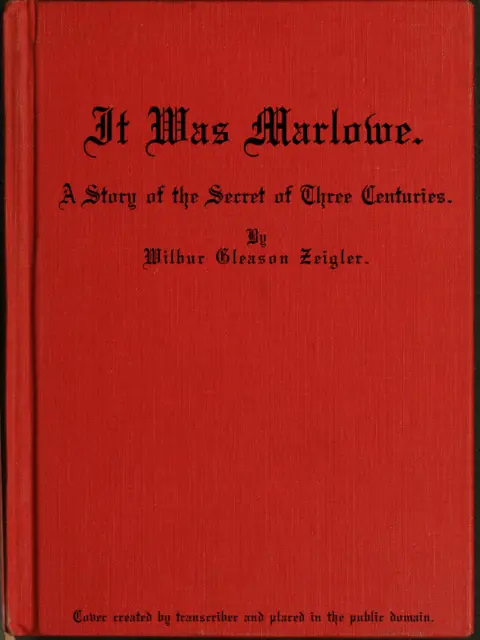
"It Was Marlowe: A Story of the Secret of Three Centuries" by Wilbur Gleason Zeigler is a historical novel written in the late 19th century. The narrative centers around the intriguing figure of Christopher Marlowe, a prominent playwright of the Elizabethan era, as it explores themes of authorship, scandal, and love, all set against the backdrop of the tumultuous societal changes of that time. At the start of the story, we meet Marlowe in the midst of the plague-stricken London of June 1593. A chance encounter with a youth named Tabbard leads to discussions regarding the Lady Anne and a potential romantic connection between them. Meanwhile, tensions brew as Marlowe navigates his professional life as a playwright and actor amid rumors of his controversial reputation and impending danger. Secrets unfold through Tabbard's news and Marlowe's upcoming clandestine meeting with Anne, setting the stage for a tale filled with intrigue, romance, and the shadow of Marlowe’s enigmatic past. This opening lays the groundwork for a plot that promises to delve into the complexities of Marlowe's life and the challenges he faces in a world rife with political and personal peril.
Introduction adapted from the source catalogue; source summaries may be automatically generated.
Free to read · English · 71,165 words · No account needed
MAKE TIME FOR A GOOD BOOK
On by default. Untick to stop anonymous reading totals. Each page counts after 10 seconds in view. How this works.
Anonymous counting is on unless you have switched it off.
“Not he,” said Gyves, “according to his stories, he has messed with the worst of the cut-throats of the Straits, kept by the side of clapperdoggers on their rounds, learned all the slang of the purlieus of Cheapside, and would as lief hobnob with a ruffler as with a nobleman or parish priest.”
“Hath he good sense?”
“The very best, I think, for I heard the Justice say that he wrote plays of the people, and must mingle with them to learn their ways.”
By this time they had approached a vacant table, and as Tabbard seated himself with pretended difficulty, he said, “Now sit you there; my friend, and have one cup with me before you venture out.”
Gyves required no second invitation.
“’Tis a bad night to hunt the highways for clapperdoggers,” said he, as he dropped into a chair, and pulling his whiskers glanced around the room with an air of familiarity as great as that of a chained mastiff in his own kennel.
“Is it a beggar you are after?” asked Tabbard with a forced air of
unconcern.
“Not exactly, and I correct my expression,” returned Gyves, “but one
even less harmful.”
“Some poor devil who has failed to attend church for a Sunday or two,
eh?” [note 34.]
“Nay, I took in two on such complaints this morning, but to-night I shall hail in a blasphemer.”
“Hardly to-night,” thought Tabbard, and then he added aloud, “Doth not thy conscience prick thee at times for dragging such men to jail?”
“I am but an instrument of the law,” replied the constable in deep tones, at the same time striking his chest with his fingers evidently in imitation of the voice and action of the Lord High Sheriff. “The man who should have cold sweats is the accuser, the public informer.”
“Are there many of such curs?”
“Enough to keep us busy,” answered Gyves.
“And who has held thy nose to the hot scent?”
“Out cow-herd! I like not thy terms of address,” exclaimed Gyves, bringing his fist down with a ring upon the table, “A hot scent with a nose upon it raises the figure of a dog. It takes no keen wit to see that. And as thou hast called it my nose, then forsooth, I am the dog.”
“Nay, nay!” exclaimed Tabbard, “I meant no offense. Here, I clink glasses with thee as evidence of good-fellowship.”
They raised the glasses of wine which the drawer had set before them.
“Who was the accuser of the man you bear a warrant for?”
“Bame,” said the constable, lowering his voice. “He is one of the prime movers against Papists and scoffers of religion.”
Your reading position is saved on this browser. Take it to another device with a library code. Reading pages adapt to text, rather than matching a printed edition.
BEHIND THE BOOK
This eBook is for the use of anyone anywhere in the United States and most other parts of the world at no cost and with almost no restrictions whatsoever. You may copy it, give it away or re-use it under the terms of the Project Gutenberg License included with this eBook or online at www.gutenberg.org. If you are not located in the United States, you will have to check the laws of the country where you are located before using this eBook. Read the source licence.
The original source file, including credits and licence, is retained by this library. Request an original-format copy at no charge. Please include the book title and Project Gutenberg identifier #57810.
KEEP YOUR CURIOSITY GOING
Cécile Tormay

Moritz Busch
Coulson Kernahan
John L. Ransom

Maurice Baring
Frances Wright