THE CLASSIC COLLECTION✦An outlaw’s diary: the CommuneCLASSIC FREE BOOKS
An outlaw’s diary: the Commune
Cécile Tormay
THE CLASSIC COLLECTION · 1895
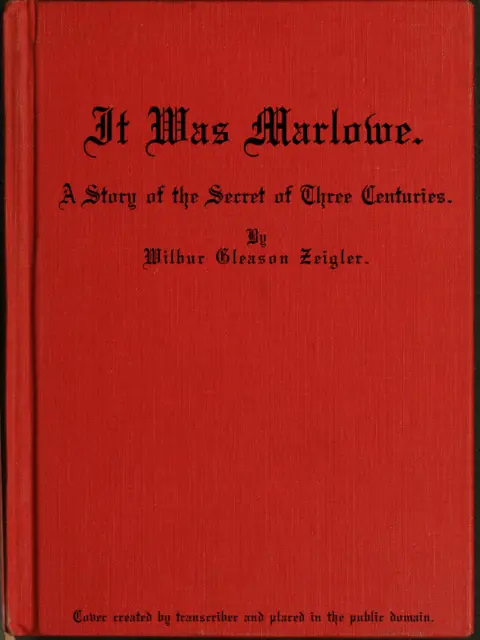
"It Was Marlowe: A Story of the Secret of Three Centuries" by Wilbur Gleason Zeigler is a historical novel written in the late 19th century. The narrative centers around the intriguing figure of Christopher Marlowe, a prominent playwright of the Elizabethan era, as it explores themes of authorship, scandal, and love, all set against the backdrop of the tumultuous societal changes of that time. At the start of the story, we meet Marlowe in the midst of the plague-stricken London of June 1593. A chance encounter with a youth named Tabbard leads to discussions regarding the Lady Anne and a potential romantic connection between them. Meanwhile, tensions brew as Marlowe navigates his professional life as a playwright and actor amid rumors of his controversial reputation and impending danger. Secrets unfold through Tabbard's news and Marlowe's upcoming clandestine meeting with Anne, setting the stage for a tale filled with intrigue, romance, and the shadow of Marlowe’s enigmatic past. This opening lays the groundwork for a plot that promises to delve into the complexities of Marlowe's life and the challenges he faces in a world rife with political and personal peril.
Introduction adapted from the source catalogue; source summaries may be automatically generated.
Free to read · English · 71,165 words · No account needed
MAKE TIME FOR A GOOD BOOK
On by default. Untick to stop anonymous reading totals. Each page counts after 10 seconds in view. How this works.
Anonymous counting is on unless you have switched it off.
“And he that cannot write true English without the help of clerks of parish churches, will needs make himself the father of interludes. O, ’tis a jolly matter when a man hath a familiar style, and can endite a whole year, and not be beholden to art.”
--Greene’s Farewell to Folly (1587).
“It’s a common practice now-a-days, amongst a sort of shifting companions, that run through every art and thrive at none, to leave the trade of noverint whereto they were born and busy themselves with the endeavors of art, that could scarcely Latinize their neck-verse, if they should have need. Yet English Seneca, read by candle light, yields many good sentences, etc.”
--Nash (1587).
16 “From jigging veins of rhyming mother wits, And such conceits as clownage keeps in pay, We’ll lead you to the stately tent of war.”
--Prologue to Marlowe’s Tamburlaine, Part First.
17 “Before him there was neither genuine blank verse nor a genuine
tragedy in our language.”
--Article on Marlowe, Ency. Britannica, vol. XV, p. 556.
“That fiery reformer who wrought on the old English stage no less a miracle than Hernani on the French stage in the days of our fathers.”
--Swinburne’s “Study of Shakespere,” p. 31.
18 “Quicke-sighted spirits,--this supposed Appolo,-- Conceit no other, but the admired Marlo; Marlo admired, whose honney-flowing vein No English writer can as yet attaine.”
--Henry Petowe, Second Part, “Hero and Leander,” 1598.
19 “Now (as swift as Time
Doth follow Motion) find th’ eternal clime
Of his free soul, whose living subject stood
Up to the chin in the Pierian flood,
And drunk to me half this Musean story
Inscribing it to deathless memory.”
--Chapman’s Third Sestiad to Marlowe’s Hero and Leander.
20 “Unhappy in thine end,
Marley, the Muses’ darling for thy verse,
Fit to write passions for the souls below,
If any wretched souls in passion speak.”
--George Peele “Prologue to the Honour of the Garter.”
21 “The impression of the man that hath been dear unto us, living an after life in our memory, etc.”
--Blunt’s Dedication of Hero and Leander, 1598.
22 “Is it a dream? or is the Highest minde That ever haunted Pauls, or haunted winde Bereft of that same sky-surmounting breath, That breath that taught the Timpany to swell?”
--“Sonet Gorgon,” Gabriel Harvey, 1593.
23 “Dead Musæus’ gracious song.”
--Henry Chettle.
24 “Next Marlow, bathed in the Thespian springs, Had in him those brave translunary things That the first poets had; his raptures were All air and fire which made his verses clear.”
--Michael Drayton’s Epistle, etc.
Your reading position is saved on this browser. Take it to another device with a library code. Reading pages adapt to text, rather than matching a printed edition.
BEHIND THE BOOK
This eBook is for the use of anyone anywhere in the United States and most other parts of the world at no cost and with almost no restrictions whatsoever. You may copy it, give it away or re-use it under the terms of the Project Gutenberg License included with this eBook or online at www.gutenberg.org. If you are not located in the United States, you will have to check the laws of the country where you are located before using this eBook. Read the source licence.
The original source file, including credits and licence, is retained by this library. Request an original-format copy at no charge. Please include the book title and Project Gutenberg identifier #57810.
KEEP YOUR CURIOSITY GOING
Cécile Tormay

Moritz Busch
Coulson Kernahan
John L. Ransom

Maurice Baring
Frances Wright