THE CLASSIC COLLECTION✦Dark powerCLASSIC FREE BOOKS
Dark power
Elisabeth Sanxay Holding

THE CLASSIC COLLECTION · 1920
"Invincible Minnie" by Elisabeth Sanxay Holding is a novel written in the early 20th century. The story centers around Minnie, who is depicted as a capable yet unconventional young woman navigating the challenges set before her. The narrative examines social class dynamics and personal ambition through her interactions with the other characters, particularly Mr. Petersen, who becomes entwined in her life. The opening of "Invincible Minnie" introduces Mr. Petersen as he grapples with the dilemma of being a compassionate landlord to Mrs. Defoe, an elderly tenant struggling to pay her rent. During his visit to the Defoe household, he meets Minnie, a seemingly ordinary young woman who possesses underlying complexities. The text sets up the contrast between the older generation's expectations and Minnie's burgeoning sense of independence. Themes of social class differences are apparent, particularly through Minnie’s interactions with Mr. Petersen, foreshadowing a deeper examination of personal relationships as the plot unfolds. As the story progresses, it is clear that Minnie's ambition will drive the plot and her relationships with those around her, particularly as she contemplates her future in a world filled with societal pressures.
Introduction adapted from the source catalogue; source summaries may be automatically generated.
Free to read · English · 85,940 words · No account needed
MAKE TIME FOR A GOOD BOOK
On by default. Untick to stop anonymous reading totals. Each page counts after 10 seconds in view. How this works.
Anonymous counting is on unless you have switched it off.
“You don’t mind if I go out to tea on Wednesday, do you?” Frances asked Miss Eppendorfer the next morning.
“Not a bit!” said she, cheerfully. “I like to see you enjoy yourself like a human being. Is it your English friend?”
“Yes. The only trouble is, I haven’t a thing fit to wear, and it’s at a hotel,” she said. “Couldn’t you come down town with me and help me pick out something?”
Miss Eppendorfer was only too pleased; it was one of her good days and she was cheerful and energetic. She led Frances from shop to shop, imperiously rejecting every suggestion.
“I know what suits you,” she insisted, “I’m a wonderful judge of value, too. You leave it all to me.”
At last she was pleased by a grey broadcloth suit.
“Oh, yes!” cried Frankie, ironically. “A hundred and fifty dollars is just what I always pay!”
“I’m going to get it for you.”
“Oh, no, I couldn’t!” she protested, shocked.
“You must. To make up for all I said that night,” whispered the authoress. “Be generous, Frances! Don’t be petty!”
She allowed herself to be persuaded, accepted the suit and with it a new hat and blouse. She felt guilty and ashamed and yet delighted. She was so very anxious to make a favourable impression on this brother Horace.
She started off, very nervous and still more ashamed. The whole exploit seemed wrong, meeting the man without his wife, and wearing clothes she could never have bought for herself.... It was common.
“Cheap,” she reflected.
But Horace would have made a supper-club respectable. They were waiting in the corridor; she saw her Mr. Naylor at once though he didn’t see her; slender and drooping, quietly conscious of his impeccable British elegance, he was watching the wrong door. Near him was a heavy, bull-necked, red-faced man with a black moustache and melancholy, bilious eyes, who smoked a big cigar and stared nowhere. This was Horace.
He surprised Frances by his lack of everything that pleased her in his brother. He was altogether the merchant, not a hint of the man-of-the-world. He shook hands with her and smiled, but it was a sad, dull smile. He was distrait, and couldn’t conceal it.
“Well,” he said, with a sigh, “Lead the way, Lionel, my boy!”
They entered an engaging little tea-room with shaded lamps and sofas. Lionel took charge of everything, chose a table, and ordered the cocktails, but the management of the conversation was evidently beyond him. There was a long and awkward silence, while the drinks were coming. No one looked at either of the others.
Your reading position is saved on this browser. Take it to another device with a library code. Reading pages adapt to text, rather than matching a printed edition.
Elisabeth Sanxay Holding

Elisabeth Sanxay Holding

Elisabeth Sanxay Holding
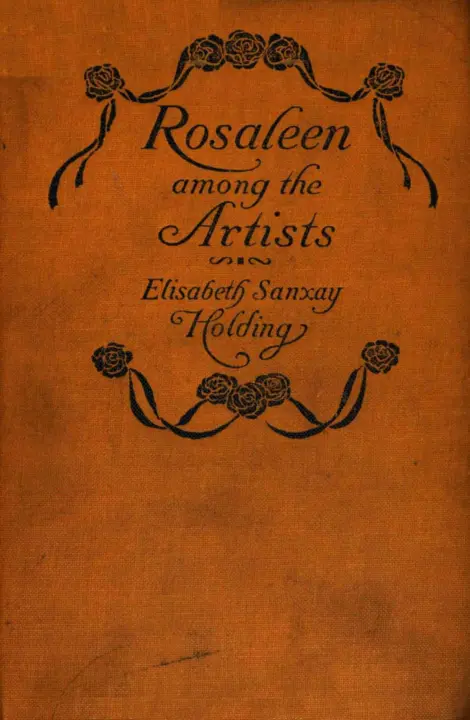
Elisabeth Sanxay Holding
BEHIND THE BOOK
This eBook is for the use of anyone anywhere in the United States and most other parts of the world at no cost and with almost no restrictions whatsoever. You may copy it, give it away or re-use it under the terms of the Project Gutenberg License included with this eBook or online at www.gutenberg.org. If you are not located in the United States, you will have to check the laws of the country where you are located before using this eBook. Read the source licence.
The original source file, including credits and licence, is retained by this library. Request an original-format copy at no charge. Please include the book title and Project Gutenberg identifier #68802.
KEEP YOUR CURIOSITY GOING
Coulson Kernahan

Maurice Baring
Frances Wright
Cécile Tormay

Frederic Jesup Stimson

W. H. P. (William Henry Pope) Jarvis