
Letters to a Friend, Written to Mrs. Ezra S. Carr, 1866-1879
John Muir
THE CLASSIC COLLECTION · 1914
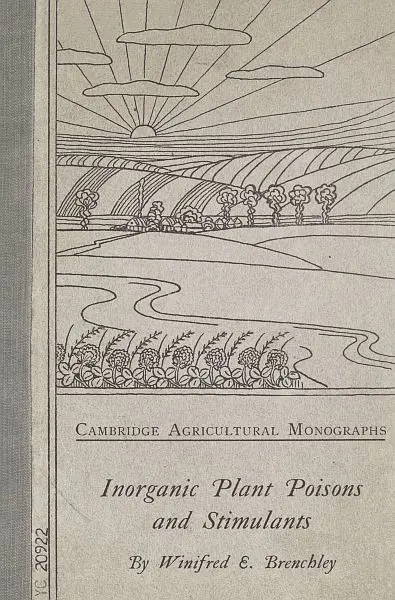
"Inorganic Plant Poisons and Stimulants" by Winifred Elsie Brenchley is a scientific publication written in the early 20th century. The work investigates the effects of various inorganic substances, specifically focusing on their toxic and stimulating actions on plant growth and development. It aims to provide a comprehensive analysis and correlation of existing research related to these substances, delving into their applicability in agricultural practices. The opening of the work begins with a preface outlining the significant changes in agricultural practices over the previous century, highlighting the use of artificial fertilizers and the conflicting evidence surrounding inorganic substances as potential plant nutrients. Brenchley sets the stage for further exploration by discussing the historical context of plant nutrition and the classification of substances based on their effects on plant growth. In particular, she emphasizes the complexity of understanding how certain inorganic compounds can exhibit both toxic and beneficial effects, depending on their concentrations and combinations with other nutrients, thereby inviting future investigation into the nuanced interactions between plants and these chemicals.
Introduction adapted from the source catalogue; source summaries may be automatically generated.
Free to read · English · 41,390 words · No account needed
MAKE TIME FOR A GOOD BOOK
On by default. Untick to stop anonymous reading totals. Each page counts after 10 seconds in view. How this works.
Anonymous counting is on unless you have switched it off.
TRUE, R. H. and OGLEVEE, C. S. The effect of the presence of insoluble substances on the toxic actions of poisons. Science, XIX, 421–4. (1904) 22
TRUE, R. H. and OGLEVEE, C. S. The effect of the presence of insoluble substances on the toxic action of poisons. Bot. Gaz. XXXIX, 1–21. (1905) 22
UCHIYAMA, S. Influence of stimulating compounds upon the crops under different conditions. Bull. Imp. Cent. Agric. Expt. Stat. Japan, I, No. 2, 37–79. (1907) 89
UNDERWOOD, L. M. vide HALL, BRENCHLEY and UNDERWOOD 8
VEDRÖDI, V. Das Kupfer als Bestandtheil der Sandböden und unserer Culturgewächse. Chem. Zeit. XVII, 1932. (1893) 16
VEDRÖDI, V. Das Kupfer als Bestandtheil unserer Vegetabilien. Chem. Zeit. XX, 399–400. (1896) 17
VERSCHAFFELT, E. Mesure de l’action des poisons sur les plantes. Archiv. Néerland. Sci. Exact. Nat. Haarlem, X, 1–7. (1905) 26
WARDEN, C. J. H. Analysis of Behar Opium ash. Chem. News, XXXVIII, 146. (1878) 79
WEHMER, C. Pflanzenstoffe. (1911) 52
WIELER, A. Die Wirkung metallischer Gifte im Boden auf das Pflanzenwachstum. Pflanzenwachstum und Kalkmangel im Boden, 177–235. (1912) --
WITTSTEIN, Dr und APOIGER, F. Entdeckung der Borsäure im Pflanzenreiche. Ann. Chem. Pharm. CIII, 362–64. (1857) 65
WOLFF, E. Aschen-analysen von landwirtschaftlichen Producten, Fabrikabfällen und wildwachsenden Pflanzen. Berlin. (1871) 78
The symbols after the plant-names represent the elements referred to
on the pages indicated.
Acorus Calamus
Mn, 79
Actinostrobus pyramidalis
Mn, 80
Aesculus
Mn, 78
Agathis robusta
Mn, 80
Ageratum
Cu, 24;
Zn, 42
Alder
As, 53
Algae
As, 62, 64;
B, 66, 77
Allium
(see Onion)
Zn, 47
Alnus incana
Mn, 79
Aloe
Cu, 26
Amomum sp. (Paradieskörner)
Cu, 15
Ampelopsis
Cu, 32;
Zn, 47
Anaboena
Cu, 35
Angiosperms
B, 66
Anthracnose
B, 76
Apple
B, 65, 66
Apricot
Cu, 16
Araucaria Bidwilli
Mn, 80
Cunninghamii
Mn, 80
Armeria sp.
Zn, 38
vulgaris
Zn, 36, 37
Arundo Sacchar
Mn, 78
Asparagus
Mn, 79
Aspergillus
Cu, 33, 34
Aspergillus niger (= Sterigmatocystis nigra)
Zn, 48, 49, 50;
As, 63;
B, 76;
Mn, 90
Athrotaxis selaginoides
Mn, 80
Barley, 11, 13;
Sr, 5;
Cu, 16, 17, 20, 29;
Zn, 37, 39, 40, 44, 46;
As, 52, 54, 55, 57, 60, 61;
B, 66, 69, 75;
Mn, 79, 81, 82, 83, 84, 85, 86, 89, 90, 92, 93, 94
Beans
Cu, 16, 17, 26;
Zn, 47
Beech
Mn, 79
Beetroot (Beta vulgaris)
Cu, 16, 26;
Zn, 37, 39;
Mn, 78, 79
Beet, sugar
B, 65
Betula alba
B, 66
Birch
Mn, 79
Botrytis cinerea
Mn, 90
Brassica oleracea
Mn, 78
Buckwheat, 11;
Cu, 16, 17, 29, 30;
As, 53
(see Polygonum Fagopyrum)
Cabbage
Sr, 5;
As, 51, 52;
Mn, 87
Cacao
Cu, 16
Callitris gracilis
Mn, 80
robusta
Mn, 80
Cannabis
B, 72
sativa
B, 66
Capsella Bursa-pastoris
Zn, 37
Cardamomum minus
Cu, 15
Carrot
Mn, 79
Cauliflower
Mn, 78
Cherry
B, 65
Chestnut
Ca, 71;
Mn, 79
Chickpea
Cu, 16;
B, 66
Chicory
Mn, 79
Chrysanthemum
B, 66
Clover
Zn, 42, 44
Colea
Cu, 24;
Zn, 42;
As, 58
Collinsia
B, 72
Coniferae
Zn, 38
Conium maculatum
Mn, 78
Colza
B, 74
Couch grass
Mn, 83
Cow pea
Cu, 18
Cruciferae
Mn, 78, 89
Cryptomeria japonica
Mn, 88
Curcuma longa
Cu, 15
Currant
Cu, 31
Dacrydium Franklini
Mn, 80
Dianthus caryophyllus
Mn, 79
Elodea canadensis
Cu, 32;
Zn, 48
Fagopyrum esculentum
Cu, 29
Ferns
B, 66
Fig
Zn, 42;
B, 65, 66
Fir
Mn, 80
Flax
Mn, 78, 88, 89
Fungi
Cu, 33;
Zn, 44, 50;
As, 64;
B, 66, 77
Geranium
Cu, 24;
Zn, 42;
As, 58
Gramineae
B, 72;
Mn, 89
Grasses
Zn, 39, 40, 42
Gymnosperms
B, 66;
Mn, 80
Haricot
B, 71, 72
green
As, 52
white
Zn, 37
Hemp
Sr, 5
Hop
B, 66
Hordeum distichum
As, 54
vulgare
Zn, 39, 47
(see Barley)
Iberis
B, 72
Laminaria saccharina
B, 66
Leguminosae
B, 72;
Mn, 78, 89
Lentil
Mn, 79
Lichen
As, 59
Linseed
Cu, 16, 17
Your reading position is saved on this browser. Take it to another device with a library code. Reading pages adapt to text, rather than matching a printed edition.
BEHIND THE BOOK
This eBook is for the use of anyone anywhere in the United States and most other parts of the world at no cost and with almost no restrictions whatsoever. You may copy it, give it away or re-use it under the terms of the Project Gutenberg License included with this eBook or online at www.gutenberg.org. If you are not located in the United States, you will have to check the laws of the country where you are located before using this eBook. Read the source licence.
The original source file, including credits and licence, is retained by this library. Request an original-format copy at no charge. Please include the book title and Project Gutenberg identifier #48008.
KEEP YOUR CURIOSITY GOING
John Muir

Asa Gray
Asa Gray

Florence Nightingale
Elizabeth Robins Pennell
Denison Olmsted