THE CLASSIC COLLECTION✦Hearts and the highwayCLASSIC FREE BOOKS
Hearts and the highway
Cyrus Townsend Brady
THE CLASSIC COLLECTION · 1904
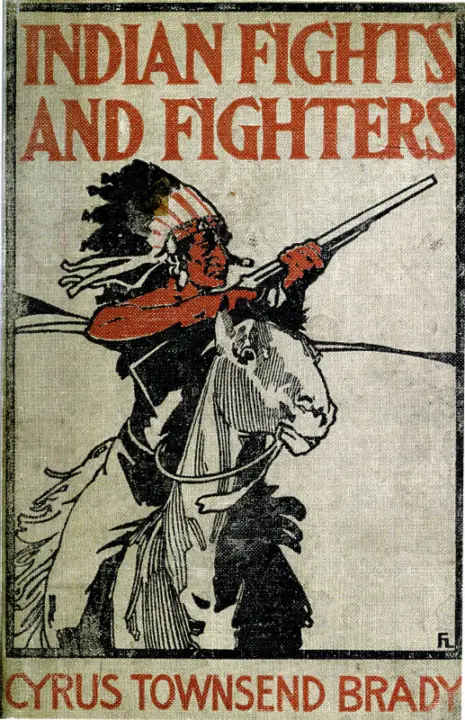
"Indian Fights and Fighters: The Soldier and the Sioux" by Cyrus Townsend Brady is a historical account written in the early 20th century. This work focuses on the battles and conflicts experienced by American soldiers and Native American tribes, particularly highlighting the Sioux nation during the Indian Wars. The book aims to offer a fair representation of the events, exploring both the soldiers' experiences and the perspectives of the Native Americans involved. The opening of the book sets the stage for the tumultuous military history surrounding Fort Phil Kearney during its brief existence from 1866 to 1868. It describes the fort's constant state of siege by the Sioux, led by notable figures like Red Cloud, as American soldiers attempted to protect emigrants and maintain control of the territory. The narrative introduces the complex relationships between the U.S. Army and the Native American tribes, emphasizing the personal accounts of soldiers who faced fierce resistance while also shedding light on the motivations and strategies of the Native Americans defending their land.
Introduction adapted from the source catalogue; source summaries may be automatically generated.
Free to read · English · 131,206 words · No account needed
MAKE TIME FOR A GOOD BOOK
On by default. Untick to stop anonymous reading totals. Each page counts after 10 seconds in view. How this works.
Anonymous counting is on unless you have switched it off.
Fry, Gen. James B., his book, “Army Sacrifices,” quoted, 72; on Custer’s Little Big Horn campaign, 360
Furey, Major, with Gen. Crook, 191
Gall, Indian chief, opposed to Reno, 241, 253, 254;
attacks Custer, 256, 286;
at big feast after the Custer battle, 290;
attacks Gen. Miles, 325
“Galvanized soldiers,” 60
“Garry Owen,” played in battle of the Washita, 161;
at Fort Lincoln, 218
Ghost Dancers, Sioux, 352
Gibbon, Gen. encamps on the Yellowstone, 218;
letter to Gen. Terry regarding Gen. Custer’s situation, 223, 224;
relieves Reno and finds Custer’s body, 257;
his conference with Custer, 266;
goes to relief of Col. Benteen, 276;
his command returned to Montana, 305
Gibson, Lieut., 251
Godfrey, Col. Edward S., 249;
his article in Century Magazine “Custer’s Last Battle,” quoted,
226, 227, 253;
his account of Custer’s defeat, 260;
on Custer’s Little Big Horn Campaign, 360, 371–380, 388–390
Gold discovered in the Black Hills, 209
Goldin, Mr. Theodore W., one of the last to see Custer alive, his reminiscences of the general, 263–278
Goose Creek, 13, 192, 201, 209
Gordon, Major G. A., 316
Graham, Capt., Tenth Cavalry, 124;
scouts on the Beaver, 127;
retreat of, 128;
unmilitary action of, 133 note
Grant, President U. S., indignant at Gen. Custer’s statements regarding
Gen. Belknap, 217
Greene, Lieut.-Col. Jacob L., his views on Custer’s Little Big Horn
campaign, 391–395
Grover, Sharp, guide, 77;
his acquaintance with Indian signs and customs, 125–127, 139
Gruard, Frank, celebrated scout, with Gen. Crook, 191, 203;
sketch of, 191 note;
his clever scouting, 298, 301, 302, 309
Grummond, Lieut., Eighteenth Infantry, 15, 20, 22;
in charge of cavalry at Fort Phil. Kearney, 25, 26;
killed, 35, 36
Hall, Lieut., 294, 295
Hamilton, Capt. John M., 316
Hamilton, Capt. Louis McLane, in Gen. Custer’s winter expedition, 153,
157, 159;
killed, 161
Hanley, Sergeant, 249
Hare, Lieut. Luther R., 249, 267, 274
Harney-Sanborne treaty with Indians, 7
Harrington, Lieut., killed with Custer, 259
Hat Creek, see War Bonnet
Hazen, Gen. W. B., inspects Fort Reno, 17 note
Henry, Gen. Guy V., Third Cavalry, 190, 193, 195, 196, 198;
wounded, 197;
in Dead Cañon, 200, 201;
sketch of, 339–355;
his march in a blizzard, 342–344;
a ghastly experience, 344–348;
bravery of his wife, 348–351;
his “Buffaloes” and their famous rides, 351–355;
in the Spanish-American War, 354;
in Porto Rico, 354;
dies there, 355
Henry rifle, breech-loading rapid fire, use of, 26, 35
Herndon, scout, 266, 267, 274
Hines, Acting-Assistant Surgeon, sent to join Capt. Fetterman, 29
Hodgson, Lieut., killed by Indians, 242;
account of his death, 263, 272, 273
Honzinger, Dr., veterinarian, killed by Rain-in-the-Face, 12, 213, 215,
283 note, 285
Horse Creek, 60
Horton, Surgeon, on wagon-beds, 44 note, 50, 56, 69
Howitzers, Indian fear of, 29
Hughes, Major-Gen. Robert P., his book, “The Campaign Against the
Sioux,” quoted, 224;
Little Big Horn campaign, 360, 366–370
Humfreville, Capt. J. Lee, his book “Twenty Years Among Our Hostile
Indians” quoted, 318
Hunting ground, Indian title to, 6
Hunting parties forbidden at Fort Phil Kearney, 4
Your reading position is saved on this browser. Take it to another device with a library code. Reading pages adapt to text, rather than matching a printed edition.
Cyrus Townsend Brady
Cyrus Townsend Brady
Cyrus Townsend Brady
Cyrus Townsend Brady
BEHIND THE BOOK
This eBook is for the use of anyone anywhere in the United States and most other parts of the world at no cost and with almost no restrictions whatsoever. You may copy it, give it away or re-use it under the terms of the Project Gutenberg License included with this eBook or online at www.gutenberg.org. If you are not located in the United States, you will have to check the laws of the country where you are located before using this eBook. Read the source licence.
The original source file, including credits and licence, is retained by this library. Request an original-format copy at no charge. Please include the book title and Project Gutenberg identifier #55275.
KEEP YOUR CURIOSITY GOING
Cécile Tormay

Moritz Busch
John L. Ransom
Frances Wright
Cécile Tormay

Mabel Potter Daggett