THE CLASSIC COLLECTION✦Indian Scout Talks: A Guide for Boy Scouts and Camp Fire GirlsCLASSIC FREE BOOKS
Indian Scout Talks: A Guide for Boy Scouts and Camp Fire Girls
Charles A. Eastman
THE CLASSIC COLLECTION · 1917
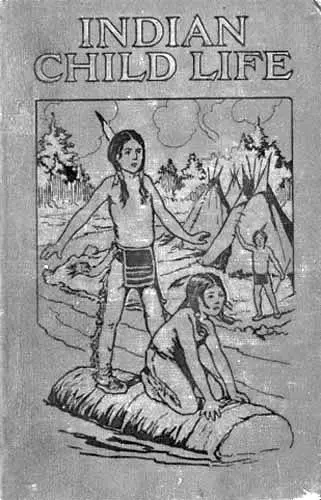
"Indian Child Life" by Charles A. Eastman is a collection of autobiographical stories written in the early 20th century. The book offers insights into the life and culture of Native American children, particularly from the perspective of Eastman, who is a member of the Sioux tribe. By sharing his experiences growing up, he aims to illustrate the simplicity and beauty of Indian childhood, juxtaposed against the harsh realities experienced by his people. The opening of the book introduces readers to Eastman's own early experiences as a member of the Sioux tribe, focusing on his time spent under the care of his grandmother. He recounts vivid memories of his infancy, highlighting cultural practices such as naming ceremonies and childhood games while also referencing the struggles his people faced during the tumultuous periods of American expansion. We learn about his affectionate relationship with his grandmother and the life lessons instilled in him, emphasizing the significance of nature and respect for the environment in the training of Indian children. This nostalgic portrayal sets the foundation for the rich tapestry of stories that follow, inviting readers to understand and appreciate the heart of Indian childhood.
Introduction adapted from the source catalogue; source summaries may be automatically generated.
Free to read · English · 25,526 words · No account needed
MAKE TIME FOR A GOOD BOOK
On by default. Untick to stop anonymous reading totals. Each page counts after 10 seconds in view. How this works.
Anonymous counting is on unless you have switched it off.
As they approached nearer the scene they could hear more distinctly the voice of their friend, but still as it were from underground. When they reached the spot to which the wolves had dragged two of the carcasses of the buffalo, Shunka was seen to stand by one of them, but at that moment he staggered and fell. The hunters took out their knives and ripped up the frozen hide covering the abdominal cavity. It revealed a warm nest of hay and buffalo hair in which the scout lay, wrapped in his own robe!
He had placed his dog in one of the carcasses and himself in another for protection from the storm; but the dog was wiser than the man, for he kept his entrance open. The man lapped the hide over and it froze solidly, shutting him securely in. When the hungry wolves came Shunka promptly extricated himself and held them off as long as he could; meanwhile, sliding and pulling, the wolves continued to drag over the slippery ice the body of the buffalo in which his master had taken refuge. The poor, faithful dog, with no care for his own safety, stood by his imprisoned master until the hunters came up. But it was too late, for he had received more than one mortal wound.
As soon as the scout got out, with a face more anxious for another than for himself, he exclaimed:
"Where is Shunka, the bravest of his tribe?"
"Ho, kola, it is so, indeed; and here he lies," replied one sadly.
His master knelt by his side, gently stroking the face of the dog.
"Ah, my friend; you go where all spirits live! The Great Mystery has a home for every living creature. May he permit our meeting there!"
At daybreak the scout carried him up to one of the pretty round hills overlooking the lake, and built up around him walls of loose stone. Red paints were scattered over the snow, in accordance with Indian custom, and the farewell song was sung.
Since that day the place has been known to the Sioux as
Shunkahanakapi--the Grave of the Dog.
Be-day-wah'-kan-ton, lake-dwellers.
Cha-tan'-na, fourth son.
chin'-to, certainly.
Che-ton'-skah, white hawk.
Chank-pay'-yu-hah, carries the club.
coo'-wah, come here!
ha-nah'-kah-pee, grave.
he-yu'-pee-yay, come all of you!
hay'-chay-tu, it is well.
Hah-kay'-dah, the last-born.
he-nah'-kah-gah, the owl.
Kah-po'-se-yah, Light Lodges (a band of Sioux).
Ko'-lah, friend.
Man-kah'-to, blue earth.
Mah-to', bear.
Mah-to'-sap-ah, black bear.
Mah-pee'-to-pah, four heavens.
Me-ne-yah'-tah, beside the water.
Me-chink'-shee, my son.
Nak-pah', ears (of an animal).
O-o'-pay-han'-skah, bluebird.
o-hit'-e-kah, brave.
shun'kah, dog.
Sna'-na, rattle.
shunk-to'-kay-chah, wolf.
She-cho'-kah, robin.
Shun'-kah-skah, white dog.
tee'-pee, tent.
tak-chah', deer.
Your reading position is saved on this browser. Take it to another device with a library code. Reading pages adapt to text, rather than matching a printed edition.
Charles A. Eastman
Charles A. Eastman
Charles A. Eastman & Elaine Goodale Eastman
Charles A. Eastman
BEHIND THE BOOK
This eBook is for the use of anyone anywhere in the United States and most other parts of the world at no cost and with almost no restrictions whatsoever. You may copy it, give it away or re-use it under the terms of the Project Gutenberg License included with this eBook or online at www.gutenberg.org. If you are not located in the United States, you will have to check the laws of the country where you are located before using this eBook. Read the source licence.
The original source file, including credits and licence, is retained by this library. Request an original-format copy at no charge. Please include the book title and Project Gutenberg identifier #25907.
KEEP YOUR CURIOSITY GOING
Cécile Tormay

Moritz Busch
John L. Ransom
Frances Wright
Cécile Tormay

Mabel Potter Daggett