THE CLASSIC COLLECTION✦Indian Scout Talks: A Guide for Boy Scouts and Camp Fire GirlsCLASSIC FREE BOOKS
Indian Scout Talks: A Guide for Boy Scouts and Camp Fire Girls
Charles A. Eastman
THE CLASSIC COLLECTION · 1917
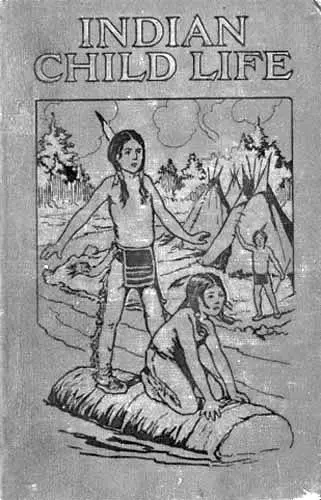
"Indian Child Life" by Charles A. Eastman is a collection of autobiographical stories written in the early 20th century. The book offers insights into the life and culture of Native American children, particularly from the perspective of Eastman, who is a member of the Sioux tribe. By sharing his experiences growing up, he aims to illustrate the simplicity and beauty of Indian childhood, juxtaposed against the harsh realities experienced by his people. The opening of the book introduces readers to Eastman's own early experiences as a member of the Sioux tribe, focusing on his time spent under the care of his grandmother. He recounts vivid memories of his infancy, highlighting cultural practices such as naming ceremonies and childhood games while also referencing the struggles his people faced during the tumultuous periods of American expansion. We learn about his affectionate relationship with his grandmother and the life lessons instilled in him, emphasizing the significance of nature and respect for the environment in the training of Indian children. This nostalgic portrayal sets the foundation for the rich tapestry of stories that follow, inviting readers to understand and appreciate the heart of Indian childhood.
Introduction adapted from the source catalogue; source summaries may be automatically generated.
Free to read · English · 25,526 words · No account needed
MAKE TIME FOR A GOOD BOOK
On by default. Untick to stop anonymous reading totals. Each page counts after 10 seconds in view. How this works.
Anonymous counting is on unless you have switched it off.
Hush, hushaby, little woman!
Be brave and weep not!
The spirits sleep not;
'Tis they who ordain
To woman, pain.
Hush, hushaby, little woman!
Now, all things bearing,
A new gift sharing
From those above--
To woman, love.
--Sioux Lullaby.
"Chinto, weyanna! Yes, indeed; she is a real little woman," declares the old grandmother, as she receives and critically examines the tiny bit of humanity.
There is no remark as to the color of its hair or eyes, both so black as almost to be blue, but the old woman scans sharply the delicate profile of the baby face.
"Ah, she has the nose of her ancestors! Lips thin as a leaf, and eyes bright as stars in midwinter!" she exclaims, as she passes on the furry bundle to the other grandmother for her inspection.
"Tokee! she is pretty enough to win a twinkle from the evening star," remarks that smiling personage.
"And what shall her name be?
"Winona, the First-born, of course. That is hers by right of birth."
"Still, it may not fit her. One must prove herself worthy in order to retain that honorable name."
"Ugh," retorts the first grandmother, "she can at least bear it on
probation!"
"Tosh, tosh," the other assents.
Thus the unconscious little Winona has passed the first stage of the
Indian's christening.
Presently she is folded into a soft white doeskin, well lined with the loose down of cattails, and snugly laced into an upright oaken cradle, the front of which is a richly embroidered buckskin bag, with porcupine quills and deer's hoofs suspended from its profuse fringes. This gay cradle is strapped upon the second grandmother's back, and that dignitary walks off with the newcomer.
"You must come with me," she says. "We shall go among the father and mother trees, and hear them speak with their thousand tongues, that you may know their language forever. I will hang the cradle of the woman-child upon Utuhu, the oak; and she shall hear the love-sighs of the pine maiden!"
In this fashion Winona is introduced to nature and becomes at once
"nature-born," in accord with the beliefs and practices of the wild red
man.
The baby girl is called Winona for some months, when the medicine-man is summoned and requested to name publicly the first-born daughter of Chetonska, the White Hawk; but not until he has received a present of a good pony with a finely painted buffalo-robe. It is usual to confer another name besides that of the "First-born," which may be resumed later if the maiden proves worthy. The name Winona implies much of honor. It means charitable, kind, helpful; all that an eldest sister should be!
Your reading position is saved on this browser. Take it to another device with a library code. Reading pages adapt to text, rather than matching a printed edition.
Charles A. Eastman
Charles A. Eastman
Charles A. Eastman & Elaine Goodale Eastman
Charles A. Eastman
BEHIND THE BOOK
This eBook is for the use of anyone anywhere in the United States and most other parts of the world at no cost and with almost no restrictions whatsoever. You may copy it, give it away or re-use it under the terms of the Project Gutenberg License included with this eBook or online at www.gutenberg.org. If you are not located in the United States, you will have to check the laws of the country where you are located before using this eBook. Read the source licence.
The original source file, including credits and licence, is retained by this library. Request an original-format copy at no charge. Please include the book title and Project Gutenberg identifier #25907.
KEEP YOUR CURIOSITY GOING
Cécile Tormay

Moritz Busch
John L. Ransom
Frances Wright
Cécile Tormay

Mabel Potter Daggett