
The story of Betty
Carolyn Wells
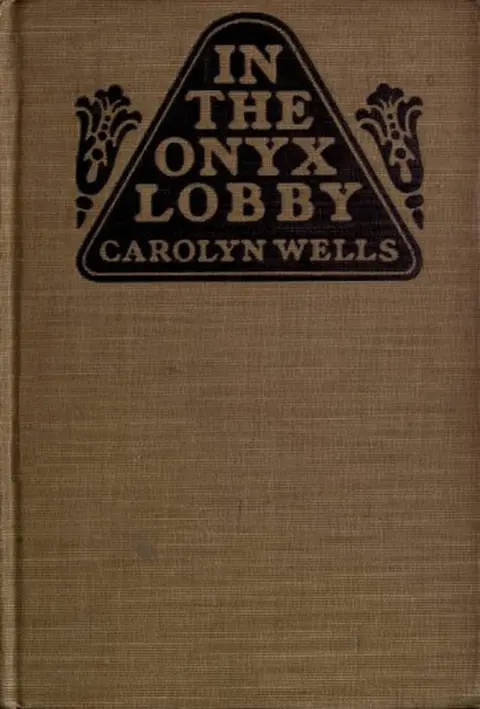
THE CLASSIC COLLECTION · 1920
"In the Onyx Lobby" by Carolyn Wells is a novel written in the early 20th century. The narrative intertwines themes of love, ambition, and rivalry primarily surrounding two feuding women, Miss Letitia Prall and Mrs. Everett, who share a long-standing animosity. At the heart of this drama is Richard Bates, a young inventor caught between his ambitions and familial loyalty, as he navigates his feelings for Dorcas Everett amidst the backdrop of their mothers' feud. At the start of "In the Onyx Lobby," we are introduced to the fraught dynamics between Miss Prall and Mrs. Everett, residents of The Campanile, who have maintained their rivalry for several decades. Richard Bates, Miss Prall's nephew, is reluctant to take up his Uncle Binney's offer to join a bakery business, preferring to pursue his inventive ideas. However, when Bates and Dorcas Everett's romantic feelings emerge, the tension escalates as both young lovers grapple with their mothers' opposition and the pressures stemming from their families’ feud. This complex beginning sets the stage for a murder mystery that intertwines personal relationships with deeper themes of social class and gender roles, as well as the potential consequences of long-held grudges.
Introduction adapted from the source catalogue; source summaries may be automatically generated.
Free to read · English · 65,246 words · No account needed
MAKE TIME FOR A GOOD BOOK
On by default. Untick to stop anonymous reading totals. Each page counts after 10 seconds in view. How this works.
Anonymous counting is on unless you have switched it off.
“No,” Gibbs told her, “you won’t be jailed for telling that,—if it’s true. But, if it isn’t,—you want to be careful about slander, you know.”
Kate looked a little startled, but Mrs Everett laughed.
“Don’t be afraid, Kate; Mr Gibbs can’t punish you for an opinion. You haven’t stated any facts.”
“Except that she heard Miss Prall’s threat to kill Sir Herbert,” Gibbs
reminded her.
“It wasn’t a threat at all. I heard her say it, and it was merely an outburst of anger. I doubt if she meant it——”
“Do you doubt her capable of committing such a crime?” the detective asked, so suddenly that he took his listener by surprise.
But she was not to be caught. “My theory is,” she smiled, “that as Goethe says, ‘We are all capable of crime, even the best of us.’ I truly think that most human beings could commit crime, given sufficient motive and opportunity.”
“All very fine in theory,” said Gibbs, smiling, “but are you willing to assert that Miss Prall or—or yourself, would be capable of the murder of Sir Herbert Binney, if you had a perfect opportunity and if you considered your motive strong enough?”
“Oh, I wouldn’t have done it!” and Mrs Everett looked shocked, indeed, “but,—well, maybe I do think Letitia Prall would have done it.”
“Aided and abetted by Miss Gurney,” the detective egged her on.
“Yes; Eliza would have been not only a help but a commander,—a tyrant,
even.”
“And Miss Gurney wished the old gentleman out of the way?”
“Oh, yes; as much, perhaps, as Letitia. You see, if he died just now, his fortune would be young Bates’ and the boy could go on with his chosen career, without being pestered to make buns! Moreover, Sir Herbert favored Rickey’s marriage——”
“To your daughter?”
“To anybody,—any nice young woman. My daughter is out of the question and not to be spoken of in this connection.”
Mrs Everett drew herself up in with an effect of injured dignity and
looked scornfully at Gibbs.
“But you seem to eliminate the young people themselves as factors in the romance part of it all.”
“They are not factors. My daughter has sufficient confidence in my judgment to agree to my advice. She knows my attitude toward Miss Prall and she would not encourage or accept the attentions of her nephew.”
“You’re sure of this?”
Your reading position is saved on this browser. Take it to another device with a library code. Reading pages adapt to text, rather than matching a printed edition.
Carolyn Wells

Carolyn Wells & Harry Persons Taber

Carolyn Wells

Carolyn Wells
BEHIND THE BOOK
This eBook is for the use of anyone anywhere in the United States and most other parts of the world at no cost and with almost no restrictions whatsoever. You may copy it, give it away or re-use it under the terms of the Project Gutenberg License included with this eBook or online at www.gutenberg.org. If you are not located in the United States, you will have to check the laws of the country where you are located before using this eBook. Read the source licence.
The original source file, including credits and licence, is retained by this library. Request an original-format copy at no charge. Please include the book title and Project Gutenberg identifier #35254.
KEEP YOUR CURIOSITY GOING
Coulson Kernahan

Maurice Baring
Frances Wright
Cécile Tormay

Frederic Jesup Stimson

W. H. P. (William Henry Pope) Jarvis