
The story of Betty
Carolyn Wells
THE CLASSIC COLLECTION · 1920
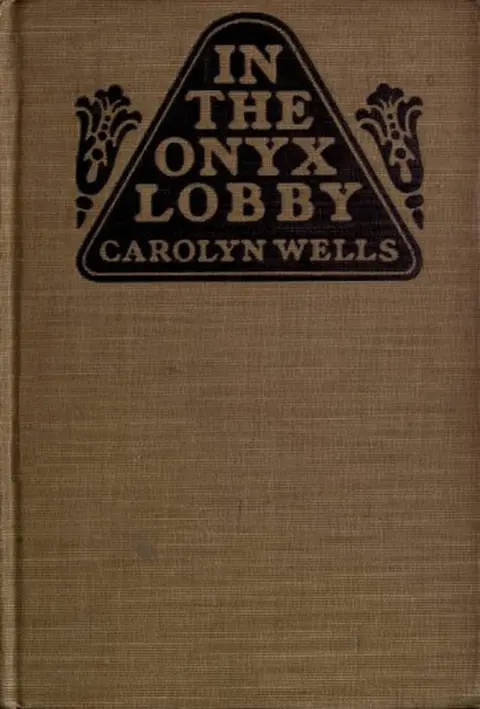
"In the Onyx Lobby" by Carolyn Wells is a novel written in the early 20th century. The narrative intertwines themes of love, ambition, and rivalry primarily surrounding two feuding women, Miss Letitia Prall and Mrs. Everett, who share a long-standing animosity. At the heart of this drama is Richard Bates, a young inventor caught between his ambitions and familial loyalty, as he navigates his feelings for Dorcas Everett amidst the backdrop of their mothers' feud. At the start of "In the Onyx Lobby," we are introduced to the fraught dynamics between Miss Prall and Mrs. Everett, residents of The Campanile, who have maintained their rivalry for several decades. Richard Bates, Miss Prall's nephew, is reluctant to take up his Uncle Binney's offer to join a bakery business, preferring to pursue his inventive ideas. However, when Bates and Dorcas Everett's romantic feelings emerge, the tension escalates as both young lovers grapple with their mothers' opposition and the pressures stemming from their families’ feud. This complex beginning sets the stage for a murder mystery that intertwines personal relationships with deeper themes of social class and gender roles, as well as the potential consequences of long-held grudges.
Introduction adapted from the source catalogue; source summaries may be automatically generated.
Free to read · English · 65,246 words · No account needed
MAKE TIME FOR A GOOD BOOK
On by default. Untick to stop anonymous reading totals. Each page counts after 10 seconds in view. How this works.
Anonymous counting is on unless you have switched it off.
“Of course I am!” was Miss Prall’s indignant reply to the detective’s question. “I hear perfectly.”
“Are you sure?” said Gibbs, mildly; “for I have noticed several times when you have seemed not to hear a side remark.”
“Inattention, then,” snapped Letitia. “I am a thoughtful person, and I often take little notice of others’ chatter.”
“But you are sure you could have heard your nephew if he had gone out of his place last night after——”
“But I didn’t go out!” declared Bates. “You’re absurd to imply that I did, unless you have some reason on which to base your accusation!”
“We have to locate you before we can go further, Mr Bates,” insisted Gibbs, who had assumed leadership, while Corson sat, with folded arms, taking in anything he found to notice.
And Corson, though lacking in initiative, was a close observer, and he saw a lot that would have escaped his notice had he been obliged to carry on the inquiry.
“Let’s try it,” Corson said, suddenly. “Go into your room, please, Miss Prall, and shut the door, and see if you can hear me go out.”
“Of course I can!” and with a determined air, Miss Prall went into her room and closed the door quite audibly.
Lifting his finger with a gesture of admonition, Corson made every one sit perfectly still and without speaking for about two minutes.
Then, rising himself, he opened Miss Prall’s door and bade her come out.
“Now,” he said, “I admit I made as little noise as possible, but did you hear me go out of the front door?”
“Of course I did!” declared the spinster, haughtily. “I heard you tiptoe to the door, open it stealthily and close it the same way.”
She looked calmly about, and then seeing the consternation on the faces of Richard and Eliza and the amused satisfaction on the countenances of the detectives, she saw she had made a false step, and became irate.
“What is it?” she began, but Richard interrupted her.
“Don’t say a word, Auntie,” he begged; “you see gentlemen, Miss Prall is a little sensitive about her slight deafness, and sometimes she imagines sounds that are not real.”
“I’m not deaf!” Letitia cried, but Eliza interposed:
“Do hush, Letitia. You only make matters worse! Will you be quiet?”
The tone more than the words caused Miss Prall to drop the subject, and
Gibbs proceeded.
“Now, you see, Mr Bates, we can’t accept your aunt’s testimony that you didn’t leave your room last night.”
Your reading position is saved on this browser. Take it to another device with a library code. Reading pages adapt to text, rather than matching a printed edition.
Carolyn Wells

Carolyn Wells & Harry Persons Taber

Carolyn Wells

Carolyn Wells
BEHIND THE BOOK
This eBook is for the use of anyone anywhere in the United States and most other parts of the world at no cost and with almost no restrictions whatsoever. You may copy it, give it away or re-use it under the terms of the Project Gutenberg License included with this eBook or online at www.gutenberg.org. If you are not located in the United States, you will have to check the laws of the country where you are located before using this eBook. Read the source licence.
The original source file, including credits and licence, is retained by this library. Request an original-format copy at no charge. Please include the book title and Project Gutenberg identifier #35254.
KEEP YOUR CURIOSITY GOING
Coulson Kernahan

Maurice Baring
Frances Wright
Cécile Tormay

Frederic Jesup Stimson

W. H. P. (William Henry Pope) Jarvis