
The story of Betty
Carolyn Wells
THE CLASSIC COLLECTION · 1920
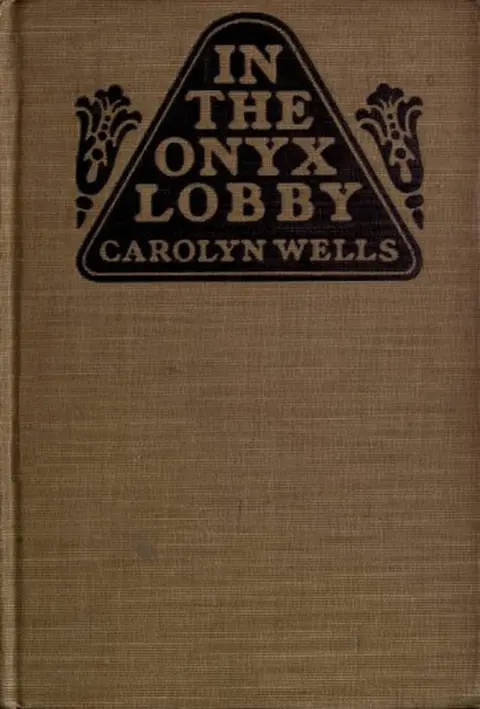
"In the Onyx Lobby" by Carolyn Wells is a novel written in the early 20th century. The narrative intertwines themes of love, ambition, and rivalry primarily surrounding two feuding women, Miss Letitia Prall and Mrs. Everett, who share a long-standing animosity. At the heart of this drama is Richard Bates, a young inventor caught between his ambitions and familial loyalty, as he navigates his feelings for Dorcas Everett amidst the backdrop of their mothers' feud. At the start of "In the Onyx Lobby," we are introduced to the fraught dynamics between Miss Prall and Mrs. Everett, residents of The Campanile, who have maintained their rivalry for several decades. Richard Bates, Miss Prall's nephew, is reluctant to take up his Uncle Binney's offer to join a bakery business, preferring to pursue his inventive ideas. However, when Bates and Dorcas Everett's romantic feelings emerge, the tension escalates as both young lovers grapple with their mothers' opposition and the pressures stemming from their families’ feud. This complex beginning sets the stage for a murder mystery that intertwines personal relationships with deeper themes of social class and gender roles, as well as the potential consequences of long-held grudges.
Introduction adapted from the source catalogue; source summaries may be automatically generated.
Free to read · English · 65,246 words · No account needed
MAKE TIME FOR A GOOD BOOK
On by default. Untick to stop anonymous reading totals. Each page counts after 10 seconds in view. How this works.
Anonymous counting is on unless you have switched it off.
On the other hand, Miss Prall wanted the old man out of the say, so that her nephew would lack his advice and assistance concerning the affair with Dorcas, and the aunt felt that, with Sir Herbert out of it, she could easily persuade Richard to return to the great work in which he was so deeply interested and forget the girl. Moreover, she knew that Mrs Everett, no more desiring the marriage of the young people than she did herself, was planning to move away, and then all would be well.
The motives were not altogether clear, but, Gibbs reasoned, there must be many points that were hidden and would remain so, with these clever women to guard them.
He tactfully tried to draw them out, but with even greater tact they evaded and eluded his questions and contradicted each other and occasionally,—and purposely,—themselves, until the detective began to think the determined masculine mind is no match for the equally determined Eternal Feminine.
Indeed, involuntarily and almost unconsciously, they joined forces against him, and presently found themselves aiding each other, which, when they realized it, made them more angry,—if possible,—than before.
At last Mrs Everett looked at her watch.
“I’ve an appointment that I’m anxious to keep,” she said, drawlingly; “as you don’t seem to be getting anywhere, Mr Detective, can you not let me go, and finish up this absorbing discussion with Miss Prall?”
“You’re quite mistaken in assuming that I’m not getting anywhere, Mrs Everett,” returned the nettled detective, “but you may go if you wish. In fact, I allow it, because I have learned about all there is to learn,—not so insignificant an amount as you imply.”
Mrs Everett looked at him sharply and was momentarily disconcerted
enough to gasp out:
“Oh, have you a clue?”
“Several,” Gibbs returned, carelessly. “Nothing that I care to make known, but I’ve found out enough to set me on the right track.”
Covertly he watched the faces to see how this struck the two principals.
With little result, for Mrs Everett, regaining her poise, merely smiled in an exasperating way, and Miss Prall looked coldly disinterested.
“Wonderful characters,” Gibbs commented to himself, for he had never before met women who could so perfectly hide their feelings.
And he was sure that one of them, at least, was hiding her emotion; that one of them was really aghast at the thought of exposure and was trying with all her powers to conceal her dismay.
Your reading position is saved on this browser. Take it to another device with a library code. Reading pages adapt to text, rather than matching a printed edition.
Carolyn Wells

Carolyn Wells & Harry Persons Taber

Carolyn Wells

Carolyn Wells
BEHIND THE BOOK
This eBook is for the use of anyone anywhere in the United States and most other parts of the world at no cost and with almost no restrictions whatsoever. You may copy it, give it away or re-use it under the terms of the Project Gutenberg License included with this eBook or online at www.gutenberg.org. If you are not located in the United States, you will have to check the laws of the country where you are located before using this eBook. Read the source licence.
The original source file, including credits and licence, is retained by this library. Request an original-format copy at no charge. Please include the book title and Project Gutenberg identifier #35254.
KEEP YOUR CURIOSITY GOING
Coulson Kernahan

Maurice Baring
Frances Wright
Cécile Tormay

Frederic Jesup Stimson

W. H. P. (William Henry Pope) Jarvis