
The story of Betty
Carolyn Wells
THE CLASSIC COLLECTION · 1920
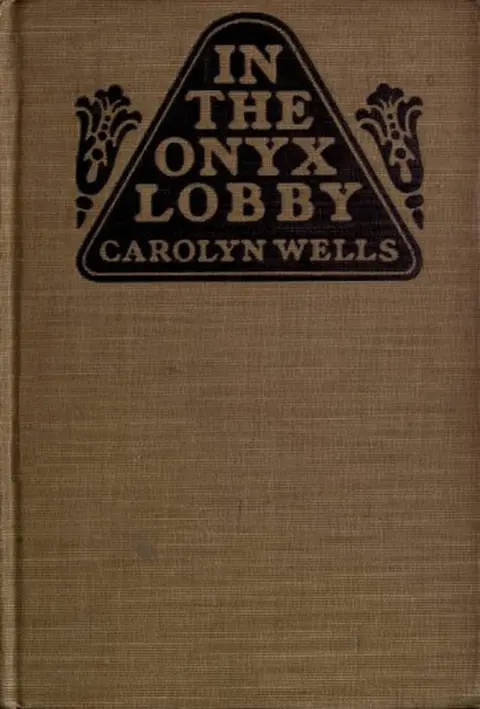
"In the Onyx Lobby" by Carolyn Wells is a novel written in the early 20th century. The narrative intertwines themes of love, ambition, and rivalry primarily surrounding two feuding women, Miss Letitia Prall and Mrs. Everett, who share a long-standing animosity. At the heart of this drama is Richard Bates, a young inventor caught between his ambitions and familial loyalty, as he navigates his feelings for Dorcas Everett amidst the backdrop of their mothers' feud. At the start of "In the Onyx Lobby," we are introduced to the fraught dynamics between Miss Prall and Mrs. Everett, residents of The Campanile, who have maintained their rivalry for several decades. Richard Bates, Miss Prall's nephew, is reluctant to take up his Uncle Binney's offer to join a bakery business, preferring to pursue his inventive ideas. However, when Bates and Dorcas Everett's romantic feelings emerge, the tension escalates as both young lovers grapple with their mothers' opposition and the pressures stemming from their families’ feud. This complex beginning sets the stage for a murder mystery that intertwines personal relationships with deeper themes of social class and gender roles, as well as the potential consequences of long-held grudges.
Introduction adapted from the source catalogue; source summaries may be automatically generated.
Free to read · English · 65,246 words · No account needed
MAKE TIME FOR A GOOD BOOK
On by default. Untick to stop anonymous reading totals. Each page counts after 10 seconds in view. How this works.
Anonymous counting is on unless you have switched it off.
“He’s gone for Mrs Everett,” said Richard, looking severely at his aunt. “Now, you must be careful, Aunt Letty. If you don’t look out, they’ll accuse you of the murder, and though you’ll disprove it, it will mean a whole lot of trouble for us all.”
Letitia Prall adored her nephew, and, too, she saw there was no use of trying to avoid the meeting with Mrs Everett. It was bound to be brought about, sooner or later, by the determined Gibbs, and it might as well be gone through with.
She sat still, thinking what attitude it was best to assume, and she decided on continued silence.
“Eliza,” she warned, “don’t talk too much. You’ll get us in an awful predicament if you’re so free with your tongue. First thing you know, you’ll tell——”
“Hush, they’re coming!” and in a moment Gibbs rang the bell.
Richard admitted him, and with him came both Adeline Everett and the
maid, Kate.
“I didn’t invite your servant,” was Miss Prall’s only word of greeting, accompanied by a scathing glance at Kate.
“You didn’t invite me,” Mrs Everett returned, pertly, “and I shouldn’t have come if you had, except that I was commanded to appear by a representative of the law. I don’t see, though, why I should be mixed up in your murder case.”
“It isn’t my murder case any more than it is yours, Adeline Everett,” her enemy faced her. “I understand you’re suspected of being——”
“Oh, don’t, Aunt Letitia,” begged Richard, who was always distressed if obliged to be present when the two “got going,” as Eliza called it. “Now, please, auntie,—please, Mrs Everett, can’t you two forget your private enmity for a few minutes and just settle this big matter? Disarm the suspicions of Mr Gibbs by telling the truth, by stating where you all were at the time of the murder, and so, get yourselves out of all touch with it. Truly, you will be sorry if you don’t. You don’t realize what it will mean if you have to be mixed up in all sorts of witness stands and things.”
“Go ahead, Mr Gibbs,” and Miss Prall glared at the detective. “We owe this unpleasant scene to you,—make it as short as possible.”
“I will,” and Gibbs’ sharp eyes darted from one face to another, for this was his harvest time, and though he expected to learn little from the wily women’s speech, he hoped for much from their uncontrollable outbursts of anger or their involuntary admissions.
Your reading position is saved on this browser. Take it to another device with a library code. Reading pages adapt to text, rather than matching a printed edition.
Carolyn Wells

Carolyn Wells & Harry Persons Taber

Carolyn Wells

Carolyn Wells
BEHIND THE BOOK
This eBook is for the use of anyone anywhere in the United States and most other parts of the world at no cost and with almost no restrictions whatsoever. You may copy it, give it away or re-use it under the terms of the Project Gutenberg License included with this eBook or online at www.gutenberg.org. If you are not located in the United States, you will have to check the laws of the country where you are located before using this eBook. Read the source licence.
The original source file, including credits and licence, is retained by this library. Request an original-format copy at no charge. Please include the book title and Project Gutenberg identifier #35254.
KEEP YOUR CURIOSITY GOING
Coulson Kernahan

Maurice Baring
Frances Wright
Cécile Tormay

Frederic Jesup Stimson

W. H. P. (William Henry Pope) Jarvis