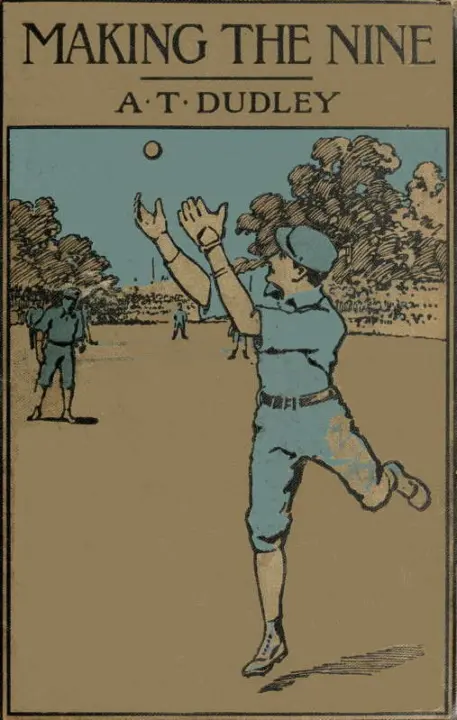
Making the Nine
Albertus T. (Albertus True) Dudley
THE CLASSIC COLLECTION · 1905
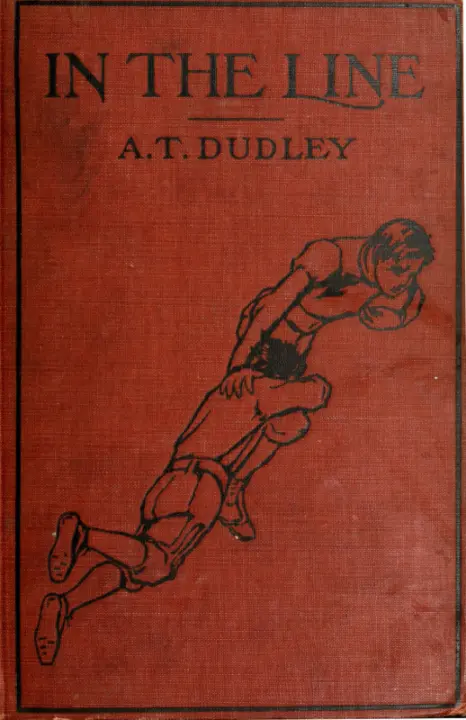
"In the Line" by Albertus T. Dudley is a novel written in the early 20th century. The story revolves around Wolcott Lindsay, a young boy navigating the challenges of school life and football at Seaton, an elite boarding school. The novel explores themes of friendship, sportsmanship, and the social dynamics within a school environment, against the background of American rugby football. The opening of "In the Line" introduces Wolcott Lindsay Senior and Junior as they arrive in Boston after a long voyage. The narrative focuses on Junior, an overgrown but energetic boy who is eager to acclimate to his new American school life. His parents discuss his education options, highlighting differing family viewpoints about schooling. The story begins to unfold as the Lindsays get settled, hinting at the challenges Wolcott will face while trying to fit in amongst his peers and the expectations set upon him in both academics and athletics. This initial setup leads to an exploration of friendships, rivalries, and personal growth as the characters and their dynamics are established.
Introduction adapted from the source catalogue; source summaries may be automatically generated.
Free to read · English · 54,146 words · No account needed
MAKE TIME FOR A GOOD BOOK
On by default. Untick to stop anonymous reading totals. Each page counts after 10 seconds in view. How this works.
Anonymous counting is on unless you have switched it off.
“Kind of all-round man, Laughlin is, isn’t he?” commented Marchmont, as Lindsay sprawled on the couch before the open fire and recounted some of his experiences of the day. “Football captain, scholar, musician, pillar of the church, butler, furnace tender, dish-washer—it isn’t every fellow from the woods who has a record like that. I don’t think I should want him to handle my china.”
“What I don’t understand is why the fellows generally seem to have such a high opinion of him,” said Lindsay.
“It’s the fashion to be democratic here,” answered Marchmont, wisely. “And then he’s a football player, and that makes up for almost everything. He oughtn’t to have been captain; there’s where the mistake was made. Of course you’ve got to encourage such fellows, and it’s very creditable in them to try to make something of themselves and all that; but when you come to the important offices, they ought to go to fellows of a better class, who could represent the school decently.”
“Perhaps he was the only candidate.”
“No, there was Butler, who played guard on the other side. He’s an awfully nice fellow, though perhaps not so good a player as that big bruiser. The choice lay between the two, and Laughlin got it.”
“He certainly thinks he’s all right,” remarked Lindsay, a little spitefully. “He’s given me advice, on several occasions, about what I ought to do and not to do here in school.”
“And whom you ought to know, and where you ought to go, and how you ought to amuse yourself, and so on. He’s probably advised you against smoking, and told you always to tell the truth when you report.”
“That’s about it,” confessed Lindsay.
“That reminds me: have I ever shown you my postern gate?”
Lindsay stared blankly. “Postern gate!”
“Yes, my secret entrance. Come here.”
Lindsay followed his companion into a closet, where Marchmont lifted the oilcloth and showed a rectangular outline on the floor where several boards had been sawed through. These boards, which had been fastened together underneath to form a trap door, he lifted, disclosing a square opening between the floor timbers into the closet below.
“That shelf under there takes out, so as to give room to get through,” explained Marchmont, proudly; “and the box on the shelf prevents the old lady from getting on to the game.”
Wolcott gazed into the dark, mysterious hole in amazement. The job was cleverly done, and yet of what use could the hole be?
“Who rooms underneath,” he asked; “Salter?”
Marchmont nodded.
Your reading position is saved on this browser. Take it to another device with a library code. Reading pages adapt to text, rather than matching a printed edition.
Albertus T. (Albertus True) Dudley
Albertus T. (Albertus True) Dudley
Albertus T. (Albertus True) Dudley
Albertus T. (Albertus True) Dudley
BEHIND THE BOOK
This eBook is for the use of anyone anywhere in the United States and most other parts of the world at no cost and with almost no restrictions whatsoever. You may copy it, give it away or re-use it under the terms of the Project Gutenberg License included with this eBook or online at www.gutenberg.org. If you are not located in the United States, you will have to check the laws of the country where you are located before using this eBook. Read the source licence.
The original source file, including credits and licence, is retained by this library. Request an original-format copy at no charge. Please include the book title and Project Gutenberg identifier #56259.
KEEP YOUR CURIOSITY GOING
Coulson Kernahan

Maurice Baring
Frances Wright
Cécile Tormay

Frederic Jesup Stimson

W. H. P. (William Henry Pope) Jarvis