THE CLASSIC COLLECTION✦From Gretna Green to Land’s End: A Literary Journey in England.CLASSIC FREE BOOKS
From Gretna Green to Land’s End: A Literary Journey in England.
Katharine Lee Bates
THE CLASSIC COLLECTION · 1913
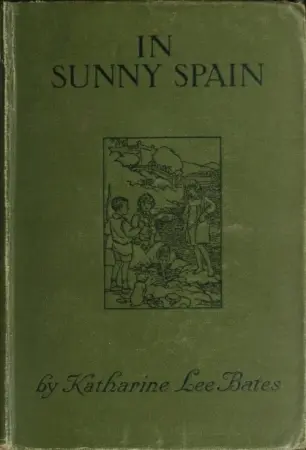
"In Sunny Spain with Pilarica and Rafael" by Katharine Lee Bates is a fictional children's book likely written in the early 20th century. The narrative follows the adventures of two young siblings, Pilarica and Rafael, as they explore their enchanting surroundings in Granada, Spain, filled with cultural richness and vivid imagery. The story weaves together their playful interactions, family dynamics, and the warmth of relationships against the backdrop of historical references and local traditions. The opening chapters introduce Pilarica, a lively little girl, fidgeting after finishing some embroidery and eager to play in the beautiful Moorish garden that once belonged to her ancestors. After a brief encounter with her older brother Rafael, who has quickly transitioned into a playful game where he takes on the role of a Moorish prince, the children engage in whimsical adventures and riddles with their grandfather. As they explore the garden, their interactions encapsulate the themes of childhood innocence, familial love, and the allure of the past. The stage is set for the siblings' adventures in a world marked by rich folklore and childhood imagination.
Introduction adapted from the source catalogue; source summaries may be automatically generated.
Free to read · English · 54,464 words · No account needed
MAKE TIME FOR A GOOD BOOK
On by default. Untick to stop anonymous reading totals. Each page counts after 10 seconds in view. How this works.
Anonymous counting is on unless you have switched it off.
With the last word of the song all the little figures in the circle flung themselves face downward on the ground, so impetuously that Carmencita and Pepito bumped their heads together and set up such a duet of stormy weeping that, for dramatic close, there was nothing left to be desired.
Don Carlos swung Pilarica, hotter and more weary than Rafael himself, to her feet, and as she smiled up into his face, she saw in it, for all its gravity, a great relief.
Tia Marta, too, who met them at the garden gate, was quick to read his
look.
“Your heart has been taking a bath of roses,” she said.
And Don Carlos, in the same breath, was telling her his good tidings.
“Rodrigo drew a lucky number. There is weeping in other homes to-day,
but not in ours.”
“Other people’s troubles are easily borne,” scoffed Tia Marta, but the dry, walnut face was twitching so strangely that the children wished it had been polite to laugh.
After their simple luncheon, a hunch of bread and a bowlful of olives for each, Pilarica coaxed Rafael out to the summer-house where the boy, not ill-pleased to have an audience for his story, seated himself with his back against the column and recounted the great event of the day.
“The Gov’ment,” he explained, with the dignity of a prime minister, “needs more soldiers for Cuba.”
“Acorns,” murmured Pilarica.
“And so it has set up in every city and town and village--my father told me so--urns for the lottery, and all the men who ar’n’t too young, like me, or too old, like Grandfather and the Geography Gentleman, draw out a number. If it’s a very, very high number, you don’t go to Cuba, but if isn’t, you do.”
“And Rodrigo?” breathed Pilarica, who was sitting on the ground exactly in front of Rafael, leaning forward and squeezing her sandals in her hands so hard that her toes ached all the rest of the afternoon.
Rafael’s eyes glowed.
“Oh, he was so tall and straight as he stood there waiting his turn. He had his cap in his hand and he waved it and looked right across the urn to my father and me and laughed. And my father took off his hat to him. Think of that! My father! Some day I am going to be a hero, like the Cid, and then, perhaps, he will take off his hat to me.”
Don Carlos, pacing back and forth on one of the tiled walks, smiled as
he caught the words.
“And then it was Rodrigo’s turn?” prompted Pilarica.
Your reading position is saved on this browser. Take it to another device with a library code. Reading pages adapt to text, rather than matching a printed edition.
Katharine Lee Bates
Katharine Lee Bates
Katharine Lee Bates
BEHIND THE BOOK
This eBook is for the use of anyone anywhere in the United States and most other parts of the world at no cost and with almost no restrictions whatsoever. You may copy it, give it away or re-use it under the terms of the Project Gutenberg License included with this eBook or online at www.gutenberg.org. If you are not located in the United States, you will have to check the laws of the country where you are located before using this eBook. Read the source licence.
The original source file, including credits and licence, is retained by this library. Request an original-format copy at no charge. Please include the book title and Project Gutenberg identifier #45441.
KEEP YOUR CURIOSITY GOING
Coulson Kernahan

Maurice Baring
Frances Wright
Cécile Tormay

Frederic Jesup Stimson

W. H. P. (William Henry Pope) Jarvis