THE CLASSIC COLLECTION✦From Gretna Green to Land’s End: A Literary Journey in England.CLASSIC FREE BOOKS
From Gretna Green to Land’s End: A Literary Journey in England.
Katharine Lee Bates
THE CLASSIC COLLECTION · 1913
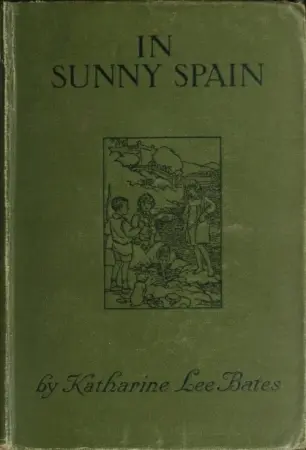
"In Sunny Spain with Pilarica and Rafael" by Katharine Lee Bates is a fictional children's book likely written in the early 20th century. The narrative follows the adventures of two young siblings, Pilarica and Rafael, as they explore their enchanting surroundings in Granada, Spain, filled with cultural richness and vivid imagery. The story weaves together their playful interactions, family dynamics, and the warmth of relationships against the backdrop of historical references and local traditions. The opening chapters introduce Pilarica, a lively little girl, fidgeting after finishing some embroidery and eager to play in the beautiful Moorish garden that once belonged to her ancestors. After a brief encounter with her older brother Rafael, who has quickly transitioned into a playful game where he takes on the role of a Moorish prince, the children engage in whimsical adventures and riddles with their grandfather. As they explore the garden, their interactions encapsulate the themes of childhood innocence, familial love, and the allure of the past. The stage is set for the siblings' adventures in a world marked by rich folklore and childhood imagination.
Introduction adapted from the source catalogue; source summaries may be automatically generated.
Free to read · English · 54,464 words · No account needed
MAKE TIME FOR A GOOD BOOK
On by default. Untick to stop anonymous reading totals. Each page counts after 10 seconds in view. How this works.
Anonymous counting is on unless you have switched it off.
Then they played Hide-and-Seek in their own special fashion. The first seeker was Pepito, who sat doubled over, with his chubby palms pressed tight against his eyes, while the others slipped softly into their hiding-places, all except Pilarica, who, as the Mother, stood by and gave Pepito his signal for the start by singing:
“My nightingales of the Alhambra
Forth from the cage are flown.
My nightingales of the Alhambra
Have left me all alone.”
After they were tired of this, Isabelita called for Butterfly Tag and was chosen, because of her pink frock--torn though it was,--to be the Butterfly. Forming in a close circle about her, the children lifted her dress-skirt by the border and held it outspread, while Pilarica, on the outside, danced round and round the ring, fluting like a bird:
“Who are these chatterers?
Oh, such a number!
Nor by day nor by night
Do they let me slumber.
They’re daughters of the Moorish king
Who search the garden-close
For lovely Lady Ana,
The sweetest thing that grows.
She’s opening the jasmine
And shutting up the rose.”
Then the children all at once lifted the pink frock and wrapped it about Isabella’s head, while Pilarica, dancing faster than ever, led them in singing seven times over:
“Butterfly, butterfly,
Dressed in rose-petals!
Is it on candle-flame
Butterfly settles?
How many shirts
Have you woven of rain?
Weave me another
Ere I call you again.”
Suddenly they varied the song:
“Now that Lady Ana
Walks in garden sweet,
Gathering the roses
Whose dew is on her feet,
Butterfly, butterfly,
Can you catch us? Try it, try!”
In an instant the circle had broken and scattered, while the Butterfly, blinded and half smothered in the folds of the skirt, dashed about as best she could, trying to catch one or another of her teasing playmates.
Then followed Washerwoman, and Chicken-Market, Rose and Pink, and Golden Earrings, and when, at noon, Don Carlos and Rafael came back, the children were all absorbed in the circle-dance of Mambrú. Don Carlos remembered the song from his own childhood in Saragossa and hummed the pathetic couplets under his breath, as he stood watching.
“Mambrú is gone to serve the king,
And comes no more by fall or spring.
“We’ve looked until our eyes are dim.
Will no one give us word of him?
“You’d know him for his mother’s son
By peasant dress of Aragon.
“You’d know him for my husband dear
By broidered kerchief on his spear.
“The one I broider now is wet.
Oh, may I see him wear it yet!”
Your reading position is saved on this browser. Take it to another device with a library code. Reading pages adapt to text, rather than matching a printed edition.
Katharine Lee Bates
Katharine Lee Bates
Katharine Lee Bates
BEHIND THE BOOK
This eBook is for the use of anyone anywhere in the United States and most other parts of the world at no cost and with almost no restrictions whatsoever. You may copy it, give it away or re-use it under the terms of the Project Gutenberg License included with this eBook or online at www.gutenberg.org. If you are not located in the United States, you will have to check the laws of the country where you are located before using this eBook. Read the source licence.
The original source file, including credits and licence, is retained by this library. Request an original-format copy at no charge. Please include the book title and Project Gutenberg identifier #45441.
KEEP YOUR CURIOSITY GOING
Coulson Kernahan

Maurice Baring
Frances Wright
Cécile Tormay

Frederic Jesup Stimson

W. H. P. (William Henry Pope) Jarvis