THE CLASSIC COLLECTION✦The golden fleeceCLASSIC FREE BOOKS
The golden fleece
A. L. O. E.
THE CLASSIC COLLECTION · 1883
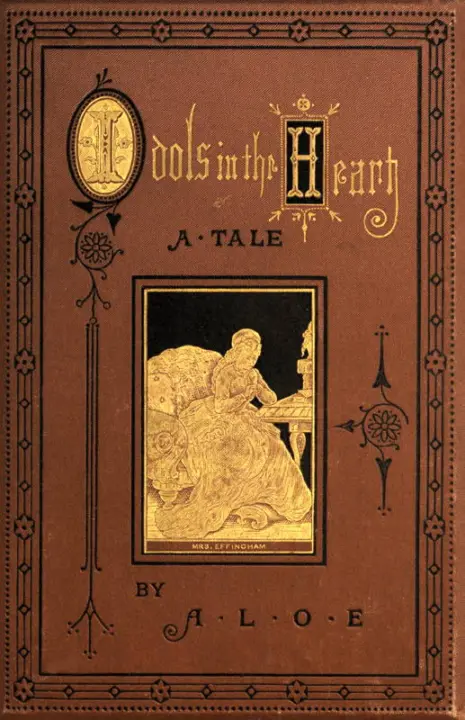
"Idols in the Heart: A Tale" by A. L. O. E. is a fictional narrative written during the late 19th century. The novel revolves around Clemence Effingham, a young bride who navigates her new life as a stepmother in a cold and judgmental family dynamic. The story likely explores themes of societal expectations, identity, and the complexity of familial relationships, particularly as Clemence grapples with the challenges posed by her husband's children and their aunt, Lady Selina. At the start of the story, we are introduced to the emotional landscape surrounding the arrival of Clemence, the new bride, in her husband Vincent's home. The opening chapter reveals the apprehension and resentment felt by his children, particularly Arabella and Louisa, as well as the manipulative influence of Lady Selina, their aunt. As services and interactions unfold, we witness a mix of curiosity, disdain, and internal struggles experienced by Clemence as she strives to forge connections with her stepchildren and adapt to her new role. The dynamics are complicated by her lower social standing compared to her husband's family, setting the stage for a tense exploration of relationships and personal growth.
Introduction adapted from the source catalogue; source summaries may be automatically generated.
Free to read · English · 55,586 words · No account needed
MAKE TIME FOR A GOOD BOOK
On by default. Untick to stop anonymous reading totals. Each page counts after 10 seconds in view. How this works.
Anonymous counting is on unless you have switched it off.
Clemence went to the book-case without replying, and returning with a volume of the “History of the Reformation,” resumed her seat by Vincent. “Would you like to hear a story?” she said, after turning to an interesting passage in the life of Luther.
“A story, yes; but I don’t want a sermon.”
Clemence read with animation and expression, and Vincent speedily became interested. The history naturally led to questions from the intelligent boy, which his step-mother readily answered. He was unconsciously drinking in information upon one of the most important of subjects.
“How odd it is,” exclaimed Vincent suddenly, “that I should ever have taken you for a Papist!”
“A Papist!” repeated Clemence in a little surprise.
“Why, Aunt Selina told us that your grandmother was a Frenchwoman.”
“And so she was, but not a Romanist.”
Vincent’s countenance fell. “So you’re partly French, after all,” cried he; “I’m sorry for that, for I hate the French.”
“Should we hate anything but sin?” said Clemence softly.
“I’m a regular John Bull!” cried Vincent, “and I don’t care if all the world knew it! Britannia for ever, say I!”
“You cannot love old England better than I do,” said Clemence; “but patriotism is one thing, and prejudice another.”
“What do you call prejudice?” asked Vincent.
“The determination to dislike some one or something before judgment has had time to decide whether it merit your dislike or not. Surely this is neither reasonable nor right!”
“I think that we were prejudiced against you,” said Vincent thoughtfully—“that is, before we knew you, and perhaps some of us after we had known you. We did not wish to like you; only, you see, we really could not help ourselves,” and the boy looked up archly into the blue eyes that met his gaze so kindly.
“Prejudice,” observed Clemence, “prevents our seeing objects as they
actually are.”
“I see, I see,” said Vincent quickly; “prejudices are like the knots in the glass of one of our windows at school. They alter the shape of everything that we choose to look at through them; they make straight things crooked, and nothing distinct—even your face would look quite ugly only seen through that glass.”
“One would not wish to have one’s mind full of such knots,” said Clemence, smiling at the schoolboy’s smile.
“I think that your glass is all rosy-coloured!” cried Vincent, “and that makes you look at every one kindly. But Aunt Selina don’t deserve it of you. Do you know what she said of you once?”
“I have no wish to hear it, dear Vincent.”
Your reading position is saved on this browser. Take it to another device with a library code. Reading pages adapt to text, rather than matching a printed edition.
A. L. O. E.
A. L. O. E.
A. L. O. E.
A. L. O. E.
BEHIND THE BOOK
This eBook is for the use of anyone anywhere in the United States and most other parts of the world at no cost and with almost no restrictions whatsoever. You may copy it, give it away or re-use it under the terms of the Project Gutenberg License included with this eBook or online at www.gutenberg.org. If you are not located in the United States, you will have to check the laws of the country where you are located before using this eBook. Read the source licence.
The original source file, including credits and licence, is retained by this library. Request an original-format copy at no charge. Please include the book title and Project Gutenberg identifier #60486.
KEEP YOUR CURIOSITY GOING
Coulson Kernahan

Maurice Baring
Frances Wright
Cécile Tormay

Frederic Jesup Stimson

W. H. P. (William Henry Pope) Jarvis