THE CLASSIC COLLECTION✦The golden fleeceCLASSIC FREE BOOKS
The golden fleece
A. L. O. E.
THE CLASSIC COLLECTION · 1883
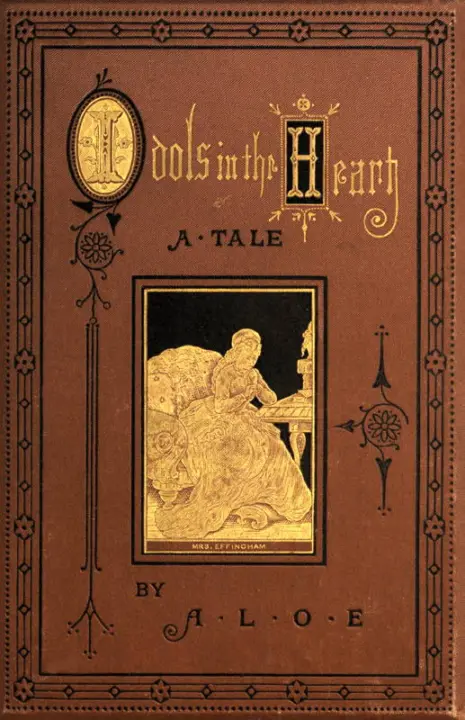
"Idols in the Heart: A Tale" by A. L. O. E. is a fictional narrative written during the late 19th century. The novel revolves around Clemence Effingham, a young bride who navigates her new life as a stepmother in a cold and judgmental family dynamic. The story likely explores themes of societal expectations, identity, and the complexity of familial relationships, particularly as Clemence grapples with the challenges posed by her husband's children and their aunt, Lady Selina. At the start of the story, we are introduced to the emotional landscape surrounding the arrival of Clemence, the new bride, in her husband Vincent's home. The opening chapter reveals the apprehension and resentment felt by his children, particularly Arabella and Louisa, as well as the manipulative influence of Lady Selina, their aunt. As services and interactions unfold, we witness a mix of curiosity, disdain, and internal struggles experienced by Clemence as she strives to forge connections with her stepchildren and adapt to her new role. The dynamics are complicated by her lower social standing compared to her husband's family, setting the stage for a tense exploration of relationships and personal growth.
Introduction adapted from the source catalogue; source summaries may be automatically generated.
Free to read · English · 55,586 words · No account needed
MAKE TIME FOR A GOOD BOOK
On by default. Untick to stop anonymous reading totals. Each page counts after 10 seconds in view. How this works.
Anonymous counting is on unless you have switched it off.
“Oh, Arabella!—mademoiselle!” exclaimed Louisa on the following day, as she entered the school-room at a later hour than usual, “I have been so much diverted—I have been enjoying such a rare treat!” and she threw herself into an arm-chair, and gave way to a burst of merriment.
“Qu’est-ce que c’est?” inquired the governess.
“I have seen Mrs. Effingham’s trousseau!” cried Louisa. Arabella looked up from her drawing, and the exclamation of mademoiselle expressed her curiosity on a subject which is supposed to be one of some interest to the fair sex.
“I was passing the door of her dressing-room,” continued Louisa, “and as it happened to be ajar she saw me, and called to me to come in.”
“As one school-girl might another,” said Arabella contemptuously.
“And there was the bride on her knees, herself unpacking her boxes!”
“She has not been accustomed to many servants,” observed Arabella, “and finds it most convenient to wait upon herself.”
“And the trousseau de madame was magnifique, no doubt?” said mademoiselle, with a little irony in her tone.
“Beautiful simplicity!” laughed Louisa; “I suppose that Mrs. Effingham has met somewhere with the line, ‘Beauty when unadorned adorned the most,’ and has adopted it for her motto!”
“Perhaps,” suggested mademoiselle, “the marchande de modes at
Stoneby—”
“Lived in the time of King Pharamond,” interrupted Louisa; “or the bride played marchande de modes herself; or, what is more probable still, employed her school-girls to run up her dresses, and make them true charity pattern! There’s not a flounce or a fringe in the whole set, from the white silk wedding-dress to the neat cotton-print.”
“Cotton-print! est-il possible!” exclaimed mademoiselle, lifting up her
hands.
“And the dressing-case—oh!” cried Louisa, bursting into fresh laughter at the recollection.
“Quelque chose très-bizarre—very extraordinary!”
“Ordinary, certainly, without the extra! Brushes, combs, all enclosed in a simple bag, ingeniously made, with many pockets big and little, quite a curiosity of art;—I believe it was one of her wedding presents!”
Arabella and mademoiselle joined in the mirth which this idea inspired.
“I should like to have seen les cadeaux,” observed the latter.
“I saw everything—all her treasures,” cried Louisa; “I have a correct inventory of them in my head. The diamond ring which Mrs. Effingham wears is papa’s gift; so is the bracelet, and his miniature surrounded with brilliants.”
“Oh! but her own family—her own friends, what did they give?” asked
mademoiselle.
Your reading position is saved on this browser. Take it to another device with a library code. Reading pages adapt to text, rather than matching a printed edition.
A. L. O. E.
A. L. O. E.
A. L. O. E.
A. L. O. E.
BEHIND THE BOOK
This eBook is for the use of anyone anywhere in the United States and most other parts of the world at no cost and with almost no restrictions whatsoever. You may copy it, give it away or re-use it under the terms of the Project Gutenberg License included with this eBook or online at www.gutenberg.org. If you are not located in the United States, you will have to check the laws of the country where you are located before using this eBook. Read the source licence.
The original source file, including credits and licence, is retained by this library. Request an original-format copy at no charge. Please include the book title and Project Gutenberg identifier #60486.
KEEP YOUR CURIOSITY GOING
Coulson Kernahan

Maurice Baring
Frances Wright
Cécile Tormay

Frederic Jesup Stimson

W. H. P. (William Henry Pope) Jarvis