THE CLASSIC COLLECTION✦The school and societyCLASSIC FREE BOOKS
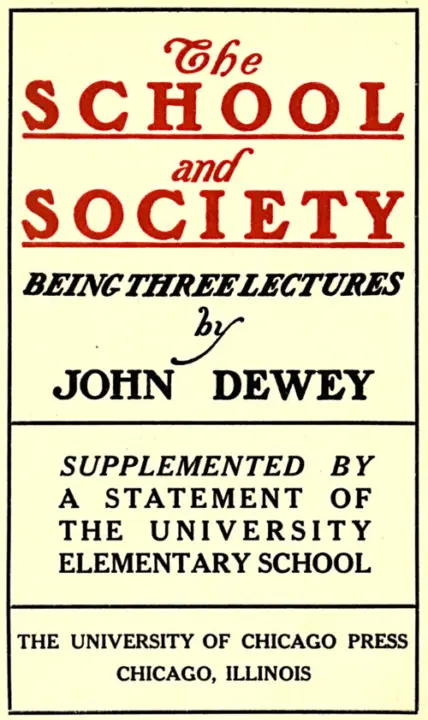
The school and society
John Dewey
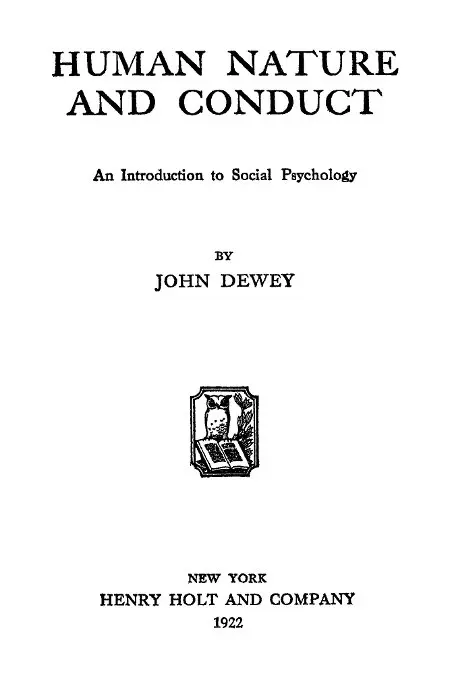
THE CLASSIC COLLECTION · 1922
"Human Nature and Conduct: An Introduction to Social Psychology" by John Dewey is a philosophical treatise focusing on social psychology, likely written in the early 20th century. The work explores the intricate relationship between human behavior, moral principles, and social environments, emphasizing how habits shape personal and societal conduct. Dewey's engagement with the concept of habit as a central element in human interaction sets the stage for a deeper examination of morality's connection to human nature and social conditions. The opening of Dewey's work introduces the premise that traditional moral views often regard human nature with suspicion, leading to a disconnection between morality and the realities of human behavior. He critiques the historical pathologizing of human nature by moralists and explores how societal structures influence individual actions. Dewey argues that understanding habits—a synthesis of impulses and intelligence—is crucial for a more realistic approach to social psychology, positing that moral principles should be grounded in an empirical study of human nature and societal conditions rather than abstract ideals. Through this exploration, he suggests a more integrated and practical framework for discussing morality within the context of human conduct.
Introduction adapted from the source catalogue; source summaries may be automatically generated.
Free to read · English · 83,723 words · No account needed
MAKE TIME FOR A GOOD BOOK
On by default. Untick to stop anonymous reading totals. Each page counts after 10 seconds in view. How this works.
Anonymous counting is on unless you have switched it off.
Ideas, see Ends, Thought
Ideals and Idealism, 2, 8, 50, 68, 77, 81, 99, 157, 166, 184, 233,
236, 255, 259-264, 274, 282-288, 301, 331
Imagination, 52, 163, 190-192, 204, 225, 234
Imitation, 66, 97, 132
Impulse, place in conduct, 89-171;
secondary, 89;
intermediary, 169-170;
as means of reorganization, 93, 102, 104, 179;
plastic, 95;
same as human instincts, 105n;
and habit, 107-111;
false simplification, 131-149;
and reason, 196, 254
Individualism, 7, 85, 93
Industry, 11
Infantilisms, 98
Instinct, not fixed, 149-168;
and knowledge, 178;
see Impulse
Institutions, 9, 80, 102, 111, 166
Intelligence, 10, 13, 51, 299, 312;
place of, in conduct, 172-277;
relation to habits, 172-180, 228;
and desire, 248-264, 276
Interpenetration of habits, 37-39
Intuitions, 33, 188
James, Wm., 112, 179, 195
Justice, 18, 52, 198
Kant, 44, 49, 55, 245
Knowledge, moral, 181-188;
see Conscience, Intelligence
Labor, 121, 144
Language, 58, 79, 95
Le Bon, 61
Liberalism, 305
Locke, 106
Marx, 154, 273, 300
Magic, 20, 26
Meaning, 37, 90, 151, 207, 262, 271, 280
Means, 20;
relation to ends, 25-36, 218-220, 251;
see Habit
Mechanization, 28, 70, 96, 144
Mediation, 197
Mind, 61, 95;
and habit, 175-180
Mind and body, 30, 67, 71
Mitchell, W. C., 213
Moore, G. E., 241n
Morals, introduction, 40;
conclusion, as objective, 52;
of art, 167;
scope, 278-281
Motives, 43-45, 118-122, 213, 231, 329
Natural law and morals, 296-300
Necessity, 312
Nirvana, 175, 286
Non-moral, 8, 27, 40, 188, 230
Occult, 11
Oligarchy, 2-3
Optimism, 286-288
Organization, 306
Passion, 9, 193-196
Pathology, 4, 50
Perfection, 173-175, 223, 282
Pessimism, 286
Plato, 50, 78, 134, 290
Play, 159-164
Pleasure, 158, 200-205, 250
Posture, 32
Potentiality, 37
Power, will to, 140-142
Pragmatic knowing, 181-188
Principles, 2;
and tendencies, 49;
nature of, 238-247
Private, 9, 16, 43, 85
Process and product, 142-143, 280
Progress, 10, 21, 93, 96, 101, 105n;
in science, 149;
nature of, 281-288
Property, 116-118;
see Economics
Psycho-analysis, 34, 86, 133, 153, 252
Psychology and moral theory, 12, 46, 91;
social, 60-63, 84-88;
current, 118, 135, 147, 155;
and scientific method, 150, 322-324
Punishment, 18
Puritanism, 5, 157
Purpose, see Ends
Radicalism, 168
Reactions, 157
Realism, 176, 256, 298
Reason, pure, 31;
reasonableness, 67, 77, 193-198, 215
Rebellion, 166
Reconstruction, 164
Religion, 5, 263, 330-332
Responsibility, 315
Revolution, 10, 108
Right, 324-328
Romanticism, 6, 100, 166, 256
Routine, 42, 66, 70, 98, 211, 232, 238
Satisfaction, 140, 158, 175, 210, 213, 265, 285
Savagery, 93, 101, 103
Science of morals, 3, 11-12, 18, 56, 224, 243, 296, 321
Self, 16, 55, 85-87, 136-139, 217, 292, 314
Self-deception, 152, 252
Self-love, 134-139, 293
Sensations, 18, 31, 189
Sentimentalism, 17
Sex, 133, 150, 153, 164-165
Social, see Environments
Social mind, 60-63
Socrates, 56
Soul, 85, 94, 138, 176
Spencer, 175, 297
Standards, 75-82, 241
Stimulation, 157
Stimulus and response, 199-207
Stuart, H. W., 218
Subjective, 16, 22, 27, 52, 54, 85, 202;
see Dualism
Sublimation, 141, 156, 164, 194
Success, 6, 173, 254
Sumner, 77
Suppression, 156, 166
Synthesis, 183-184
Tendency, 49
Thought, 30, 67, 98, 108, 171, 190, 200, 222, 258;
vices of, 197
Tolstoi, 285, 312
Tools, 25, 32;
intellectual, 244
Transcendentalism, 50-52, 54, 81
Universality, 245-247
Utilitarianism, 50, 189, 199-209, 211, 221-222, 291
Virtues, 4, 16, 22;
see Goodness
War, 110-115
Westermarck, 76
Will, and habits, 25, 29, 40-44, 259;
will to power, 140-143;
freedom of, 9
Williams, M., 273n
page original correction v FUNCTIONS 13 FUNCTIONS 14 3 go back of the go back to the 8 by pleasureable excursions by pleasurable excursions 17 infliction of retibutive infliction of retributive 41 some-counteracting some counteracting 74 an ungoing splurge an ongoing splurge 90 wind on a mudpuddle wind on a mud puddle 92 the southsea islander the Southsea islander 123 to find fulfillment, to find fulfilment, l45 it it quite possible it is quite possible 163 artificial exitents artificial exigents 211 its every presentation its every presentation. 212 with only one factor, with only one factor, 234 only a phantasy only a fantasy, 236 and phantasy-building, and fantasy-building, 262 is as unreasonble as is as unreasonable as 276 reporting and analysis reporting and analysis 325 how to satisfy desire. how to satisfy desire." 334 Phantasies, 158, Fantasies, 158,
Your reading position is saved on this browser. Take it to another device with a library code. Reading pages adapt to text, rather than matching a printed edition.
John Dewey
John Dewey
John Dewey
John Dewey
BEHIND THE BOOK
This eBook is for the use of anyone anywhere in the United States and most other parts of the world at no cost and with almost no restrictions whatsoever. You may copy it, give it away or re-use it under the terms of the Project Gutenberg License included with this eBook or online at www.gutenberg.org. If you are not located in the United States, you will have to check the laws of the country where you are located before using this eBook. Read the source licence.
The original source file, including credits and licence, is retained by this library. Request an original-format copy at no charge. Please include the book title and Project Gutenberg identifier #41386.
KEEP YOUR CURIOSITY GOING

David Patterson (Spirit) Hatch
Coulson Kernahan

Ralph Waldo Emerson
Frances Wright

Edwin Abbott Abbott

Joseph Droz