
The Writing of News A Handbook with Chapters on Newspaper Correspondence and Copy Reading
Charles G. (Charles Griffith) Ross
THE CLASSIC COLLECTION · 1898
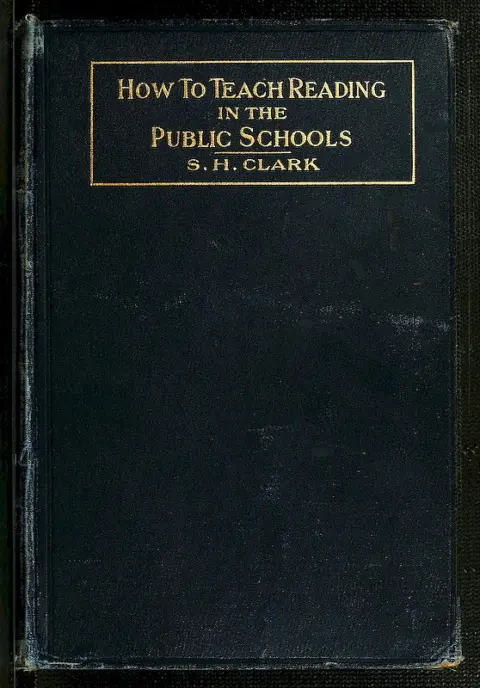
"How to Teach Reading in the Public Schools" by S. H. Clark is an instructional manual aimed at educators, written in the late 19th century. This work provides insights and methodologies for teaching reading effectively in public schools, stressing the importance of understanding vocal expression and its various components. The book appears to focus on improving both the teachers’ and students’ abilities to extract meaning from text, thereby elevating the standard of reading instruction. The opening of this manual establishes its purpose by addressing the inadequacies of reading education in public schools. The author outlines common remedial approaches, such as mechanical methods of teaching vocal expression and comprehension techniques, explaining why they often fall short in fostering a true understanding of literature. Clark emphasizes the need for teachers to appreciate great literature, to understand the psychology behind vocal expression, and to implement a structured, methodical approach to instruction that prioritizes clarity and comprehension, rather than rote learning.
Introduction adapted from the source catalogue; source summaries may be automatically generated.
Free to read · English · 80,383 words · No account needed
MAKE TIME FOR A GOOD BOOK
On by default. Untick to stop anonymous reading totals. Each page counts after 10 seconds in view. How this works.
Anonymous counting is on unless you have switched it off.
She mounts her chariot with a trice,
Nor would she stay for no advice,
Until her maids, that were so nice,
To wait on her were fitted.
But ran herself away alone;
Which when they heard, there was not one
But hasted after to be gone,
As she had been diswitted.
Hop, and Mop, and Drap so clear,
Pip, and Trip, and Ship, that were
To Mab their sovereign dear,
Her special maids of honor;
Fib, and Tib, and Pinck, and Pin,
Tick, and Quick, and Jill, and Jin,
Tit, and Nit, and Wap, and Win,
The train that wait upon her.
Upon a grasshopper they got,
And what with amble and with trot,
For hedge nor ditch they spared not,
But after her they hie them.
A cobweb over them they throw,
To shield the wind if it should blow,
Themselves they wisely could bestow,
Lest any should espy them.
--Queen Mab. DRAYTON.
Cheer answer cheer, and bear the cheer about.
Hurrah, hurrah, for the fiery fort is ours!
“Victory, victory, victory!”
Hear the sledges with the bells,--silver bells;
What a world of merriment their melody foretells!
How they tinkle, tinkle, tinkle,
In the icy air of night!
While the stars that oversprinkle
All the heavens, seem to twinkle
With a crystalline delight;
Keeping time, time, time,
In a sort of Runic rhyme,
To the tintinnabulation that so musically wells
From the bells, bells, bells, bells, bells,--
From the jingling and the tinkling of the bells.
--The Bells. POE.
For the third time, it is well to be reminded that drills in the elements of expression as such have no place in public-school training. Perhaps in no part of the work is more care necessary than in the development of the pupil’s power to express feeling. If we were discussing methods of teaching elocution outside of the public school, the author would be compelled to protest strongly against a prevalent practice of endeavoring to develop the different vocal qualities apart from the emotion that produces these qualities. But the difficulty in public-school methods is that they pay comparatively little attention to emotional expression. As a general thing, so educators say, there is either no feeling (“no expression,” some put it), or, what is worse, there is a palpable affectation of feeling. Somehow, it has come to be considered “girlish” for a boy to put feeling into his reading, especially tender feeling; and for the girl to do so is considered a sure indication of weakness. The atmosphere of the school-room is not conducive to the development of emotional power, and if, by any chance, a shoot should peep out of the soil, it dies for want of light and warmth. Emotion in itself is a good thing, when properly guided; but we need emotion in reading because it is a sign that the pupil can be moved by the contemplation of the noble, the tender, the true. It is a sign that the children have that precious gift of imagination. Where there is no opportunity for the expression of feeling, there must result a great loss in expressive power and eventually in power of imagination. Such a loss is irremediable, for there follows in its wake inability to appreciate the finer breath and spirit of literature.
Your reading position is saved on this browser. Take it to another device with a library code. Reading pages adapt to text, rather than matching a printed edition.
BEHIND THE BOOK
This eBook is for the use of anyone anywhere in the United States and most other parts of the world at no cost and with almost no restrictions whatsoever. You may copy it, give it away or re-use it under the terms of the Project Gutenberg License included with this eBook or online at www.gutenberg.org. If you are not located in the United States, you will have to check the laws of the country where you are located before using this eBook. Read the source licence.
The original source file, including credits and licence, is retained by this library. Request an original-format copy at no charge. Please include the book title and Project Gutenberg identifier #61727.
KEEP YOUR CURIOSITY GOING
Charles G. (Charles Griffith) Ross
Hannah Webster Foster

Emily Lawless
Edwin Hamlin Carr

Charles De Lano Hine
Andrew Ure