
The Writing of News A Handbook with Chapters on Newspaper Correspondence and Copy Reading
Charles G. (Charles Griffith) Ross
THE CLASSIC COLLECTION · 1898
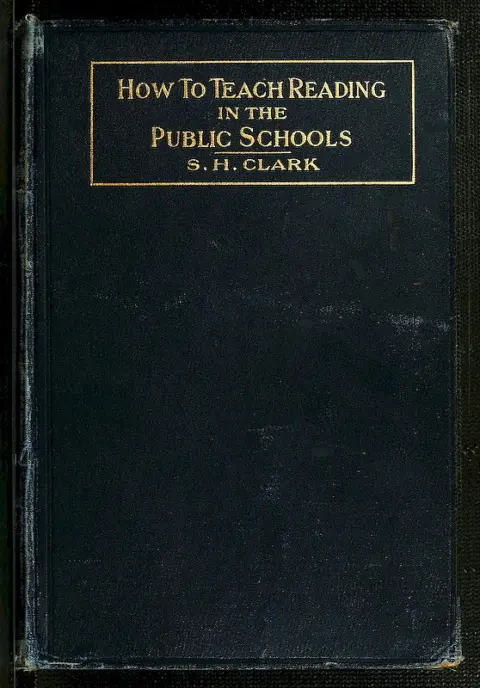
"How to Teach Reading in the Public Schools" by S. H. Clark is an instructional manual aimed at educators, written in the late 19th century. This work provides insights and methodologies for teaching reading effectively in public schools, stressing the importance of understanding vocal expression and its various components. The book appears to focus on improving both the teachers’ and students’ abilities to extract meaning from text, thereby elevating the standard of reading instruction. The opening of this manual establishes its purpose by addressing the inadequacies of reading education in public schools. The author outlines common remedial approaches, such as mechanical methods of teaching vocal expression and comprehension techniques, explaining why they often fall short in fostering a true understanding of literature. Clark emphasizes the need for teachers to appreciate great literature, to understand the psychology behind vocal expression, and to implement a structured, methodical approach to instruction that prioritizes clarity and comprehension, rather than rote learning.
Introduction adapted from the source catalogue; source summaries may be automatically generated.
Free to read · English · 80,383 words · No account needed
MAKE TIME FOR A GOOD BOOK
On by default. Untick to stop anonymous reading totals. Each page counts after 10 seconds in view. How this works.
Anonymous counting is on unless you have switched it off.
A few simple illustrations are added as examples of what may be used for class drill. The more difficult illustrations may be used for advanced classes, and for practice by the teacher himself:
And children, coming home from school,
Look in at the open door;
And, with his hard, rough hand, he wipes
A tear out of his eyes.
However, as the sun baked these two very dry and hard, I lifted them very gently, and set them down again in two great wicker baskets, which I had made on purpose for them, that they might not break; and, as between the pot and the basket there was a little room to spare, I stuffed it full of the rice and barley straw; and these two pots, being to stand always dry, I thought would hold my dry corn, and perhaps the meal, when the corn was bruised.
Though I succeeded so poorly in my design for large pots, yet I made several smaller things with better success, such as little round pots, flat dishes, pitchers, and pipkins, and anything my hand turned to; and the heat of the sun baked them very hard.
Art is long, and Time is fleeting,
And our hearts, though stout and brave,
Still, like muffled drums, are beating
Funeral marches to the grave.
Then it was that Jo, living in the darkened room, with that suffering little sister always before her eyes, and that pathetic voice sounding in her ears, learned to see the beauty and sweetness of Beth’s nature, to feel how deep and tender a place she filled in all hearts, and to acknowledge the worth of Beth’s unselfish ambition to live for others, and make home happy by the exercise of those simple virtues which all may possess, and which all should love and value more than talent, wealth, or beauty.[12]
It was past two o’clock when Jo, who stood at the window thinking how dreary the world looked in its winding-sheet of snow, heard a movement by the bed, and, turning quickly, saw Meg kneeling before their mother’s easy-chair, with her face hidden.
In what school did the worthies of our land--the Washingtons,
Henrys, Franklins, Rutledges--learn those principles of civil
liberty?
Next to the worship of the Father of us all--the deepest and
grandest of human emotions--is the love of the land that gave us
birth.
I am not--I need scarcely say it--the panegyrist of England.
I have returned,--not, as the right honorable member has said, to raise a storm,--I have returned to discharge an honorable debt of gratitude to my country.
Your reading position is saved on this browser. Take it to another device with a library code. Reading pages adapt to text, rather than matching a printed edition.
BEHIND THE BOOK
This eBook is for the use of anyone anywhere in the United States and most other parts of the world at no cost and with almost no restrictions whatsoever. You may copy it, give it away or re-use it under the terms of the Project Gutenberg License included with this eBook or online at www.gutenberg.org. If you are not located in the United States, you will have to check the laws of the country where you are located before using this eBook. Read the source licence.
The original source file, including credits and licence, is retained by this library. Request an original-format copy at no charge. Please include the book title and Project Gutenberg identifier #61727.
KEEP YOUR CURIOSITY GOING
Charles G. (Charles Griffith) Ross
Hannah Webster Foster

Emily Lawless
Edwin Hamlin Carr

Charles De Lano Hine
Andrew Ure