
The Writing of News A Handbook with Chapters on Newspaper Correspondence and Copy Reading
Charles G. (Charles Griffith) Ross
THE CLASSIC COLLECTION · 1898
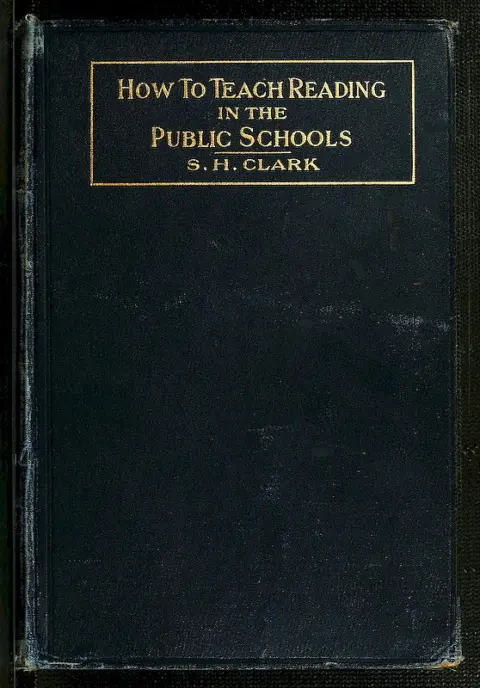
"How to Teach Reading in the Public Schools" by S. H. Clark is an instructional manual aimed at educators, written in the late 19th century. This work provides insights and methodologies for teaching reading effectively in public schools, stressing the importance of understanding vocal expression and its various components. The book appears to focus on improving both the teachers’ and students’ abilities to extract meaning from text, thereby elevating the standard of reading instruction. The opening of this manual establishes its purpose by addressing the inadequacies of reading education in public schools. The author outlines common remedial approaches, such as mechanical methods of teaching vocal expression and comprehension techniques, explaining why they often fall short in fostering a true understanding of literature. Clark emphasizes the need for teachers to appreciate great literature, to understand the psychology behind vocal expression, and to implement a structured, methodical approach to instruction that prioritizes clarity and comprehension, rather than rote learning.
Introduction adapted from the source catalogue; source summaries may be automatically generated.
Free to read · English · 80,383 words · No account needed
MAKE TIME FOR A GOOD BOOK
On by default. Untick to stop anonymous reading totals. Each page counts after 10 seconds in view. How this works.
Anonymous counting is on unless you have switched it off.
It is evident that the speakers have been conversing about the two parts of the battle, and Titinius has told his friend that Cassius has been overthrown. To this Messala replies, comfortingly, Affairs are balanced, then, etc. The entire extract needs and will amply repay most critical study. It would be hard to find one containing more difficulties.
BASSANIO. This is no answer, thou unfeeling man, To excuse the current of thy cruelty. SHYLOCK. I am not bound to please thee with my answer. BASSANIO. Do all men kill the things they do not love? SHYLOCK. Hates any man the thing he would not kill? BASSANIO. Every offense is not a hate at first. SHYLOCK. What! wouldst thou have a serpent sting thee twice?
--Merchant of Venice, Act iv., Sc. 1.
DUNCAN. Go, pronounce his present[11] death,
And with his former title greet Macbeth.
ROSS. I’ll see it done.
DUNCAN. What he hath lost, noble Macbeth hath won.
--Macbeth, Act i., Sc. 2.
Thou shalt get kings, though thou be none.
--Macbeth, Act i., Sc. 3.
MACBETH. The thane of Cawdor lives: why do you dress me
In borrow’d robes?
ANGUS. Who was the thane, lives yet.
--Ibid.
LIGARIUS. What’s to do? BRUTUS. A piece of work that will make sick men whole. LIGARIUS. But are not some whole that we must make sick?
--Julius Caesar, Act ii., Sc. 1.
When beggars die, there are no comets seen; The heavens themselves blaze forth the death of princes.
--Julius Caesar, Act ii., Sc. 2.
BRUTUS. He hath the falling sickness. CASSIUS. No, Caesar hath it not; but you and I, And honest Casca, we have the falling sickness.
--Julius Caesar, Act i., Sc. 2.
Romans now
Have thews and limbs like to their ancestors,
But, woe the while! our fathers’ minds are dead,
And we are govern’d with our mothers’ spirits.
--Julius Caesar, Act i., Sc. 3.
That you do love me, I am nothing jealous; What you would work me to, I have some aim; How I have thought of this, and of these times, I shall recount hereafter; for this present, I would not, so with love I might entreat you, Be any further mov’d. What you have said, I will consider; what you have to say, I will with patience hear, and find a time Both meet to hear, and answer such high things.
--Julius Caesar, Act i., Sc. 2.
Cowards die many times before their deaths;
The valiant never taste of death but once.
--Julius Caesar, Act ii., Sc 2.
FLAVIUS. Thou art a cobbler, art thou? CITIZEN. Truly, sir, all that I live by is with the awl.
Your reading position is saved on this browser. Take it to another device with a library code. Reading pages adapt to text, rather than matching a printed edition.
BEHIND THE BOOK
This eBook is for the use of anyone anywhere in the United States and most other parts of the world at no cost and with almost no restrictions whatsoever. You may copy it, give it away or re-use it under the terms of the Project Gutenberg License included with this eBook or online at www.gutenberg.org. If you are not located in the United States, you will have to check the laws of the country where you are located before using this eBook. Read the source licence.
The original source file, including credits and licence, is retained by this library. Request an original-format copy at no charge. Please include the book title and Project Gutenberg identifier #61727.
KEEP YOUR CURIOSITY GOING
Charles G. (Charles Griffith) Ross
Hannah Webster Foster

Emily Lawless
Edwin Hamlin Carr

Charles De Lano Hine
Andrew Ure