
The lost dirigible
Ralph Henry Barbour
THE CLASSIC COLLECTION · 1907
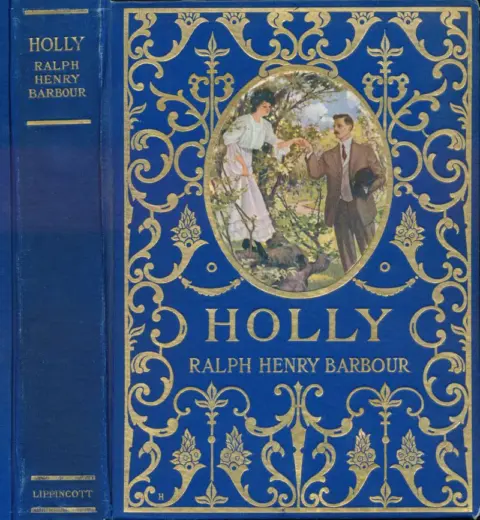
"Holly: The Romance of a Southern Girl" by Ralph Henry Barbour is a novel written in the early 20th century. It centers around Holly Wayne, an 18-year-old girl living in the South, who faces the transition from childhood to adulthood just as her mundane world is disrupted by the arrival of new circumstances and a stranger. The story unfolds in a rich Southern setting filled with descriptions of nature and family dynamics, capturing Holly's complex emotions as she navigates loss, affection, and societal expectations. The opening of the book introduces us to Holly, who is grappling with the loss of her father while living with her Aunt India at Waynewood, their family estate. As the narrative progresses, we learn that Holly is about to undergo significant changes in her life—her sheltered existence is primed for disruption. The arrival of Robert Winthrop, the new owner of Waynewood, brings both mystery and excitement. Holly's initial responses intertwine curiosity and caution, setting the stage for deepening relationships and the possibilities of romance. Through stylish prose, the author hints at Holly’s youthful innocence and her evolving understanding of love and life against a backdrop of Southern culture and charm.
Introduction adapted from the source catalogue; source summaries may be automatically generated.
Free to read · English · 45,478 words · No account needed
MAKE TIME FOR A GOOD BOOK
On by default. Untick to stop anonymous reading totals. Each page counts after 10 seconds in view. How this works.
Anonymous counting is on unless you have switched it off.
“I’ll change it,” said Holly, her eyes dancing. “I’ll say instead that one Northerner is very nice.”
“You said ‘quite nice’ before.”
“That just shows that I like you better every minute,” laughed the girl.
Winthrop sighed.
“It’s a dangerous course you’re pursuing, Miss Holly,” he said, sadly. “If you aren’t awfully careful you’ll lose a good slave and find a poor admirer.”
“My admirers must be my slaves, too,” answered Holly.
“I am warned. I thank you. I could never play a dual rôle, I fear.”
Holly pouted.
“Then which do you choose?” she asked, aggrievedly.
“To be your slave, my dear young lady; I fancy that rôle would be more becoming to middle-age and, at all events, far less hazardous.”
“But if I command you to admire me you’ll have to, you see; slaves must
obey.”
“I haven’t waited for the command,” replied Winthrop.
“You blow hot and cold, sir. First you refuse to be my admirer and then you declare that you do admire me. What am I to believe?”
“That my heart and brain are at war, Miss Holly. My heart says: ‘Down on your knees!’ but my brain says: ‘Don’t you do it, my boy; she’ll lead you a dance that your aged limbs won’t take kindly to, and in the end she’ll run out of your sight, laughing, leaving you to sorrow and liniment!”
“You have as good as called me a coquette, Mr. Winthrop,” charged
Holly, severely.
“Have I? And, pray, what have you been doing for the last ten minutes but coquetting with me, young lady? Tell me that.”
“Have I?” asked Holly, with a soft little laugh. “Do you mind?”
“Mind? On the contrary, do you know, I rather like it? So go right ahead; you are keeping your hand in, and at the same time flattering the vanity of one who has reached the age when to be used even for target practice is flattering.”
“Your age troubles you a great deal, doesn’t it?” asked Holly, ironically. “Please, why do you always remind me of it? Are you afraid that I’ll lose my heart to you and that you’ll have to refuse me?”
“Well, you have seen me for a week,” answered Winthrop, modestly, “and know my irresistible charm.”
Holly was silent a moment, her brown eyes fixed speculatively on the man’s smiling face. Then――――
“You must feel awfully safe,” she said, with conviction, “to talk the way you do. And I reckon I know why.”
“And may I know, too?”
Your reading position is saved on this browser. Take it to another device with a library code. Reading pages adapt to text, rather than matching a printed edition.
Ralph Henry Barbour
Ralph Henry Barbour

Ralph Henry Barbour

Ralph Henry Barbour
BEHIND THE BOOK
This eBook is for the use of anyone anywhere in the United States and most other parts of the world at no cost and with almost no restrictions whatsoever. You may copy it, give it away or re-use it under the terms of the Project Gutenberg License included with this eBook or online at www.gutenberg.org. If you are not located in the United States, you will have to check the laws of the country where you are located before using this eBook. Read the source licence.
The original source file, including credits and licence, is retained by this library. Request an original-format copy at no charge. Please include the book title and Project Gutenberg identifier #69920.
KEEP YOUR CURIOSITY GOING
Coulson Kernahan

Maurice Baring
Frances Wright
Cécile Tormay

Frederic Jesup Stimson

W. H. P. (William Henry Pope) Jarvis