
The lost dirigible
Ralph Henry Barbour
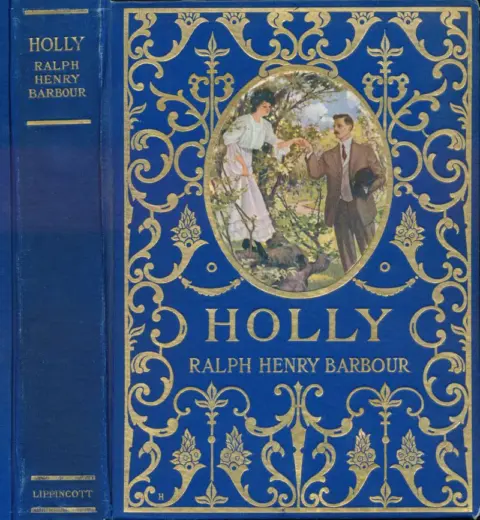
THE CLASSIC COLLECTION · 1907
"Holly: The Romance of a Southern Girl" by Ralph Henry Barbour is a novel written in the early 20th century. It centers around Holly Wayne, an 18-year-old girl living in the South, who faces the transition from childhood to adulthood just as her mundane world is disrupted by the arrival of new circumstances and a stranger. The story unfolds in a rich Southern setting filled with descriptions of nature and family dynamics, capturing Holly's complex emotions as she navigates loss, affection, and societal expectations. The opening of the book introduces us to Holly, who is grappling with the loss of her father while living with her Aunt India at Waynewood, their family estate. As the narrative progresses, we learn that Holly is about to undergo significant changes in her life—her sheltered existence is primed for disruption. The arrival of Robert Winthrop, the new owner of Waynewood, brings both mystery and excitement. Holly's initial responses intertwine curiosity and caution, setting the stage for deepening relationships and the possibilities of romance. Through stylish prose, the author hints at Holly’s youthful innocence and her evolving understanding of love and life against a backdrop of Southern culture and charm.
Introduction adapted from the source catalogue; source summaries may be automatically generated.
Free to read · English · 45,478 words · No account needed
MAKE TIME FOR A GOOD BOOK
On by default. Untick to stop anonymous reading totals. Each page counts after 10 seconds in view. How this works.
Anonymous counting is on unless you have switched it off.
“Yes, I reckon so, but――sometimes it’s an awful temptation to say the wrong, isn’t it? Are you awfully old? May I guess?”
“I shall be flattered.”
“Then――forty?”
Winthrop sighed loudly.
“Too much? Wait! Thirty――thirty-seven?”
“Thirty-eight.”
“Is that very old? I shall be eighteen in a few days.”
“Really? Then, you see, I have already lived twice as long as you have.”
“Yes,” Holly nodded, thoughtfully. “Do you know, I don’t think I want to live to be real, real old; I think I’d rather die before――before that.”
“And what do you call real, real old?” asked Winthrop.
“Oh, I don’t know; fifty, I reckon.”
“Then I have twelve years longer to live,” said Winthrop, gravely.
Holly turned a pair of startled eyes upon him.
“No, no! It’s different with you; you’re a man.”
“Oh, that makes a difference?”
“Lots! Men can do heaps of things, great, big things, after they’re old, but a woman――――” She paused and shrugged her shoulders in a funny, exaggerated way that Winthrop thought charming. “What is there for a woman when she’s that old?”
“Much,” answered Winthrop, gravely, “if she has been a wise woman. There should be her children to love and to love her, and if she has married the right man there will be that love, too, in the afternoon of her life.”
“Children,” murmured Holly. “Yes, that would be nice; but they wouldn’t be children then, would they? And――supposing they died before? The woman would be terribly lonely, wouldn’t she――in the afternoon?”
Winthrop turned his face away and looked out across the sunlit garden.
“Yes,” he said, very soberly; “yes, she would be lonely.”
Something in his tones drew Holly’s attention. How deep the lines about his mouth were this morning, and how gray the hair was at his temples; she had not noticed it before. Yes, after all, thirty-eight was quite old. That thought or some other moved her to a sudden sentiment of pity. Impulsively she tore one of the big yellow roses from the bunch and with her free hand tossed it into his lap.
“Do you know, Mr. Winthrop,” she said, softly, “I reckon we’re going to be friends, you and I,――that is, if you want to.”
Winthrop sprang to his feet, the rose in his hand.
Your reading position is saved on this browser. Take it to another device with a library code. Reading pages adapt to text, rather than matching a printed edition.
Ralph Henry Barbour
Ralph Henry Barbour

Ralph Henry Barbour

Ralph Henry Barbour
BEHIND THE BOOK
This eBook is for the use of anyone anywhere in the United States and most other parts of the world at no cost and with almost no restrictions whatsoever. You may copy it, give it away or re-use it under the terms of the Project Gutenberg License included with this eBook or online at www.gutenberg.org. If you are not located in the United States, you will have to check the laws of the country where you are located before using this eBook. Read the source licence.
The original source file, including credits and licence, is retained by this library. Request an original-format copy at no charge. Please include the book title and Project Gutenberg identifier #69920.
KEEP YOUR CURIOSITY GOING
Coulson Kernahan

Maurice Baring
Frances Wright
Cécile Tormay

Frederic Jesup Stimson

W. H. P. (William Henry Pope) Jarvis