
The lost dirigible
Ralph Henry Barbour
THE CLASSIC COLLECTION · 1907
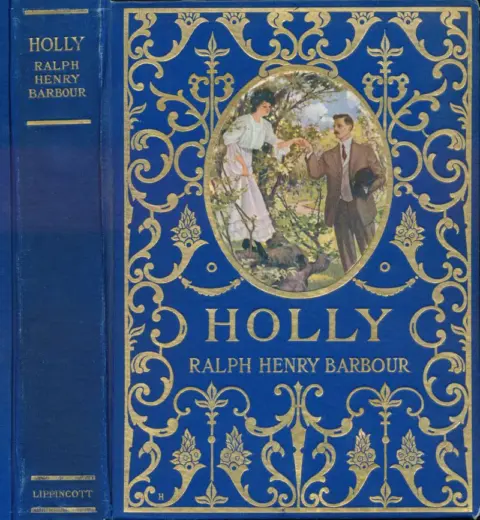
"Holly: The Romance of a Southern Girl" by Ralph Henry Barbour is a novel written in the early 20th century. It centers around Holly Wayne, an 18-year-old girl living in the South, who faces the transition from childhood to adulthood just as her mundane world is disrupted by the arrival of new circumstances and a stranger. The story unfolds in a rich Southern setting filled with descriptions of nature and family dynamics, capturing Holly's complex emotions as she navigates loss, affection, and societal expectations. The opening of the book introduces us to Holly, who is grappling with the loss of her father while living with her Aunt India at Waynewood, their family estate. As the narrative progresses, we learn that Holly is about to undergo significant changes in her life—her sheltered existence is primed for disruption. The arrival of Robert Winthrop, the new owner of Waynewood, brings both mystery and excitement. Holly's initial responses intertwine curiosity and caution, setting the stage for deepening relationships and the possibilities of romance. Through stylish prose, the author hints at Holly’s youthful innocence and her evolving understanding of love and life against a backdrop of Southern culture and charm.
Introduction adapted from the source catalogue; source summaries may be automatically generated.
Free to read · English · 45,478 words · No account needed
MAKE TIME FOR A GOOD BOOK
On by default. Untick to stop anonymous reading totals. Each page counts after 10 seconds in view. How this works.
Anonymous counting is on unless you have switched it off.
“Why, you may stay, of course. Besides, it was all arranged last evening. Uncle Major and Auntie fixed it all up between them after he came down from seeing you. You are to have the room you are in and the one back of it, if you want it, and you are to pay three dollars and a-half a week; one dollar for your room and two dollars and a-half for your board.”
“But――isn’t that――――?”
“Please don’t!” begged Holly. “I don’t know anything about it. If it’s too much, you must speak to Aunt India or Major Cass.”
“I was about to suggest that it seemed ridiculously little,” said Winthrop. “But――――”
“Gracious!” exclaimed Holly. “Uncle Major thought it ought to be more, but Auntie wouldn’t hear of it. Do you think it should be?”
“Well, I’m scarcely a disinterested party,” laughed Winthrop, “but it doesn’t sound much, does it?”
“Three dollars and a-half!” said Holly, slowly and thoughtfully. Then she nodded her head vigorously. “Yes, it sounds a whole lot.” She laughed softly. “It’s very funny, though, isn’t it?”
“What?” he asked, smiling in sympathy.
“Why, that you should be paying three dollars and a-half a week for the privilege of being a slave!”
“Ah, but that’s it,” answered Winthrop. “It is a privilege, as you say.”
“Oh!” cried Holly, in simulated alarm. “You’re at it again, Mr.
Winthrop!”
“At it? At what?”
“Compliments, compliments, sir! You’ll have none left for this evening if you don’t take care. Just think; you might meet a beautiful young lady this evening and not have any compliments for her! Wouldn’t that be dreadful?”
“Horrible,” answered Winthrop. “I shudder.”
“Are you hungry?” asked Holly, suddenly.
“Hungry? No――yes――I hardly know.”
“You’re probably starving, then,” said Holly, jumping up and sweeping the roses into her arms. “I’ll see if breakfast isn’t nearly ready. Auntie doesn’t come down to breakfast very often, and it’s my place to see that it’s on time. But I never do, and it never is. Do you love punctuality, Mr. Winthrop?”
“Can’t bear it, Miss Holly.”
She stood a little way off, smiling down at him, a soft flush in her
cheeks.
“You always say just the right thing, don’t you?” She laughed. “How do
you manage it?”
“Long practice, my dear young lady. When you’ve lived as long as I have you will have discovered that it is much better to say the right thing than the wrong――even when the right thing isn’t altogether right.”
Your reading position is saved on this browser. Take it to another device with a library code. Reading pages adapt to text, rather than matching a printed edition.
Ralph Henry Barbour
Ralph Henry Barbour

Ralph Henry Barbour

Ralph Henry Barbour
BEHIND THE BOOK
This eBook is for the use of anyone anywhere in the United States and most other parts of the world at no cost and with almost no restrictions whatsoever. You may copy it, give it away or re-use it under the terms of the Project Gutenberg License included with this eBook or online at www.gutenberg.org. If you are not located in the United States, you will have to check the laws of the country where you are located before using this eBook. Read the source licence.
The original source file, including credits and licence, is retained by this library. Request an original-format copy at no charge. Please include the book title and Project Gutenberg identifier #69920.
KEEP YOUR CURIOSITY GOING
Coulson Kernahan

Maurice Baring
Frances Wright
Cécile Tormay

Frederic Jesup Stimson

W. H. P. (William Henry Pope) Jarvis