THE CLASSIC COLLECTION✦An outlaw’s diary: the CommuneCLASSIC FREE BOOKS
An outlaw’s diary: the Commune
Cécile Tormay
THE CLASSIC COLLECTION · 1922
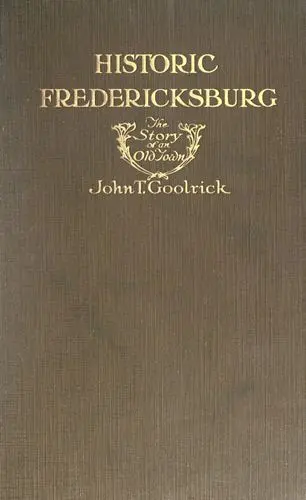
"HISTORIC FREDERICKSBURG: The Story of an Old Town" by John T. Goolrick is a historical account written in the early 20th century. The book explores the rich history of Fredericksburg, Virginia, tracing its significance from its colonial origins through its involvement in major conflicts such as the Revolutionary War and the Civil War. The author focuses on the town's resilience and the stories of its inhabitants, showcasing the cultural and historical tapestry that defines Fredericksburg. The opening of the narrative sets the stage by painting a vivid picture of Fredericksburg's geographical beauty and its layered past. Goolrick reminisces about the town's atmosphere, illustrating how it embodies both history and modern life. He emphasizes the town's sacrifices during the Revolutionary War and its role during the Civil Wars, reflecting on how Fredericksburg has remained loyal and resilient despite the hardships it encountered. This introductory portion reveals Goolrick's deep personal connection to the town and his intention to convey its narrative in a way that highlights the human experiences woven into the historical events.
Introduction adapted from the source catalogue; source summaries may be automatically generated.
Free to read · English · 62,241 words · No account needed
MAKE TIME FOR A GOOD BOOK
On by default. Untick to stop anonymous reading totals. Each page counts after 10 seconds in view. How this works.
Anonymous counting is on unless you have switched it off.
In 1872, en route to Madrid to join Mr. Jay, he heard that de Crillion was preparing to storm Gibraltar, and, believing himself in honor bound to follow the fortunes of his chief, he wrote Mr. Jay that he must turn again to arms.
From that day forward he was a soldier, a diplomat, a courtier--the elected friend of Kings and Princes.
He aided in storming Gibraltar and left his ship only when it had burned to the water's edge. He was highly recommended to the King for his gallantry, and went back to Paris with de Crillion to become a brilliant figure at court and in the salons.
Europe knew him, but America refused him even a small commission, though Kings wrote to our Congress in his behalf.
He met Lafayette at Gibraltar; in fact, accompanied him to Spain. Then, after considerable travel in European countries, he again encountered Prince Nassau, who was his brother at arms in de Crillion's forces, became his aide-de-camp and, together they found happiness in travel. They sought the bright lights of gay capitals and followed mysterious moon tracks on the Danube river.
[Sidenote: When Poland's Star Flamed]
At the Diet of Grodno, in 1784, where he went with Nassau, he met Stanislaus Augustus, King of Poland. He captivated the King; and in a brilliant ball room, Stanislaus offered him a permanent service at his court.
Within a year he was chamberlain and secretary to the cabinet of His Majesty, and for years he was practically the ruler of the empire.
In 1787, at Kiva, he made a treaty with Catherine, Empress of Russia, and became her intimate friend.
He was a special and secret envoy from Poland to the sessions of the grand quadruple alliance in France. Later we see him leading a division of the army of Prince Potempkin across the snow-clad steppes of Russia, and a few months after, he was marching at the head of the Prince's army through the wild reaches of Tartary. Again, under Prince Nassau, we find him commanding a fleet against the Turks at Oczacon.
Shortly after, he was a special high commissioner to Madrid. His mission completed, he was ordered to return to Russia for the revolution of 1791, and now he served as aide-de-camp and Major-General.
In 1794, when the Polish patriot, Kosciusco, headed a revolution,
Littlepage answered his summons and fought through to the storming of
Prague.
Stanislaus held him the greatest of his generals and his aides and when the King was captured by the Russians, Littlepage, tired of the broils of European politics, came home to America.
[Sidenote: Ah, But he Had His Memories]
Your reading position is saved on this browser. Take it to another device with a library code. Reading pages adapt to text, rather than matching a printed edition.
BEHIND THE BOOK
This eBook is for the use of anyone anywhere in the United States and most other parts of the world at no cost and with almost no restrictions whatsoever. You may copy it, give it away or re-use it under the terms of the Project Gutenberg License included with this eBook or online at www.gutenberg.org. If you are not located in the United States, you will have to check the laws of the country where you are located before using this eBook. Read the source licence.
The original source file, including credits and licence, is retained by this library. Request an original-format copy at no charge. Please include the book title and Project Gutenberg identifier #39403.
KEEP YOUR CURIOSITY GOING
Cécile Tormay

Moritz Busch
John L. Ransom
Frances Wright
Cécile Tormay

Mabel Potter Daggett