THE CLASSIC COLLECTION✦An outlaw’s diary: the CommuneCLASSIC FREE BOOKS
An outlaw’s diary: the Commune
Cécile Tormay
THE CLASSIC COLLECTION · 1922
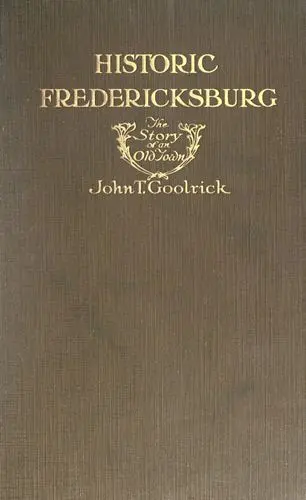
"HISTORIC FREDERICKSBURG: The Story of an Old Town" by John T. Goolrick is a historical account written in the early 20th century. The book explores the rich history of Fredericksburg, Virginia, tracing its significance from its colonial origins through its involvement in major conflicts such as the Revolutionary War and the Civil War. The author focuses on the town's resilience and the stories of its inhabitants, showcasing the cultural and historical tapestry that defines Fredericksburg. The opening of the narrative sets the stage by painting a vivid picture of Fredericksburg's geographical beauty and its layered past. Goolrick reminisces about the town's atmosphere, illustrating how it embodies both history and modern life. He emphasizes the town's sacrifices during the Revolutionary War and its role during the Civil Wars, reflecting on how Fredericksburg has remained loyal and resilient despite the hardships it encountered. This introductory portion reveals Goolrick's deep personal connection to the town and his intention to convey its narrative in a way that highlights the human experiences woven into the historical events.
Introduction adapted from the source catalogue; source summaries may be automatically generated.
Free to read · English · 62,241 words · No account needed
MAKE TIME FOR A GOOD BOOK
On by default. Untick to stop anonymous reading totals. Each page counts after 10 seconds in view. How this works.
Anonymous counting is on unless you have switched it off.
The St. Andrew's Society, which he joined in 1757, erected a monument to his memory and in the historical painting of the Battle of Princeton, by Peale Mercer is given a prominent place. The states of Pennsylvania, Kentucky, Virginia and New Jersey have, by an act of Legislature, named a county "Mercer," and on October 1, 1897, a bronze tablet to his memory was unveiled at Princeton, N. J. We have not the space to relate all of his illustrious life, but somewhere there is a poem, the last lines of which voice the sentiment of his countrymen.
"But he, himself, is canonized,
If saintly deeds such fame can give;
As long as liberty is prized,
Hugh Mercer's name shall surely live."
In the possession of a well-known man of Richmond, Va., is a large gold
key.
It is vastly different from the keys one sees these days, and inquiry develops that it was once the property of one of the most picturesque characters in America--a man who began his life in the cornfields of Hanover County, Va., in 1753, and was swept by the wave of circumstance into the palace of a King.
The atmosphere of old William and Mary College, where Lewis Littlepage was graduated, after the death of his father, gave a mysteriously romantic note to the beckoning song of adventure, which finally became a definite urge, when the youth, after residing in Fredericksburg, listened to the advice of his guardian, Benjamin Lewis, of Spotsylvania County, who placed him with John Jay, the American Minister at Madrid.
Six months later, Jay, in a letter to Benjamin Lewis, said of the
seventeen-year-old lad:
"I am much pleased with your nephew, Lewis Littlepage, whom I regard as a man of undoubted genius, and a person of unusual culture."
And a few months after this we discover that the well-known traveler, Mr. Elekiah Watson, has an entry in his diary which reads:
"At Nantes I became acquainted with Lewis Littlepage, and although he is but eighteen years of age, I believe him to be the most remarkable character of the age. I esteem him a prodigy of genius."
[Sidenote: The Poet Takes The Sword]
In Madrid, Littlepage got into financial straits, owing to the fact that his allowance did not reach him, and the next glimpse we get of him is through the smoke of battle at Fort Mahon, where in 1781, as a member of the force under the Duke de Crillion, he was painfully wounded while charging the Turks.
Your reading position is saved on this browser. Take it to another device with a library code. Reading pages adapt to text, rather than matching a printed edition.
BEHIND THE BOOK
This eBook is for the use of anyone anywhere in the United States and most other parts of the world at no cost and with almost no restrictions whatsoever. You may copy it, give it away or re-use it under the terms of the Project Gutenberg License included with this eBook or online at www.gutenberg.org. If you are not located in the United States, you will have to check the laws of the country where you are located before using this eBook. Read the source licence.
The original source file, including credits and licence, is retained by this library. Request an original-format copy at no charge. Please include the book title and Project Gutenberg identifier #39403.
KEEP YOUR CURIOSITY GOING
Cécile Tormay

Moritz Busch
John L. Ransom
Frances Wright
Cécile Tormay

Mabel Potter Daggett